


MAIT cell activation is associated with disease severity markers in acute hantavirus infection
- PMID: 33763658
- PMCID: PMC7974553
- DOI: 10.1016/j.xcrm.2021.100220
MAIT cell activation is associated with disease severity markers in acute hantavirus infection
Abstract
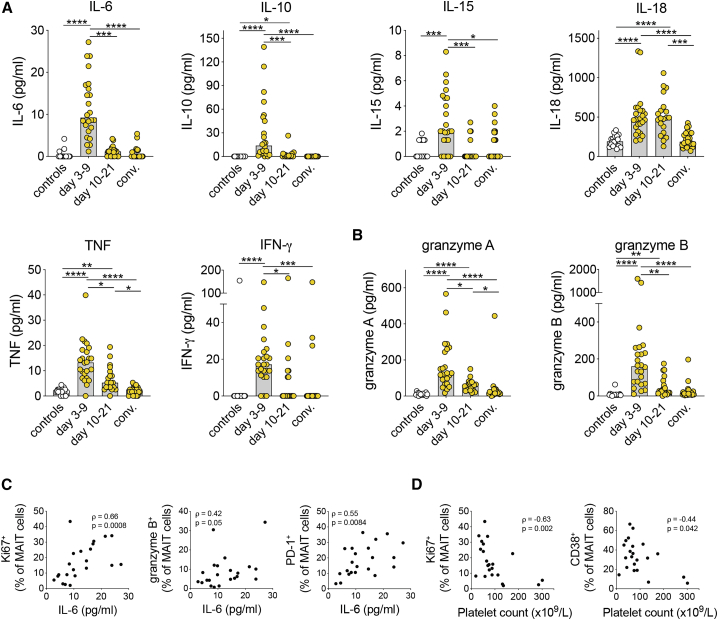
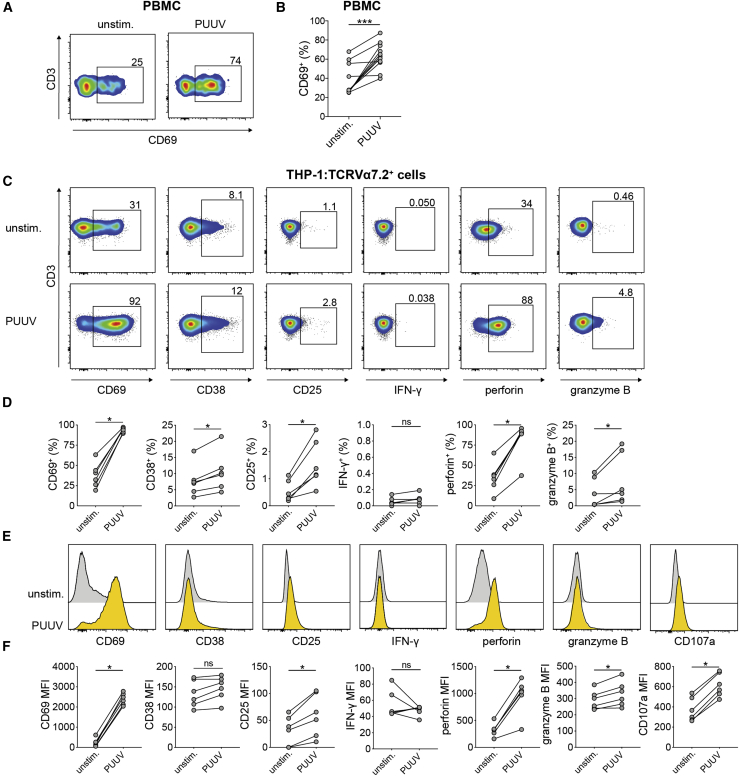
Hantaviruses are zoonotic RNA viruses that cause severe acute disease in humans. Infected individuals have strong inflammatory responses that likely cause immunopathology. Here, we studied the response of mucosal-associated invariant T (MAIT) cells in peripheral blood of individuals with hemorrhagic fever with renal syndrome (HFRS) caused by Puumala orthohantavirus, a hantavirus endemic in Europe. We show that MAIT cell levels decrease in the blood during HFRS and that residual MAIT cells are highly activated. This activation correlates with HFRS severity markers. In vitro activation of MAIT cells by hantavirus-exposed antigen-presenting cells is dependent on type I interferons (IFNs) and independent of interleukin-18 (IL-18). These findings highlight the role of type I IFNs in virus-driven MAIT cell activation and suggest a potential role of MAIT cells in the disease pathogenesis of viral infections.
Keywords: IL-6; MAIT cells; Puumala orthohantavirus; T cells; cytokines; endothelial cells; hantavirus; hemorrhagic fever with renal syndrome; monocytes; type I interferons.
© 2021 The Author(s).
Conflict of interest statement
The authors declare no competing interests.
Figures




References
-
- Vaheri A., Henttonen H., Voutilainen L., Mustonen J., Sironen T., Vapalahti O. Hantavirus infections in Europe and their impact on public health. Rev. Med. Virol. 2013;23:35–49. - PubMed
-
- Avsic-Zupanc T., Petrovec M., Furlan P., Kaps R., Elgh F., Lundkvist A. Hemorrhagic fever with renal syndrome in the Dolenjska region of Slovenia--a 10-year survey. Clin. Infect. Dis. 1999;28:860–865. - PubMed
-
- Vaheri A., Strandin T., Hepojoki J., Sironen T., Henttonen H., Mäkelä S., Mustonen J. Uncovering the mysteries of hantavirus infections. Nat. Rev. Microbiol. 2013;11:539–550. - PubMed
Publication types
MeSH terms
Substances
LinkOut - more resources
Full Text Sources
Other Literature Sources
Medical
Miscellaneous
