


Perceptions of homeopathy in supportive cancer care among oncologists and general practitioners in France
- PMID: 33763723
- PMCID: PMC8410724
- DOI: 10.1007/s00520-021-06137-5
Perceptions of homeopathy in supportive cancer care among oncologists and general practitioners in France
Abstract
Objectives: In France, homeopathy is the most frequently used complementary therapy in supportive care in oncology (SCO); its use is steadily increasing. However, data is limited about the perception and relevance of homeopathy by oncologists and general practitioners (GPs) both with and without homeopathic training (HGPs and NHGPs, respectively). Our aim was to evaluate French physicians' perceptions of homeopathy to clarify its place in SCO through two original observation survey-based studies.
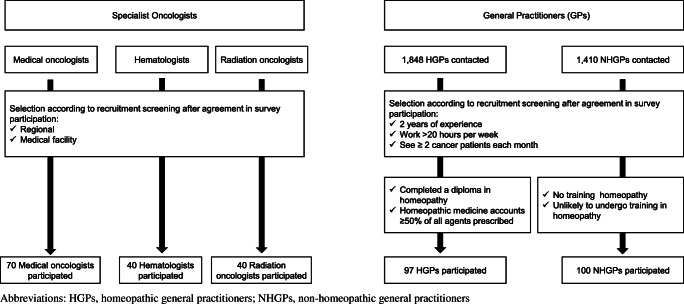
Materials and methods: Two cross-sectional surveys of French physicians were conducted involving (1) 150 specialist oncologists; (2) 97 HGPs and 100 NHGPs. Questions evaluated physician attitudes to homeopathy and patterns of use of homeopathic therapies in patients requiring SCO. Survey responses were described and analyzed on the basis of physician status.
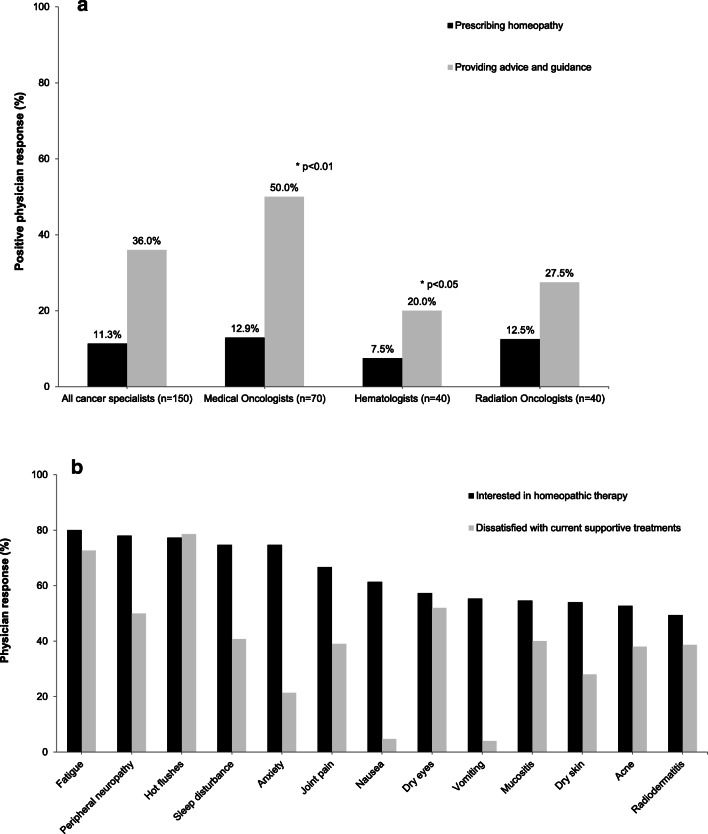
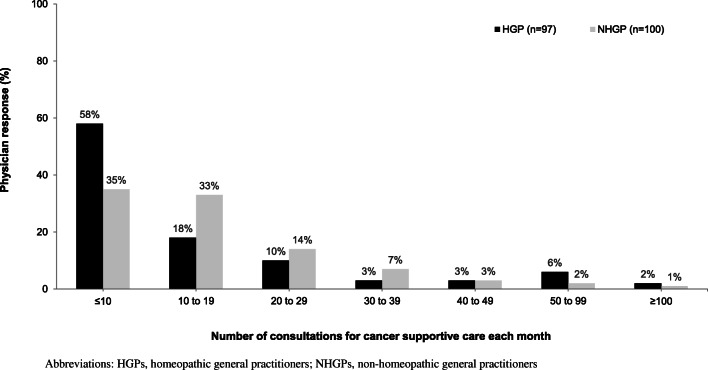
Results: Ten percent of oncologists stated they prescribe homeopathy; 36% recommend it; 54% think that homeopathy is potentially helpful in SCO. Two-thirds of the NHGPs sometimes prescribe homeopathy in the context of SCO and 58% regularly refer their patients to homeopathic doctors. HGPs have a positive perception of homeopathy in SCO.
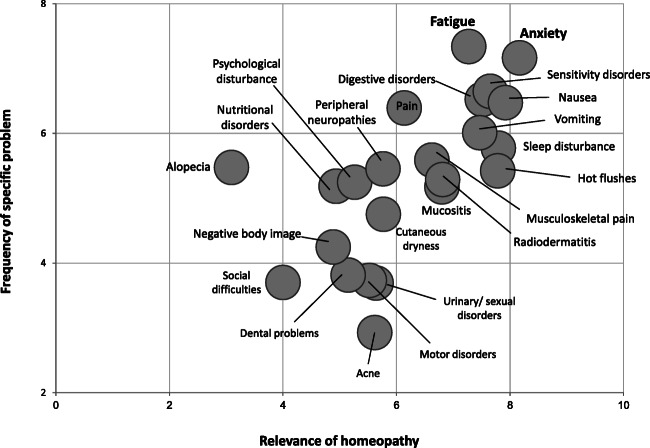
Conclusions: Homeopathy is viewed favorably as an integrated SCO therapy by the majority of French physicians involved with cancer patients-oncologists and GPs. Symptoms of particular relevance include fatigue, anxiety, peripheral neuropathy, sleep disturbance, and hot flashes. In such clinical situations, response to conventional therapies may be suboptimal and homeopathy is considered a reliable therapeutic option. These two studies highlight the fact that homeopathy has gained legitimacy as the first complementary therapy in SCO in France.
Keywords: Cancer patient; General practitioner; Homeopathy; Integrative oncology; Oncologist; Supportive care in oncology.
© 2021. The Author(s).
Conflict of interest statement
JLB has received grants and personal fees from Boiron SA, Weleda SA and Rochal-Lehning for expert reports, conferences, advisory and training activities. IT has received grants and personal fees from Boiron SA and Teva for expert reports, conferences, advisory and training activities. AS is an employee of Boiron SA.
Figures
References
-
- Circulaire N″DHOS/SDO/2005/101 du 22 février 2005 relative à l’organisation des soins en cancérologie. Circular of 22 February, 2005, regarding The Organisation of Cancer Care - PubMed
-
- Colombat P, Antoun S, Aubry R, et al. Setting up supportive care in oncology: reflexions and suggestions. Bull Cancer. 2009;96(suppl 2):67–79. - PubMed
-
- Krakowski IBF, Bugat R, Chassignol L, et al. Pour une coordination des soins de support pour les personnes atteintes de maladies graves: proposition d’organisation dans les établissements de soins publics et privés [For a coordination of the supportive care for people affected by severe illnesses: proposition of organization in the public and private health care centres] Oncologie. 2004;6:7–15. doi: 10.1007/s10269-004-0008-9. - DOI - PubMed
MeSH terms
LinkOut - more resources
Full Text Sources
Other Literature Sources
Medical
