


Electroacupuncture facilitates the integration of a grafted TrkC-modified mesenchymal stem cell-derived neural network into transected spinal cord in rats via increasing neurotrophin-3
- PMID: 33763978
- PMCID: PMC8193704
- DOI: 10.1111/cns.13638
Electroacupuncture facilitates the integration of a grafted TrkC-modified mesenchymal stem cell-derived neural network into transected spinal cord in rats via increasing neurotrophin-3
Abstract
Aims: This study was aimed to investigate whether electroacupuncture (EA) would increase the secretion of neurotrophin-3 (NT-3) from injured spinal cord tissue, and, if so, whether the increased NT-3 would promote the survival, differentiation, and migration of grafted tyrosine kinase C (TrkC)-modified mesenchymal stem cell (MSC)-derived neural network cells. We next sought to determine if the latter would integrate with the host spinal cord neural circuit to improve the neurological function of injured spinal cord.
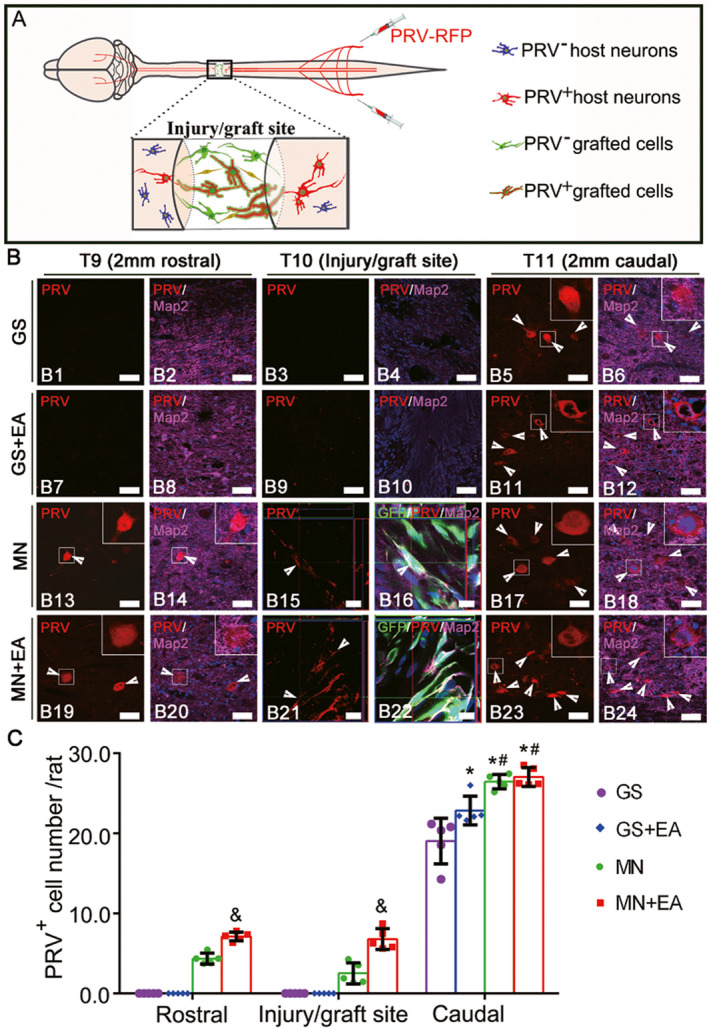
Methods: After NT-3-modified Schwann cells (SCs) and TrkC-modified MSCs were co-cultured in a gelatin sponge scaffold for 14 days, the MSCs differentiated into neuron-like cells that formed a MSC-derived neural network (MN) implant. On this basis, we combined the MN implantation with EA in a rat model of spinal cord injury (SCI) and performed immunohistochemical staining, neural tracing, electrophysiology, and behavioral testing after 8 weeks.
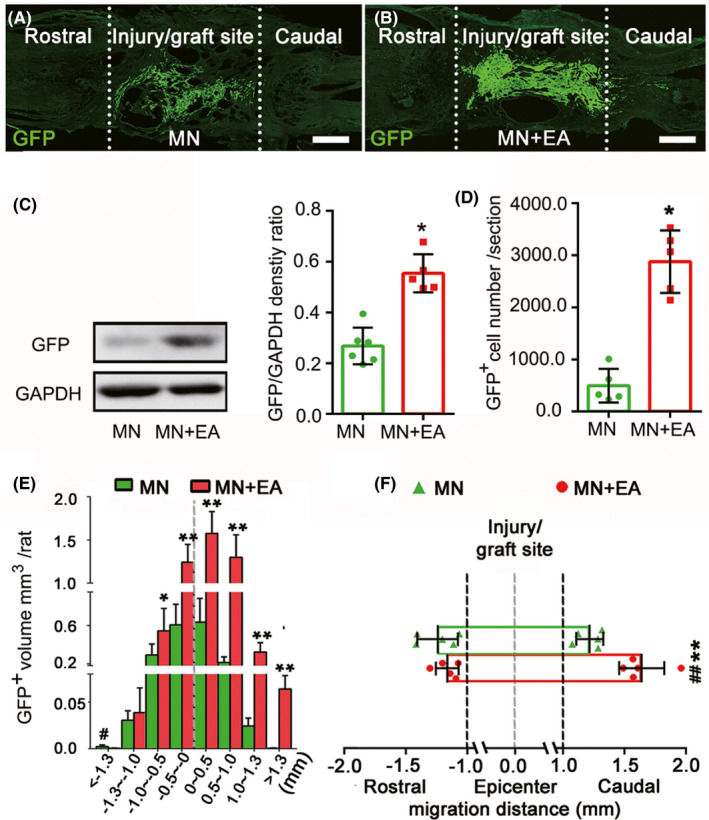
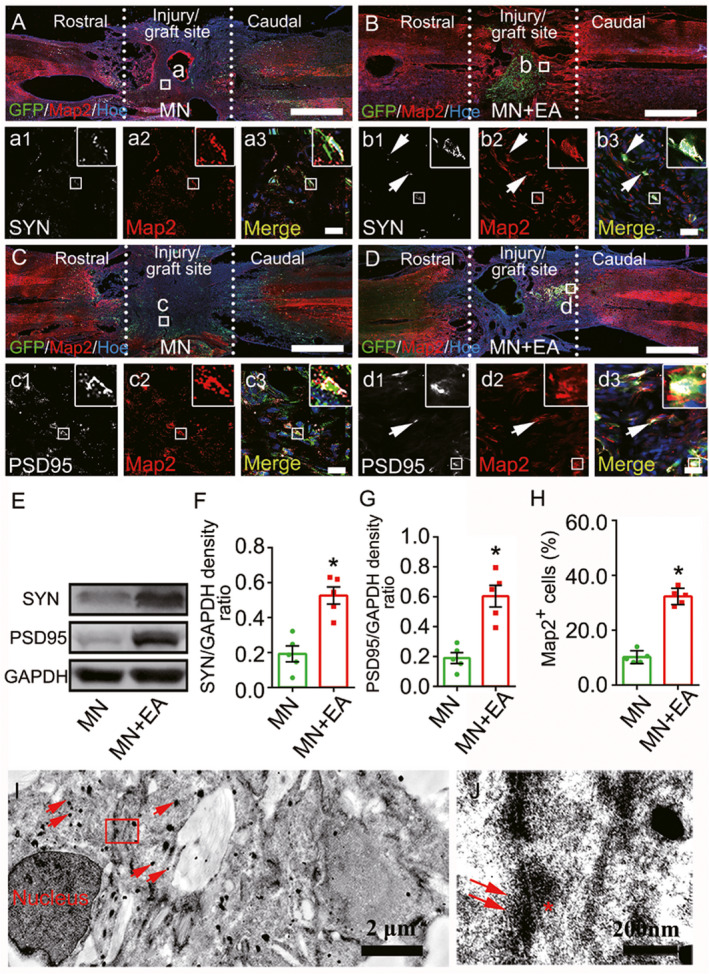
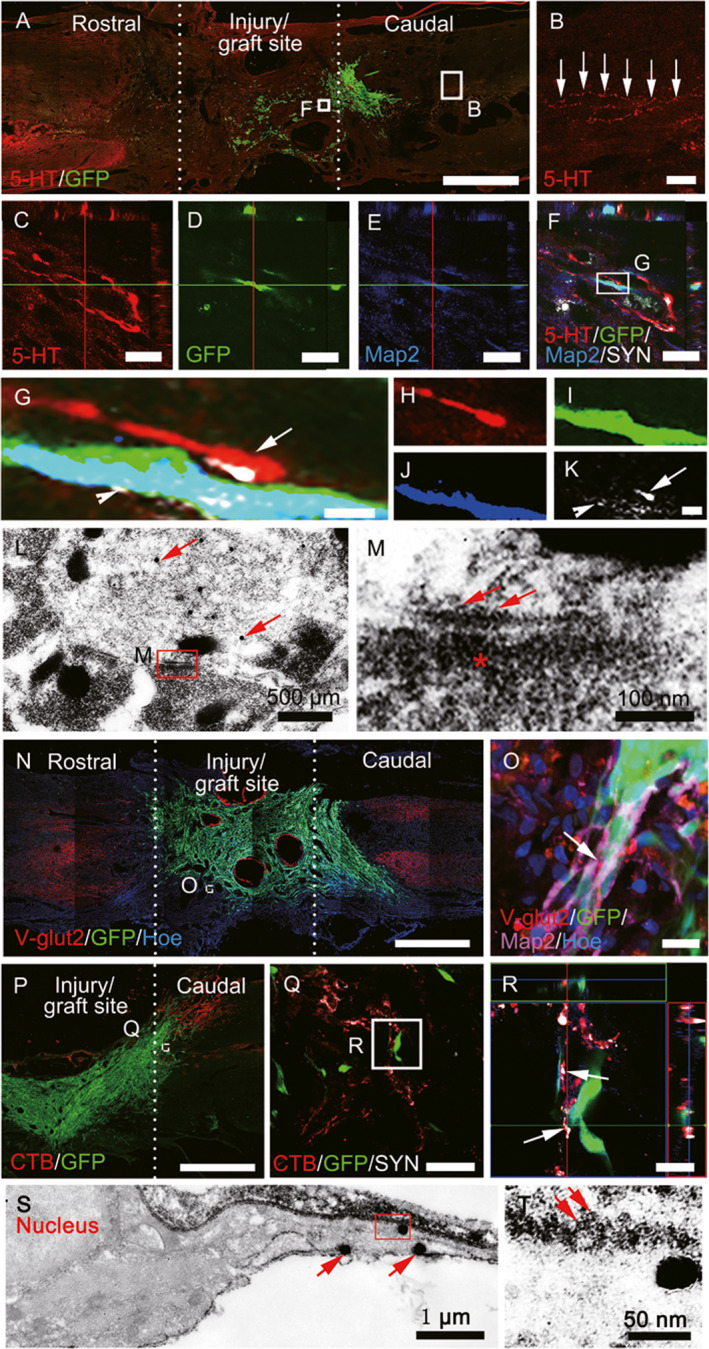
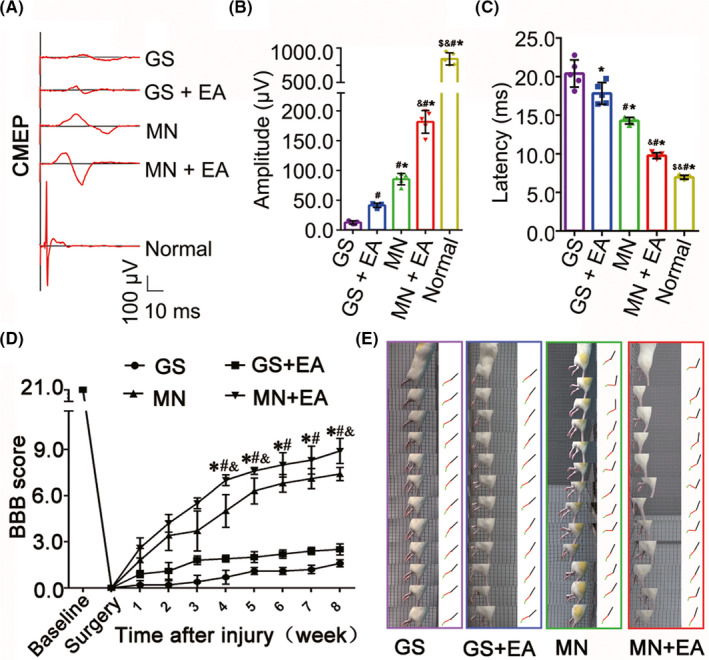
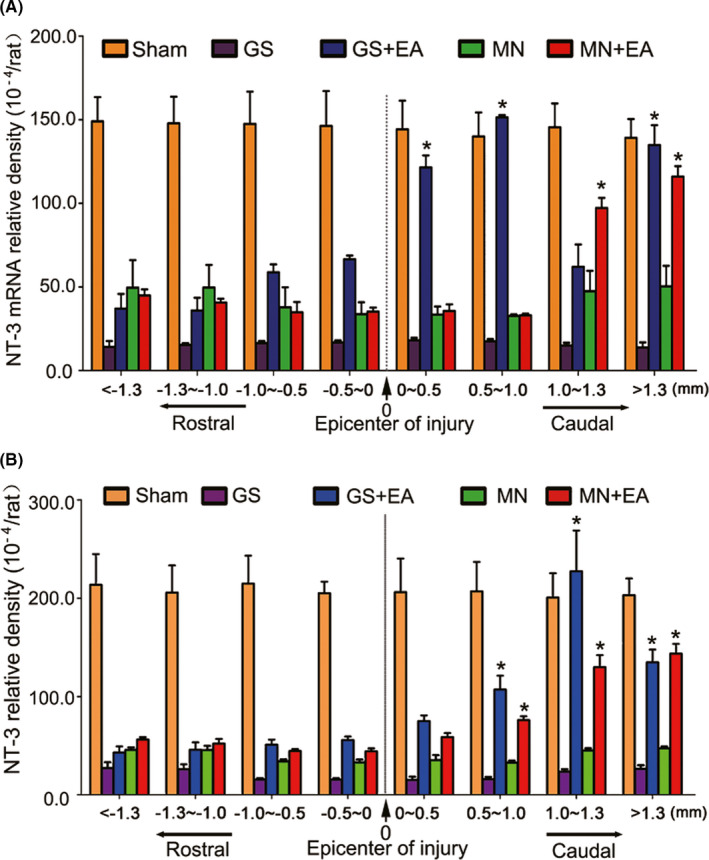
Results: Electroacupuncture application enhanced the production of endogenous NT-3 in damaged spinal cord tissues. The increase in local NT-3 production promoted the survival, migration, and maintenance of the grafted MN, which expressed NT-3 high-affinity TrkC. The combination of MN implantation and EA application improved cortical motor-evoked potential relay and facilitated the locomotor performance of the paralyzed hindlimb compared with those of controls. These results suggest that the MN was better integrated into the host spinal cord neural network after EA treatment compared with control treatment.
Conclusions: Electroacupuncture as an adjuvant therapy for TrkC-modified MSC-derived MN, acted by increasing the local production of NT-3, which accelerated neural network reconstruction and restoration of spinal cord function following SCI.
Keywords: electroacupuncture; implantation; mesenchymal stem cells; neural tracing; neurotrophin-3; spinal cord injury; tissue engineering neural network; tyrosine kinase C.
© 2021 The Authors. CNS Neuroscience & Therapeutics published by John Wiley & Sons Ltd.
Conflict of interest statement
The authors have no financial conflicts of interest.
Figures
References
-
- Fan C, Li X, Zhao Y, et al. Cetuximab and taxol co‐modified collagen scaffolds show combination effects for the repair of acute spinal cord injury. Biomaterials Sci. 2018;6:1723‐1734. - PubMed
-
- Olson L. Combinatory treatments needed for spinal cord injury. Exp Neurol. 2013;248:309‐315. - PubMed
-
- Du BL, Xiong Y, Zeng CG, et al. Transplantation of artificial neural construct partly improved spinal tissue repair and functional recovery in rats with spinal cord transection. Brain Res. 2011;1400:87‐98. - PubMed
-
- Wu H, Ding L, Wang Y, et al. MiR‐615 regulates NSC differentiation in vitro and contributes to spinal cord injury repair by targeting LINGO‐1. Mol Neurobiol. 2020;57:3057‐3074. - PubMed
Publication types
MeSH terms
Substances
Grants and funding
LinkOut - more resources
Full Text Sources
Other Literature Sources
Medical
Molecular Biology Databases
Research Materials
