


Respectful maternal and newborn care: measurement in one EN-BIRTH study hospital in Nepal
- PMID: 33765971
- PMCID: PMC7995692
- DOI: 10.1186/s12884-020-03516-4
Respectful maternal and newborn care: measurement in one EN-BIRTH study hospital in Nepal
Abstract
Background: Respectful maternal and newborn care (RMNC) is an important component of high-quality care but progress is impeded by critical measurement gaps for women and newborns. The Every Newborn Birth Indicators Research Tracking in Hospitals (EN-BIRTH) study was an observational study with mixed methods assessing measurement validity for coverage and quality of maternal and newborn indicators. This paper reports results regarding the measurement of respectful care for women and newborns.
Methods: At one EN-BIRTH study site in Pokhara, Nepal, we included additional questions during exit-survey interviews with women about their experiences (July 2017-July 2018). The questionnaire was based on seven mistreatment typologies: Physical; Sexual; or Verbal abuse; Stigma/discrimination; Failure to meet professional standards of care; Poor rapport between women and providers; and Health care denied due to inability to pay. We calculated associations between these typologies and potential determinants of health - ethnicity, age, sex, mode of birth - as possible predictors for reporting poor care.
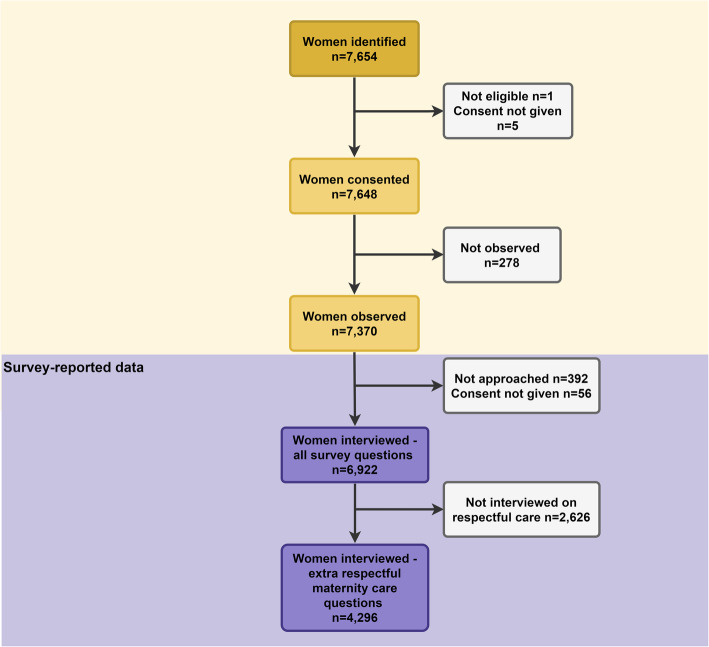
Results: Among 4296 women interviewed, none reported physical, sexual, or verbal abuse. 15.7% of women were dissatisfied with privacy, and 13.0% of women reported their birth experience did not meet their religious and cultural needs. In descriptive analysis, adjusted odds ratios and multivariate analysis showed primiparous women were less likely to report respectful care (β = 0.23, p-value < 0.0001). Women from Madeshi (a disadvantaged ethnic group) were more likely to report poor care (β = - 0.34; p-value 0.037) than women identifying as Chettri/Brahmin. Women who had caesarean section were less likely to report poor care during childbirth (β = - 0.42; p-value < 0.0001) than women with a vaginal birth. However, babies born by caesarean had a 98% decrease in the odds (aOR = 0.02, 95% CI, 0.01-0.05) of receiving skin-to-skin contact than those with vaginal births.
Conclusions: Measurement of respectful care at exit interview after hospital birth is challenging, and women generally reported 100% respectful care for themselves and their baby. Specific questions, with stratification by mode of birth, women's age and ethnicity, are important to identify those mistreated during care and to prioritise action. More research is needed to develop evidence-based measures to track experience of care, including zero separation for the mother-newborn pair, and to improve monitoring.
Keywords: Coverage; Delivery; Maternal; Mistreatment; Nepal; Newborn; Privacy; Respect; Respectful maternal and newborn care; Standard of care.
Conflict of interest statement
The authors declare that they have no competing interests.
Figures
References
-
- United Nations Inter-agency Group for Child Mortality E . Levels & Trends in Child Mortality 2020, Estimates developed by the United Nations Inter-agency Group for Child Mortality Estimation. New York: United Nations Children’s Fund; 2020.
-
- Countdown to 2030: Tracking progress towards universal coverage for reproductive, maternal, newborn, and child health. Lancet. 2018;391(10129):1538–48. - PubMed
-
- Grollman C, Arregoces L, Martinez-Alvarez M, Pitt C, Mills A, Borghi J. 11 years of tracking aid to reproductive, maternal, newborn, and child health: estimates and analysis for 2003-13 from the countdown to 2015. Lancet Glob Health. 2017;5(1):e104–e114. doi: 10.1016/S2214-109X(16)30304-7. - DOI - PMC - PubMed
Publication types
MeSH terms
Grants and funding
LinkOut - more resources
Full Text Sources
Other Literature Sources
Medical
Research Materials
