


Nurses' knowledge and attitudes towards palliative care and death: a learning intervention
- PMID: 33765995
- PMCID: PMC7993469
- DOI: 10.1186/s12904-021-00738-x
Nurses' knowledge and attitudes towards palliative care and death: a learning intervention
Abstract
Background: In many countries, nurses are ill-prepared to provide care to patients with terminal illnesses. Limited education and training affect their ability to deliver proper palliative care. Only a few studies have explored appropriate and effective training methods of palliative care in China. Therefore, we aimed to provide evidence for a palliative care training system by appraising the effects of a mixed-method intervention on participants' knowledge of palliative care and attitudes towards dying patients and death.
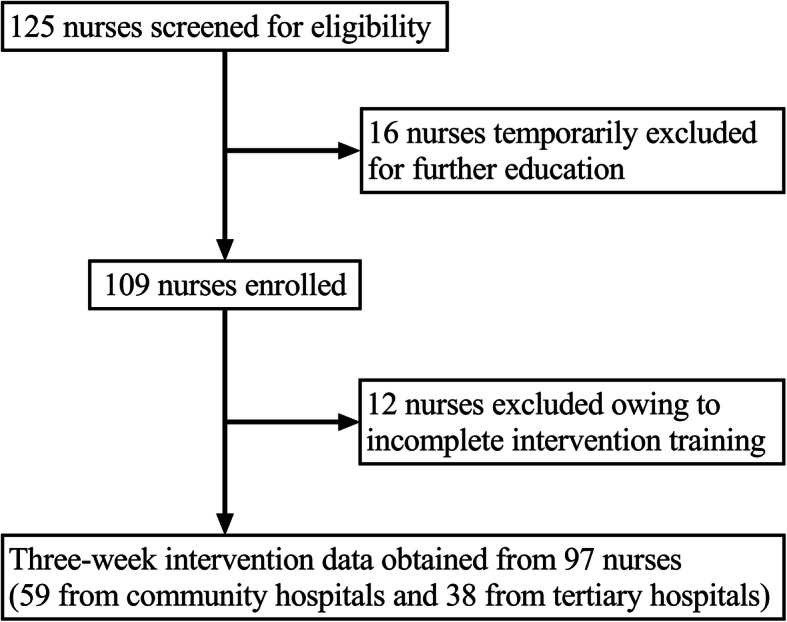
Methods: An e-learning intervention approach was adopted for 97 nurses from oncology departments across five hospitals, using a mobile terminal combined with a virtual forum and face-to-face interactions. We conducted a pre- and post-training evaluation through the Palliative Care Quiz of Nursing (PCQN), Frommelt Attitude Toward Care of the Dying Scale Form B (FATCOD-B), and Death Attitude Profile-Revised (DAP-R).
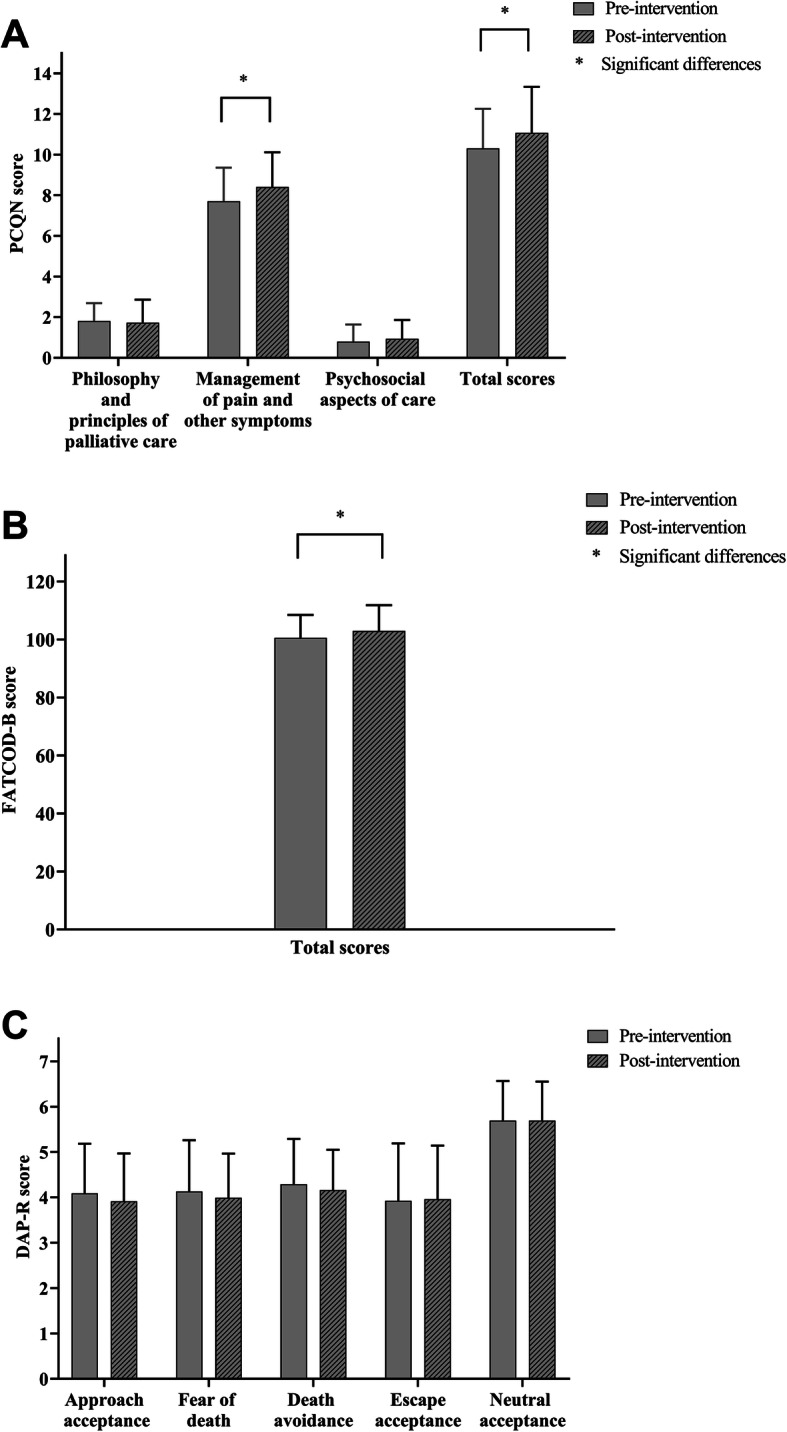
Results: After a three-week intervention, there was a significant increase in the PCQN and FATCOD-B scores as compared to the baseline. For PCQN, the total score increased from 10.3 ± 1.9 to 11.1 ± 2.2 (p = .011) and the score for management of pain and other symptoms increased from 7.7 ± 1.7 to 8.4 ± 1.7 (p = .003). FATCOD-B scores increased noticeably from 100.6 ± 7.9 to 102.9 ± 8.9 (p = .019). The DAP-R scores showed no obvious difference between pre- and post-intervention results.
Conclusions: The mixed-method intervention was effective in improving participants' knowledge and attitudes about palliative care. The implementation of training for nurses at appropriate intervals during both education and professional life is required, especially regarding the improvement in participants' attitudes towards death. Therefore, palliative care training in China should receive more attention.
Keywords: Attitude; Internet-based intervention; Knowledge; Nursing; Palliative care.
Conflict of interest statement
The authors declare that they have no competing interests.
Figures
References
-
- World Health Organization. Global Health Observatory. Geneva: World Health Organization. 2018. http://who.int/gho/database/en/. Accessed 21 June 2018.
-
- Hall S, Petkova H, Tsouros AD, et al. Palliative care for older people: better practices. Copenhagen: World Health Organization; 2011.
-
- The Hospice and Palliative Nurse Association. Ensuring high quality in palliative care. J Hosp Palliat Nurs2018;20(6):E10–E12. doi:10.1097/NJH.00000000000 00520. - PubMed
-
- National Health Commission of the People’s Republic of China. Notice of the National Health and Family Planning Commission on the issuance of the basic standards and management norms for palliative care centres (trial). 2017. http://www.nhc.gov.cn/cms-search/xxgk/getManuscriptXxgk.htm?id=83797c026.... Accessed 27 February 2021.
MeSH terms
Grants and funding
LinkOut - more resources
Full Text Sources
Other Literature Sources
Medical
