


Comparative proteomic profiling of newly acquired, virulent and attenuated Neoparamoeba perurans proteins associated with amoebic gill disease
- PMID: 33767232
- PMCID: PMC7994405
- DOI: 10.1038/s41598-021-85988-8
Comparative proteomic profiling of newly acquired, virulent and attenuated Neoparamoeba perurans proteins associated with amoebic gill disease
Erratum in
-
Author Correction: Comparative proteomic profiling of newly acquired, virulent and attenuated Neoparamoeba perurans proteins associated with amoebic gill disease.Sci Rep. 2021 Nov 9;11(1):22287. doi: 10.1038/s41598-021-01760-y. Sci Rep. 2021. PMID: 34754065 Free PMC article. No abstract available.
Abstract
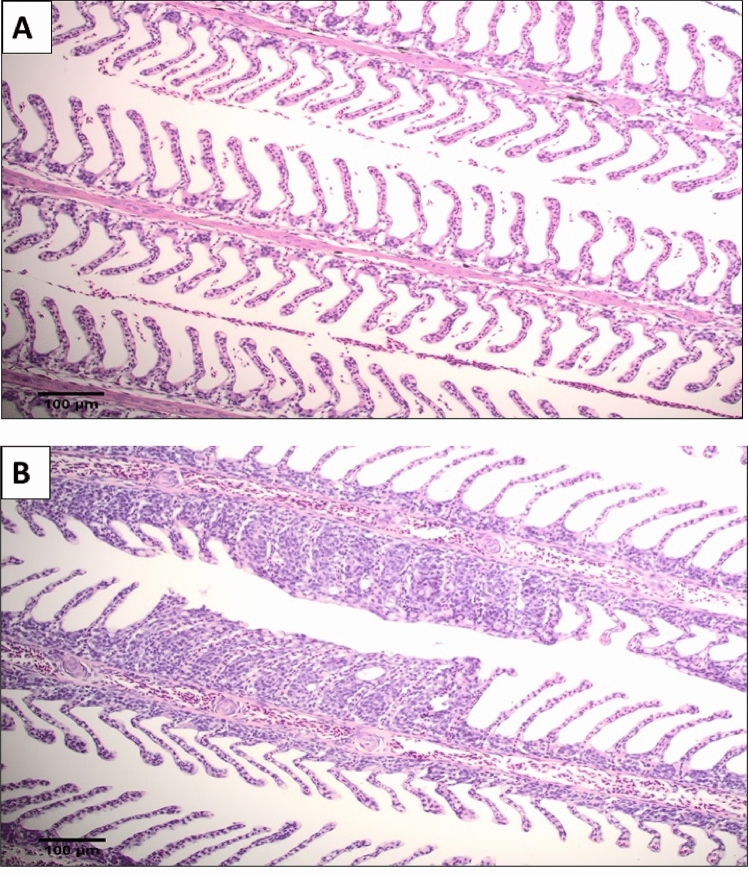
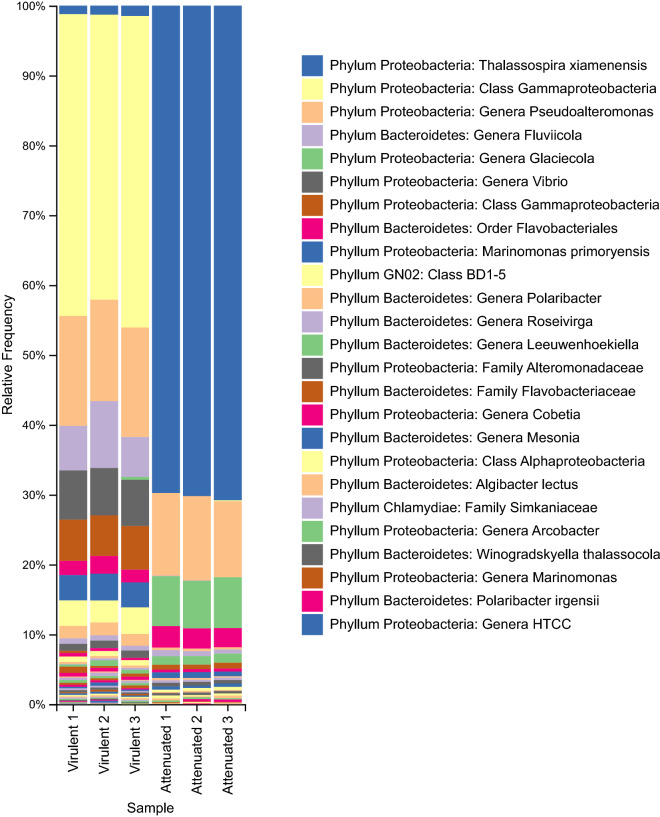
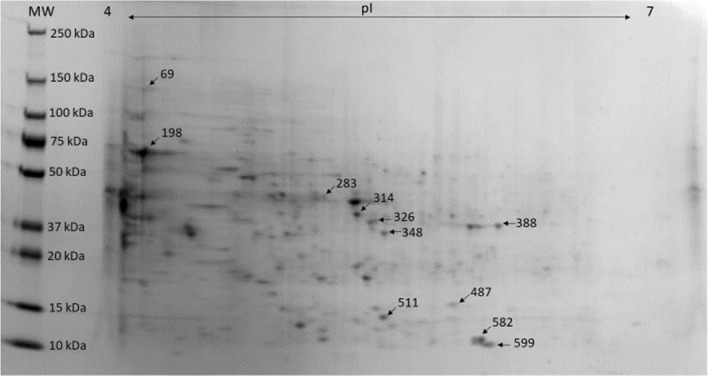
The causative agent of amoebic gill disease, Neoparamoeba perurans is reported to lose virulence during prolonged in vitro maintenance. In this study, the impact of prolonged culture on N. perurans virulence and its proteome was investigated. Two isolates, attenuated and virulent, had their virulence assessed in an experimental trial using Atlantic salmon smolts and their bacterial community composition was evaluated by 16S rRNA Illumina MiSeq sequencing. Soluble proteins were isolated from three isolates: a newly acquired, virulent and attenuated N. perurans culture. Proteins were analysed using two-dimensional electrophoresis coupled with liquid chromatography tandem mass spectrometry (LC-MS/MS). The challenge trial using naïve smolts confirmed a loss in virulence in the attenuated N. perurans culture. A greater diversity of bacterial communities was found in the microbiome of the virulent isolate in contrast to a reduction in microbial community richness in the attenuated microbiome. A collated proteome database of N. perurans, Amoebozoa and four bacterial genera resulted in 24 proteins differentially expressed between the three cultures. The present LC-MS/MS results indicate protein synthesis, oxidative stress and immunomodulation are upregulated in a newly acquired N. perurans culture and future studies may exploit these protein identifications for therapeutic purposes in infected farmed fish.
Conflict of interest statement
The authors declare no competing interests.
Figures
References
-
- Young N, Crosbie P, Adams M, Nowak B, Morrison R. Neoparamoeba perurans n. sp., an agent of amoebic gill disease of Atlantic salmon (Salmo salar) Int. J. Parasitol. 2007;37:1469–1481. - PubMed
-
- Munday, B. L. Diseases of salmonids. In Proceedings of the workshop on diseases of Australian fish and shellfish 1986 (pp. 127–141). Australian Fish Health Reference Laboratory.
-
- Bridle AR, Morrison RN, Nowak BF. The expression of immune-regulatory genes in rainbow trout, Oncorhynchus mykiss, during amoebic gill disease (AGD) Fish Shellfish Immunol. 2006;20:346–364. - PubMed
-
- Dyková I, Figueras A, Novoa B, Casal JF. Paramoeba sp., an agent of amoebic gill disease of turbot Scophthalmus maximus. Dis. Aquat. Org. 1998;33(2):137–141. - PubMed
-
- Mitchell S, Rodger H. A review of infectious gill disease in marine salmonid fish. J. Fish Dis. 2011;34:411–432. - PubMed
Publication types
MeSH terms
Substances
Supplementary concepts
LinkOut - more resources
Full Text Sources
Other Literature Sources
