


A 3D analysis of growth trajectory and integration during early human prenatal facial growth
- PMID: 33767268
- PMCID: PMC7994314
- DOI: 10.1038/s41598-021-85543-5
A 3D analysis of growth trajectory and integration during early human prenatal facial growth
Abstract
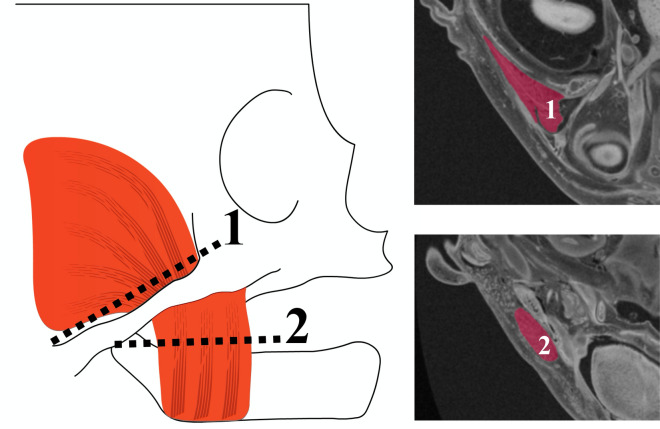
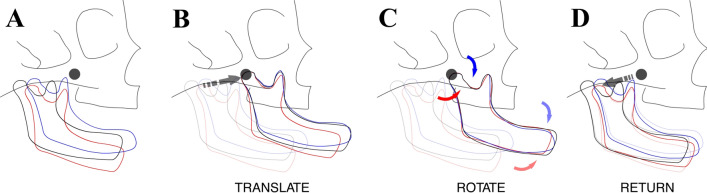
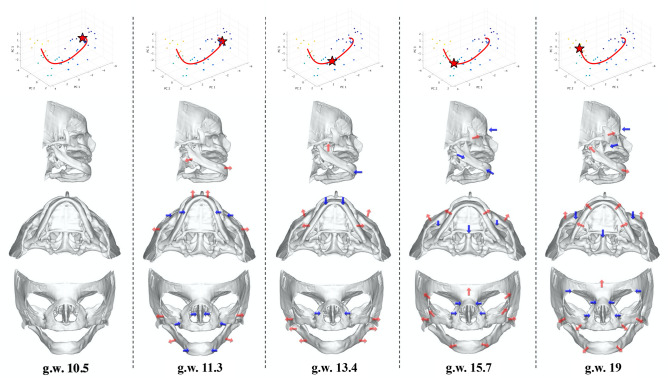
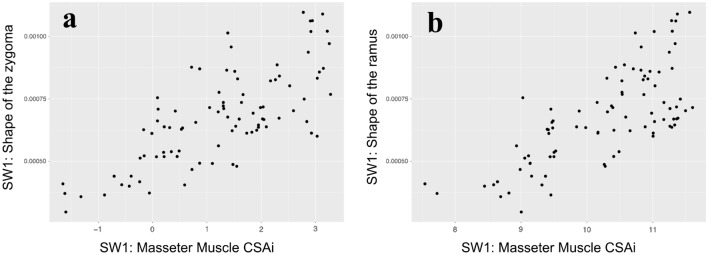
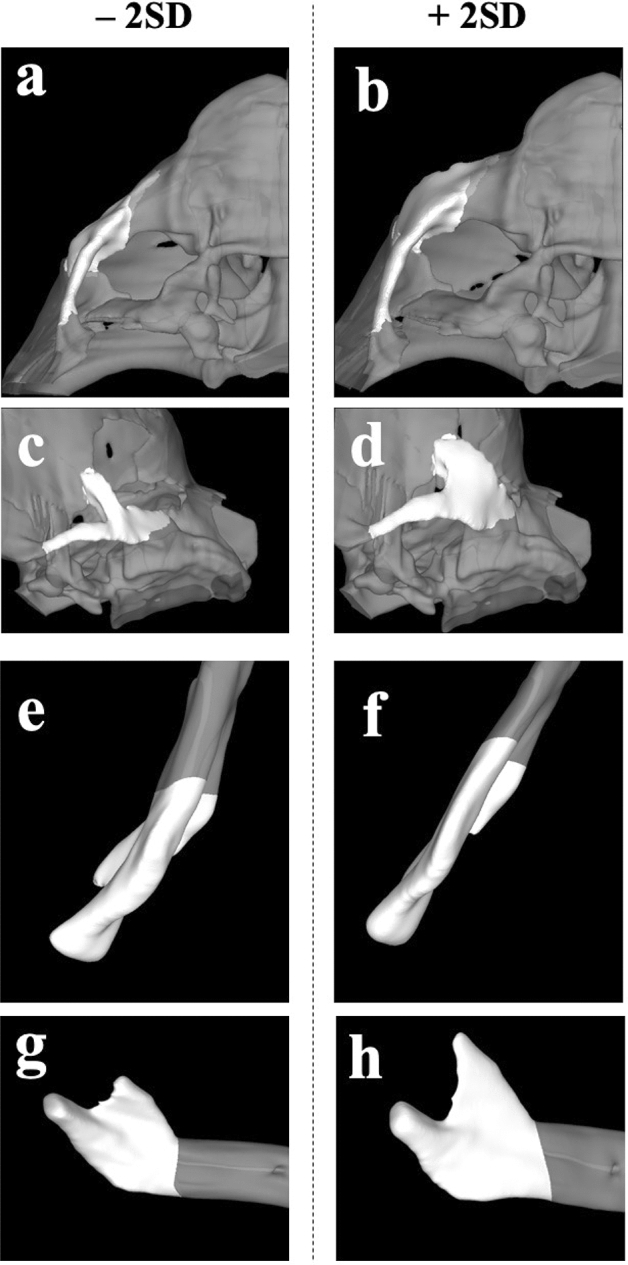
Significant shape changes in the human facial skeleton occur in the early prenatal period, and understanding this process is critical for studying a myriad of congenital facial anomalies. However, quantifying and visualizing human fetal facial growth has been challenging. Here, we applied quantitative geometric morphometrics (GM) to high-resolution magnetic resonance images of human embryo and fetuses, to comprehensively analyze facial growth. We utilized non-linear growth estimation and GM methods to assess integrated epigenetic growth between masticatory muscles and associated bones. Our results show that the growth trajectory of the human face in the early prenatal period follows a curved line with three flexion points. Significant antero-posterior development occurs early, resulting in a shift from a mandibular prognathic to relatively orthognathic appearance, followed by expansion in the lateral direction. Furthermore, during this time, the development of the zygoma and the mandibular ramus is closely integrated with the masseter muscle.
Conflict of interest statement
The authors declare no competing interests.
Figures
References
-
- Carlson DS. Theories of craniofacial growth in the postgenomic era. Semin. Orthod. 2005;11:172–183. doi: 10.1053/j.sodo.2005.07.002. - DOI
-
- DeMyer W, Zeman W, Palmer C. The face predicts the brain: Diagnostic significance of median facial anomalies for holoprosencephaly (arhinencephaly) Pediatrics. 1964;2:256–256. - PubMed
Publication types
MeSH terms
LinkOut - more resources
Full Text Sources
Other Literature Sources
