


Viral etiology and epidemiology of pediatric patients hospitalized for acute respiratory tract infections in Macao: a retrospective study from 2014 to 2017
- PMID: 33771128
- PMCID: PMC7995389
- DOI: 10.1186/s12879-021-05996-x
Viral etiology and epidemiology of pediatric patients hospitalized for acute respiratory tract infections in Macao: a retrospective study from 2014 to 2017
Abstract
Background: Acute respiratory infections (ARIs) are among the leading causes of hospitalization in children. Understanding the local dominant viral etiologies is important to inform infection control practices and clinical management. This study aimed to investigate the viral etiology and epidemiology of respiratory infections among pediatric inpatients in Macao.
Methods: A retrospective study using electronic health records between 2014 and 2017 at Kiang Wu Hospital was performed. Nasopharyngeal swab specimens were obtained from hospitalized children aged 13 years or younger with respiratory tract diseases. xMAP multiplex assays were employed to detect respiratory agents including 10 respiratory viruses. Data were analyzed to describe the frequency and seasonality.
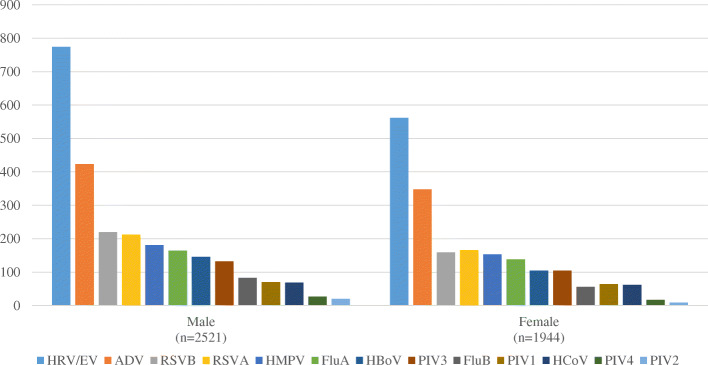
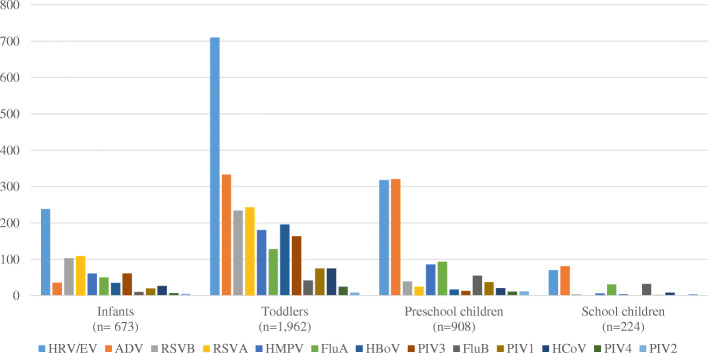
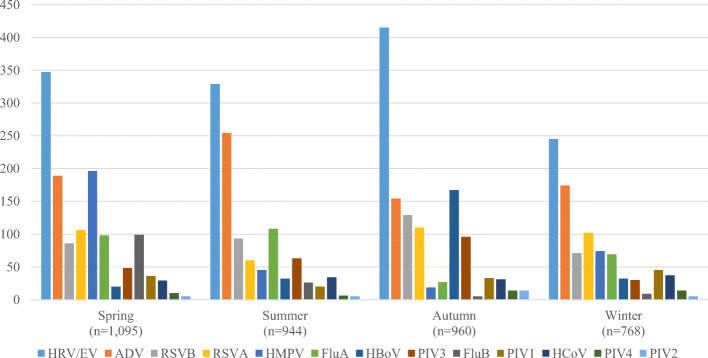
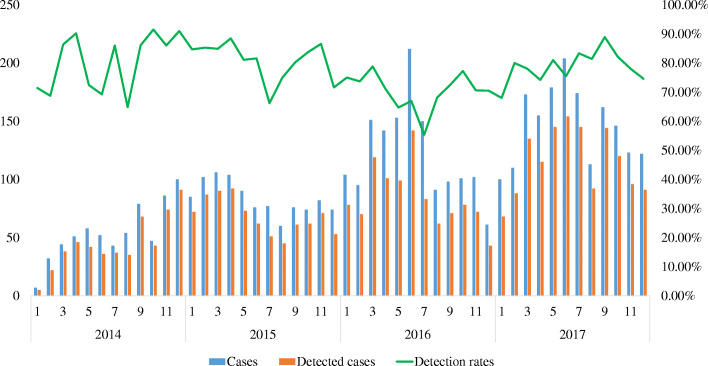
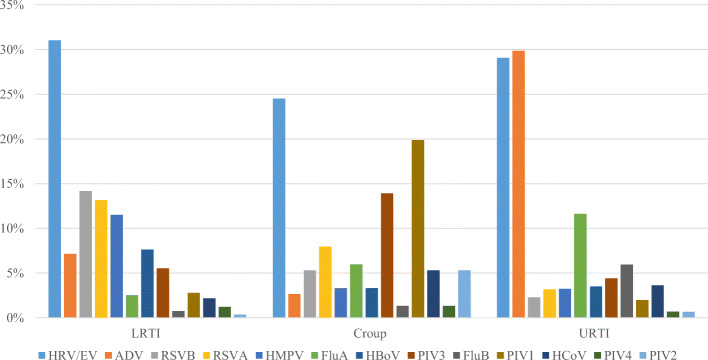
Results: Of the 4880 children enrolled in the study, 3767 (77.1%) were positive for at least one of the 13 viral pathogens tested, of which 2707 (55.5%) being male and 2635 (70.0%) under 2 years old. Among the positive results, there were 3091 (82.0%) single infections and 676 (18.0%) multiple infections. The predominant viruses included human rhinovirus/enterovirus (HRV/EV 27.4%), adenovirus (ADV, 15.8%), respiratory syncytial virus B (RSVB, 7.8%) and respiratory syncytial virus A (RSVA, 7.8%). The detection of viral infection was the most prevalent in autumn (960/1176, 81.6%), followed by spring (1095/1406, 77.9%), winter (768/992, 77.4%), and summer (944/1306, 72.3%), with HRV/EV and ADV being most commonly detected throughout the 4 years of study period. The detection rate of viral infection was highest among ARI patients presented with croup (123/141, 87.2%), followed by lower respiratory tract infection (1924/2356, 81.7%) and upper respiratory tract infection (1720/2383, 72.2%). FluA, FluB and ADV were positive factors for upper respiratory tract infections. On the other hand, infection with RSVA, RSVB, PIV3, PIV4, HMPV, and EV/RHV were positively associated with lower respiratory tract infections; and PIV1, PIV2, and PIV3 were positively associated with croup.
Conclusions: This is the first study in Macao to determine the viral etiology and epidemiology of pediatric patients hospitalized for ARIs. The study findings can contribute to the awareness of pathogen, appropriate preventative measure, accurate diagnosis, and proper clinical management of respiratory viral infections among children in Macao.
Keywords: Acute respiratory infections; Children; Epidemiology; Macao; Respiratory viruses; Viral etiology.
Conflict of interest statement
No.
Figures
References
-
- Forum of International Respiratory Societies (FIRS) Respiratory diseases in the world: realities of today—opportunities for tomorrow. 2014.
-
- Vos T, Barber RM, Bell B, et al. Global, regional, and national incidence, prevalence, and years lived with disability for 301 acute and chronic diseases and injuries in 188 countries, 1990–2013: a systematic analysis for the Global Burden of Disease Study 2013. Lancet. 2015;386:743–800. doi: 10.1016/S0140-6736(15)60692-4. - DOI - PMC - PubMed
-
- Abubakar II, Tillmann T, Banerjee A. Global, regional, and national age-sex specific all-cause and cause-specific mortality for 240 causes of death, 1990-2013: a systematic analysis for the global burden of disease study 2013. Lancet. 2015;385(9963):117–171. doi: 10.1016/S0140-6736(14)61682-2. - DOI - PMC - PubMed
MeSH terms
LinkOut - more resources
Full Text Sources
Other Literature Sources
Medical
