


Mass mortality events of autochthonous faunas in a Lower Cretaceous Gondwanan Lagerstätte
- PMID: 33772067
- PMCID: PMC7997927
- DOI: 10.1038/s41598-021-85953-5
Mass mortality events of autochthonous faunas in a Lower Cretaceous Gondwanan Lagerstätte
Abstract
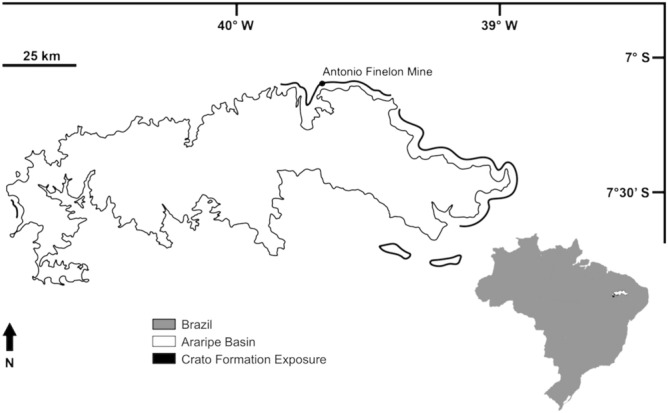
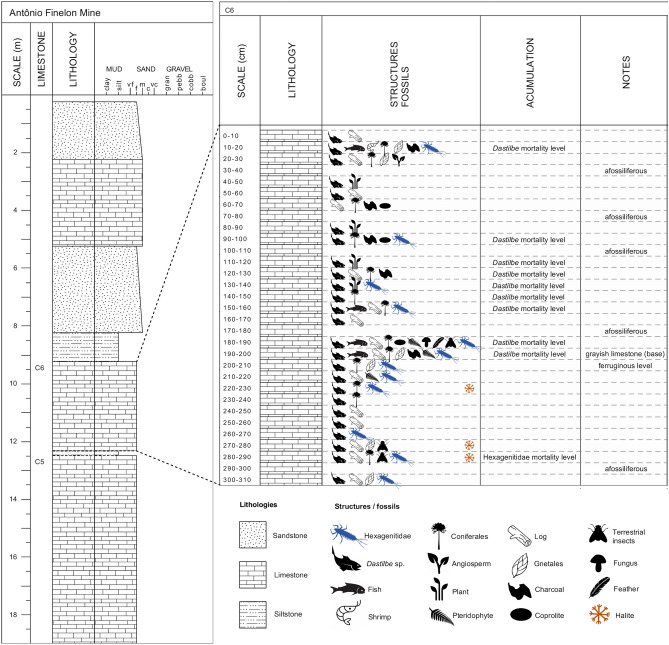
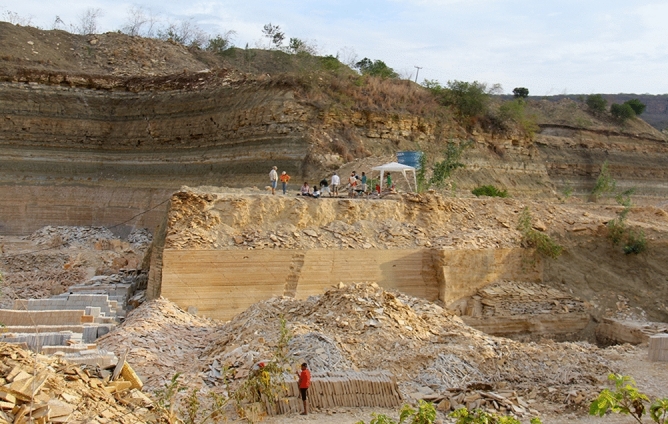
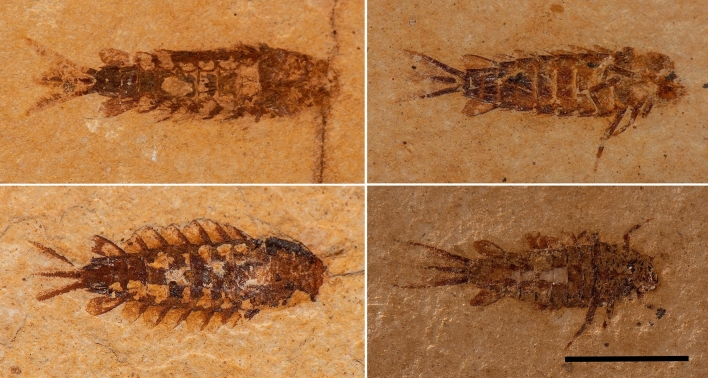
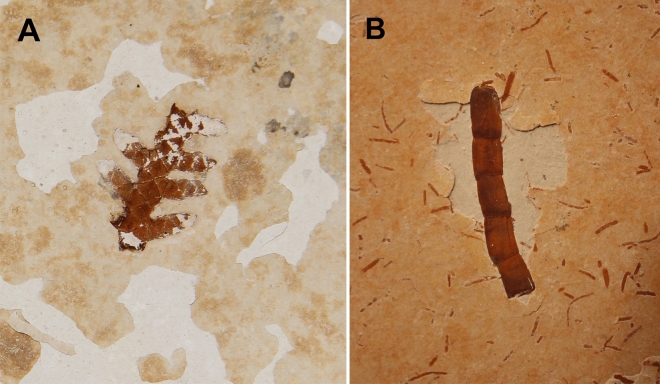
Mass mortality events are unusual in the Crato Formation. Although mayflies' accumulations have been previously reported from that unit, they lacked crucial stratigraphic data. Here we provide the first taphonomic analysis of a mayfly mass mortality event, from a layer 285 cm from the top of the Formation, with 40 larvae, and an overview of the general biological community structure of a three meters deep excavated profile. The only other autochthonous taxon observed in the mayfly mortality layer was the gonorynchiform fish Dastilbe. The larvae and fishes were smaller than usual in the layer 285 cm, suggesting that they lived in a shallow water column. Their excellent preservation and a lack of preferential orientation in the samples suggest an absence of significant transport. All mayflies belong to the Hexagenitidae, whose larvae lived in quiet waters. We also recovered allochthonous taxa in that layer indicative of drier weather conditions. Adjacent layers presented crystals and pseudomorphs of halite, suggesting drought and high salinity. In other layers, Dastilbe juveniles were often found in mass mortality events, associated with a richer biota. Our findings support the hypothesis that the Crato Formation's palaeolake probably experienced seasonal high evaporation, caused by the hot climate tending to aridity, affecting the few autochthonous fauna that managed to live in this setting.
Conflict of interest statement
The authors declare no competing interests.
Figures


References
-
- Neumann VH, Borrego AG, Cabrera L, Dino R. Organic matter composition and distribution through the Aptian-Albian lacustrine sequences of the Araripe Basin, northeastern Brazil. Int. J. Coal. Geol. 2003;54:21–40. doi: 10.1016/S0166-5162(03)00018-1. - DOI
-
- Heimhofer U, Martill DM. Stratigraphy of the Crato Formation. In: Martill DM, Bechly G, Loveridge RF, editors. The Crato Fossil Beds of Brazil: Window into an Ancient World. Cambridge University Press; 2007. pp. 25–43.
-
- Neumann VHML. Estratigrafía, sedimentología, geoquímica y diagénesis de los sistemas lacustres Aptienses-Albienses de la Cuenca de Araripe (Noreste de Brasil) Universidad de Barcelona; 1999.
-
- Martill DM. The geology of the Crato Formation. In: Martill DM, Bechly G, Loveridge RF, editors. The Crato Fossil Beds of Brazil: Window into an Ancient World. Cambridge University Press; 2007. pp. 8–24.
-
- Martill DM, Wilby PR. Stratigraphy. In: Martill DM, editor. Fossils of the Santana and Crato Formations, Brazil. The Palaeontological Association Field Guides to Fossils; 1993. pp. 20–50.
Publication types
LinkOut - more resources
Full Text Sources
Other Literature Sources
