


A Meta-analysis of Cognitive Remediation for Schizophrenia: Efficacy and the Role of Participant and Treatment Factors
- PMID: 33772310
- PMCID: PMC8266668
- DOI: 10.1093/schbul/sbab022
A Meta-analysis of Cognitive Remediation for Schizophrenia: Efficacy and the Role of Participant and Treatment Factors
Abstract
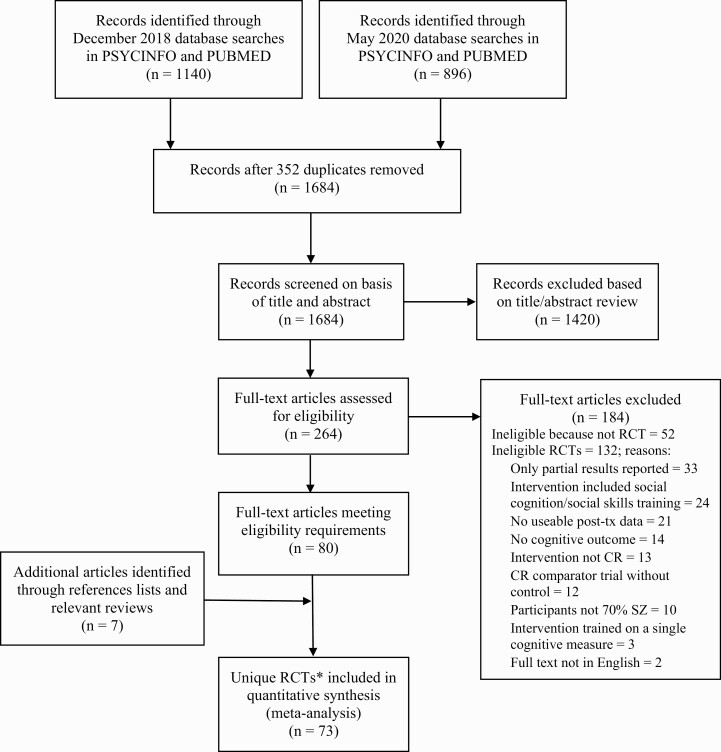
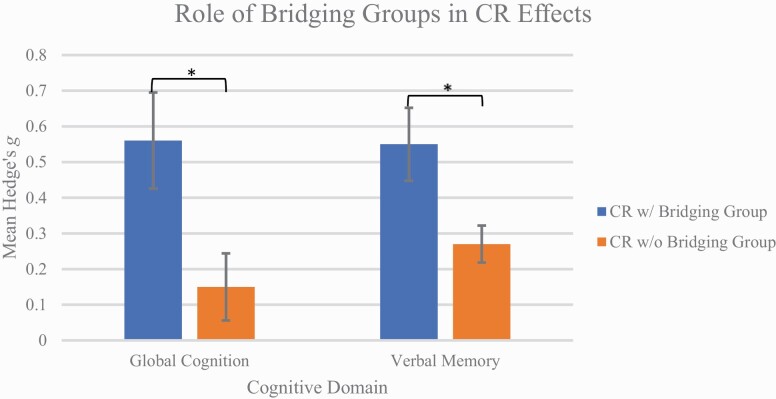
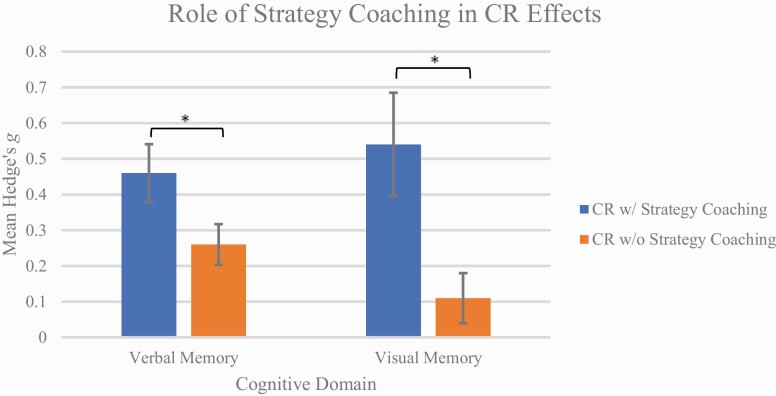
The number of randomized, controlled studies of cognitive remediation (CR) for schizophrenia, a therapeutic approach designed to improve cognitive skills and function, has grown substantially over the past 20 years. Active elements of CR treatment, however, remain unknown. The current meta-analysis investigated treatment, study, and participant factors in the size of observed treatment effects. Electronic databases were searched up to May 2020 using variants of the key words "cognitive remediation," "clinical trials," and "schizophrenia." This search produced 73 unique, randomized, controlled trials. Data were independently extracted by 3 reviewers with excellent reliability. Random-effects models were used to assess primary cognitive and secondary symptom and functional outcomes. Moderator analyses investigated the role of a variety of treatment, study, and participant factors. The meta-analysis (4594 participants) revealed that CR produced significant small-to-moderate size improvements in all domains of cognition studied (Hedge's gs = .19-.33). and a significant small improvement in function (Hedge's g = .21). CR programs that included a discussion ("bridging") group to help apply acquired cognitive skills to everyday life produced larger effects on global cognition and verbal memory. CR programs with strategy-coaching produced larger effects on episodic memory. Sample age, gender, positive, negative, and overall symptoms, and medication dose did not serve as barriers to treatment gains. CR produces small-to-moderate improvements in cognition and function in schizophrenia. Programs of CR that utilize bridging groups and strategy-coaching are more cognitively potent. Future research should focus on ways to modify CR to bolster generalization of cognitive improvements to function.
Keywords: cognitive rehabilitation; cognitive training; psychosis; severe mental illness.
© The Author(s) 2021. Published by Oxford University Press on behalf of the Maryland Psychiatric Research Center. All rights reserved. For permissions, please email: journals.permissions@oup.com.
Figures
References
Publication types
MeSH terms
LinkOut - more resources
Full Text Sources
Other Literature Sources
Medical
Miscellaneous
