


Osteoblast role in the pathogenesis of rheumatoid arthritis
- PMID: 33774802
- PMCID: PMC8060181
- DOI: 10.1007/s11033-021-06288-y
Osteoblast role in the pathogenesis of rheumatoid arthritis
Abstract
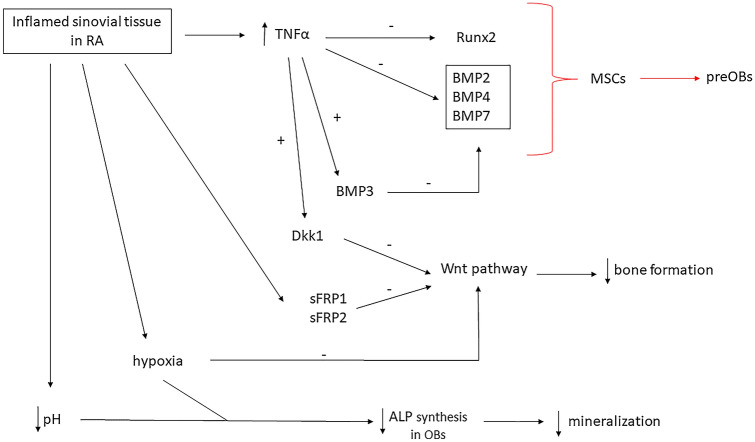
In the pathogenesis of several rheumatic diseases, such as rheumatoid arthritis, spondyloarthritis, osteoarthritis, osteoporosis, alterations in osteoblast growth, differentiation and activity play a role. In particular, in rheumatoid arthritis bone homeostasis is perturbed: in addition to stimulating the pathologic bone resorption process performed by osteoclasts in course of rheumatoid arthritis, proinflammatory cytokines (such as Tumor Necrosis factor-α, Interleukin-1) can also inhibit osteoblast differentiation and function, resulting in net bone loss. Mouse models of rheumatoid arthritis showed that complete resolution of inflammation (with maximal reduction in the expression of pro-inflammatory factors) is crucial for bone healing, performed by osteoblasts activity. In fact, abnormal activity of factors and systems involved in osteoblast function in these patients has been described. A better understanding of the pathogenic mechanisms involved in osteoblast dysregulation could contribute to explain the generalized and focal articular bone loss found in rheumatoid arthritis. Nevertheless, these aspects have not been frequently and directly evaluated in studies. This review article is focused on analysis of the current knowledge about the role of osteoblast dysregulation occurring in rheumatoid arthritis: a better knowledge of these mechanisms could contribute to the realization of new therapeutic strategies.
Keywords: Bone loss; Cytokines; Osteoblasts; RANKL/RANK; Rheumatoid arthritis.
Conflict of interest statement
The authors have no conflicts of interest to declare that are relevant to the content of this article.
Figures
References
Publication types
MeSH terms
LinkOut - more resources
Full Text Sources
Other Literature Sources
Medical
