


Missing the human connection: A rapid appraisal of healthcare workers' perceptions and experiences of providing palliative care during the COVID-19 pandemic
- PMID: 33775169
- PMCID: PMC8114443
- DOI: 10.1177/02692163211004228
Missing the human connection: A rapid appraisal of healthcare workers' perceptions and experiences of providing palliative care during the COVID-19 pandemic
Abstract
Background: During infectious epidemics, healthcare workers are required to deliver traditional care while facing new pressures. Time and resource restrictions, a focus on saving lives and new safety measures can lead to traditional aspects of care delivery being neglected.
Aim: Identify barriers to delivering end-of-life care, describe attempts to deliver care during the COVID-19 pandemic, and understand the impact this had on staff.
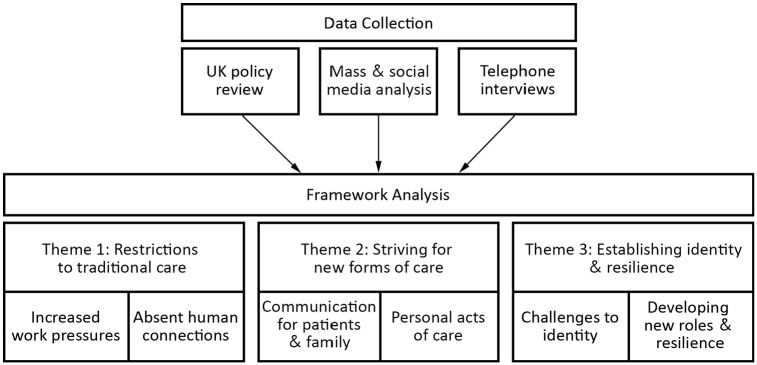
Design: A rapid appraisal was conducted incorporating a rapid review of policies from the United Kingdom, semi-structured telephone interviews with healthcare workers, and a review of mass print media news stories and social media posts describing healthcare worker's experiences of delivering care during the pandemic. Data were coded and analysed using framework analysis.
Setting/participants: From a larger ongoing study, 22 interviews which mentioned death or caring for patients at end-of-life, eight government and National Health Service policies affecting end-of-life care delivery, eight international news media stories and 3440 publicly available social media posts were identified. The social media analysis centred around 274 original tweets with the highest reach, engagement and relevance. Incorporating multiple workstreams provided a broad perspective of end-of-life care during the COVID-19 pandemic in the United Kingdom.
Results: Three themes were developed: (1) restrictions to traditional care, (2) striving for new forms of care and (3) establishing identity and resilience.
Conclusions: The COVID-19 pandemic prohibited the delivery of traditional care as practical barriers restricted human connections. Staff prioritised communication and comfort orientated tasks to re-establish compassion at end-of-life and displayed resilience by adjusting their goals.
Keywords: COVID-19; delivery of healthcare; health personnel; palliative care; qualitative research.
Conflict of interest statement
Figures
References
-
- World Health Organisation. WHO definition of palliative care, https://www.who.int/cancer/palliative/definition/en/ (2021, accessed 5 September 2020).
-
- Leong IY, Lee AO, Ng TW, et al.. The challenge of providing holistic care in a viral epidemic: opportunities for palliative care. Palliat Med 2004; 18(1): 12–18. - PubMed
-
- Fowler RA, Fletcher T, Fischer WA, et al.. Caring for critically ill patients with Ebola virus disease. Perspectives from West Africa. Am J Respir Crit Care Med 2014; 190(7): 733–737. - PubMed
Publication types
MeSH terms
LinkOut - more resources
Full Text Sources
Other Literature Sources
Medical
