Lessons Learned in Conducting Community Participatory School-Based Health Research on an American Indian Reservation
- PMID: 33775963
- PMCID: PMC8078218
- DOI: 10.1353/cpr.2021.0007
Lessons Learned in Conducting Community Participatory School-Based Health Research on an American Indian Reservation
Abstract
Background: Describing lessons learned from using a community-based participatory research (CBPR) approach to conduct school-based child health research in a tribal community is an important contribution to the literature.
Objectives: To identify how CBPR principles shaped the process of conducting a school-based child health intervention, and to describe lessons learned.
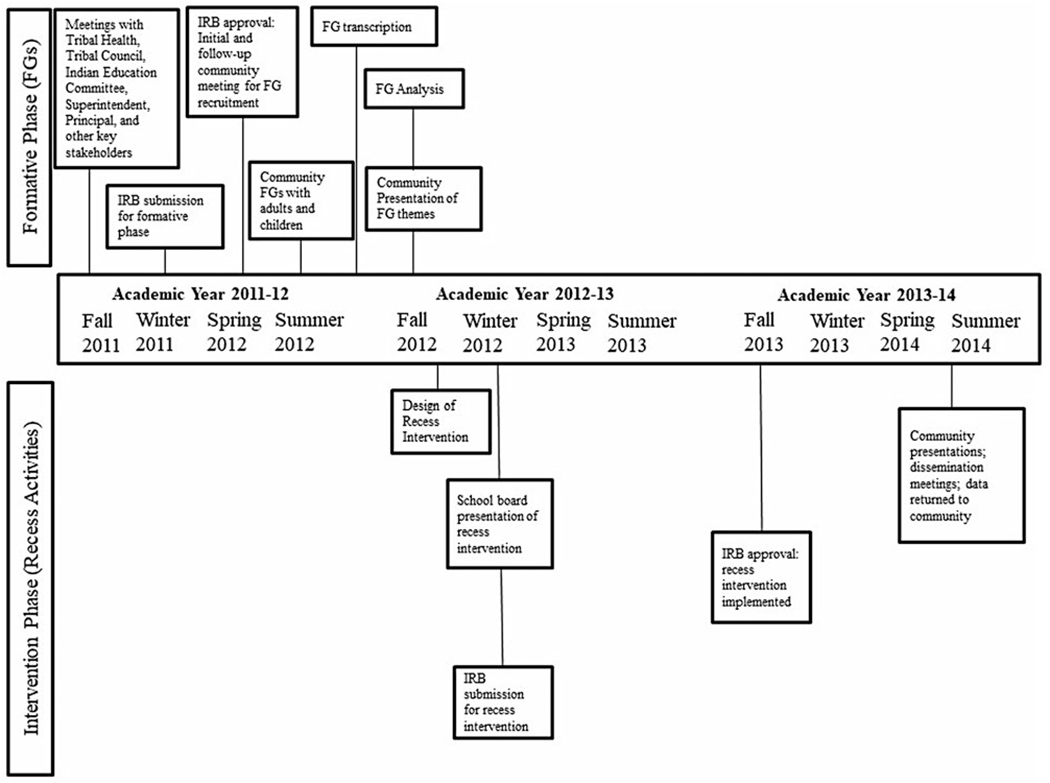
Methods: The study evaluates how CBPR principles guided a mixed-methods, school-based child health intervention to increase physical activity (PA).
Results: Nine key lessons are identified, associated with CBPR principles.
Conclusions: This information can help researchers understand how to successfully navigate the challenges and opportunities of conducting CBPR-guided research in the context of a small, short-term project, including leadership turnover, multiple Institutional Review Board (IRB)s, and study design approaches amidst schools policy changes. Collectively, understanding the lessons learned through the perspective of CBPR principles may help others conduct meaningful research with schools and children in tribal communities.
Figures
References
-
- Chatterjee A, Daftary G, Gatison L, et al. Lessons learned from a partnership to evaluate a school food program. Prog Community Health Partnersh. 2016;10:577–84. - PubMed
-
- Ickes S, Mahoney E, Roberts A, et al. Parental involvement in a school-based child physical activity and nutrition program in southeastern United States: A qualitative analysis of parenting capacities. Health Promot Pract. 2016;17:285–96. - PubMed
Publication types
MeSH terms
Grants and funding
LinkOut - more resources
Full Text Sources
Other Literature Sources