


Pemafibrate, A Novel Selective Peroxisome Proliferator-Activated Receptor α Modulator, Reduces Plasma Eicosanoid Levels and Ameliorates Endothelial Dysfunction in Diabetic Mice
- PMID: 33775978
- PMCID: PMC8629704
- DOI: 10.5551/jat.61101
Pemafibrate, A Novel Selective Peroxisome Proliferator-Activated Receptor α Modulator, Reduces Plasma Eicosanoid Levels and Ameliorates Endothelial Dysfunction in Diabetic Mice
Abstract
Aims: Various pathological processes related to diabetes cause endothelial dysfunction. Eicosanoids derived from arachidonic acid (AA) have roles in vascular regulation. Fibrates have recently been shown to attenuate vascular complications in diabetics. Here we examined the effects of pemafibrate, a selective peroxisome proliferator-activated receptor α modulator, on plasma eicosanoid levels and endothelial function in diabetic mice.
Methods: Diabetes was induced in 7-week-old male wild-type mice by a single injection of streptozotocin (150 mg/kg). Pemafibrate (0.3 mg/kg/day) was administered orally for 3 weeks. Untreated mice received vehicle. Circulating levels of eicosanoids and free fatty acids were measured using both gas and liquid chromatography-mass spectrometry. Endothelium-dependent and endothelium-independent vascular responses to acetylcholine and sodium nitroprusside, respectively, were analyzed.
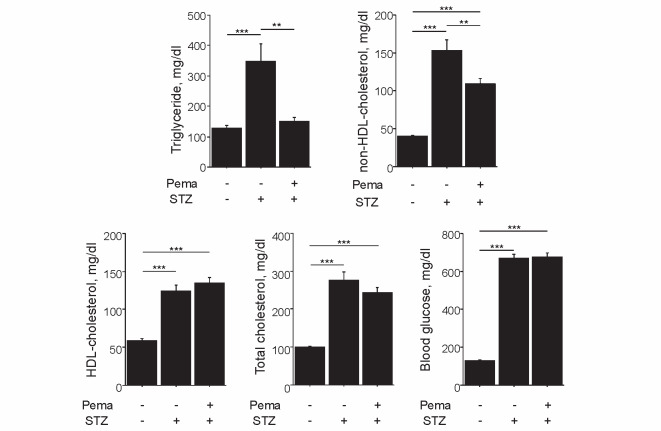
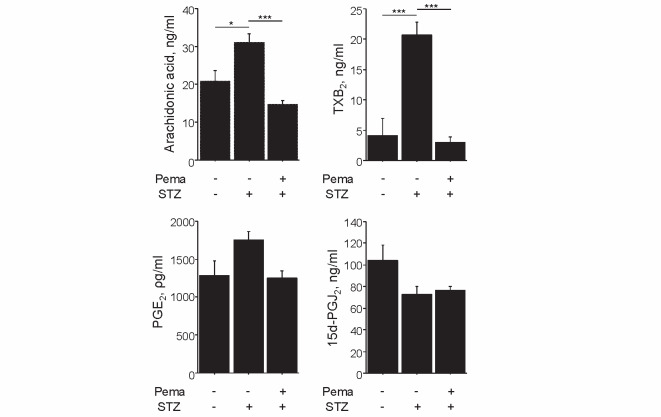
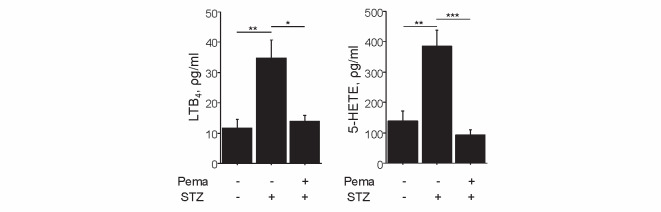
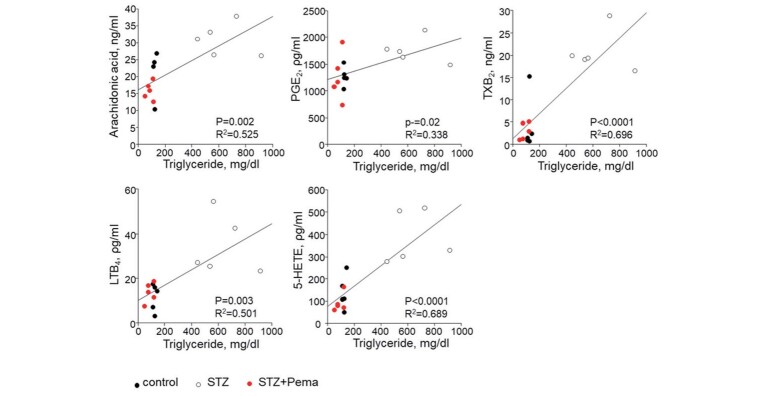
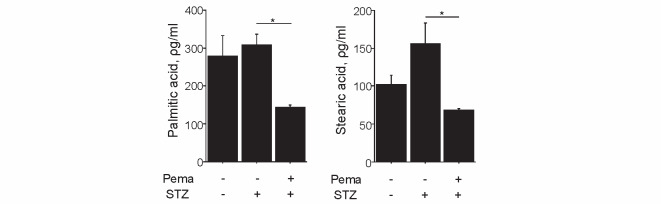
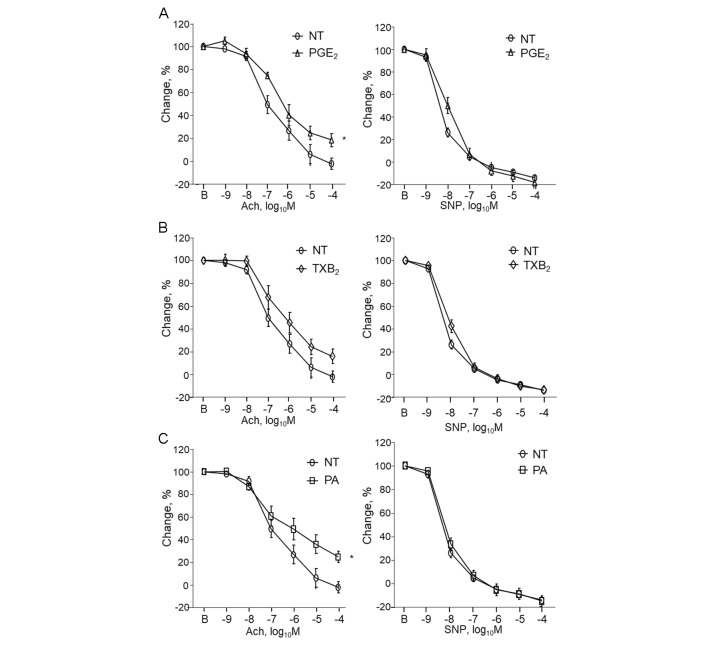
Results: Pemafibrate reduced both triglyceride and non-high-density lipoprotein-cholesterol levels (P<0.01), without affecting body weight. It also decreased circulating levels of AA (P<0.001), thromboxane B2 (P<0.001), prostaglandin E2, leukotriene B4 (P<0.05), and 5-hydroxyeicosatetraenoic acid (P<0.001), all of which were elevated by the induction of diabetes. In contrast, the plasma levels of 15-deoxy-Δ12,14-prostaglandin J2, which declined following diabetes induction, remained unaffected by pemafibrate treatment. In diabetic mice, pemafibrate decreased palmitic acid (PA) and stearic acid concentrations (P<0.05). Diabetes induction impaired endothelial function, whereas pemafibrate ameliorated it (P<0.001). The results of ex vivo experiments indicated that eicosanoids or PA impaired endothelial function.
Conclusion: Pemafibrate diminished the levels of vasoconstrictive eicosanoids and free fatty acids accompanied by a reduction of triglyceride. These effects may be associated with the improvement of endothelial function by pemafibrate in diabetic mice.
Keywords: Diabetes; Eicosanoid; Endothelial function; Pemafibrate.
Conflict of interest statement
The Department of Cardio-Diabetes Medicine, Tokushima University Graduate School is supported in part by unrestricted research grants from Boehringer Ingelheim. The authors declare that they have no conflict of interest.
Figures

References
-
- Yuhki K, Kojima F, Kashiwagi H, Kawabe J, Fujino T, Narumiya S and Ushikubi F. Roles of prostanoids in the pathogenesis of cardiovascular diseases: Novel insights from knockout mouse studies. Pharmacol Ther, 2011; 129: 195-205 - PubMed
-
- Sellers MM and Stallone JN. Sympathy for the devil: the role of thromboxane in the regulation of vascular tone and blood pressure. Am J Physiol Heart Circ Physiol, 2008; 294: H1978-1986 - PubMed
-
- Bagi Z, Erdei N, Papp Z, Edes I and Koller A. Up-regulation of vascular cyclooxygenase-2 in diabetes mellitus. Pharmacol Rep, 2006; 58 Suppl: 52-56 - PubMed
MeSH terms
Substances
LinkOut - more resources
Full Text Sources
Other Literature Sources
