


The Current Status of Gene Therapy for the Treatment of Cancer
- PMID: 33776419
- PMCID: PMC7987258
- DOI: 10.2147/BTT.S302095
The Current Status of Gene Therapy for the Treatment of Cancer
Abstract
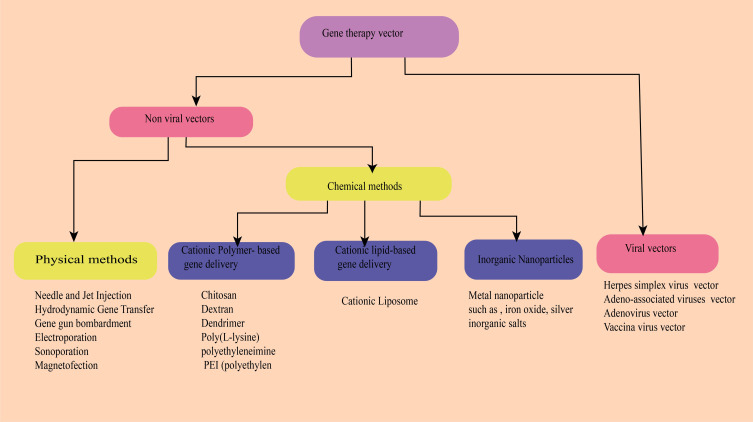
Gene therapy is the administration of foreign genomic material into the host tissue to modify the expression of a gene product or to change the biological properties of cells for therapeutic use. Initially, the major objective of gene therapy was to manage genetic diseases, but now different disorders with several patterns of acquired and inherited disorders are targets of gene therapy. Over three decades, the advancement of Genome engineering technologies facilitated gene therapy for the prevention and management of intractable diseases. Researchers are advancing with cautious optimism that safe and effective treatment will give to patients with single-gene disorders and complex acquired disorders. To date, over 3000 genes associates with disease-causing mutations, and about 2600 gene therapy trials are undergoing for the management of various disorders. This review summarizes the principles of genome-editing approaches, such as zinc finger nucleases, transcription activator-like effector nucleases, meganucleases, and the CRISPR/Cas9 system with the underlying mechanisms. This review also explains the types of gene delivery systems as viral [adenoviral, adeno association, herpes simplex virus] and nonviral delivery systems (physical: DNA bombardment, electroporation) and (chemical: Cationic lipids, cationic polymers). Finally, this review summarizes gene therapy medicines approved to treat cancer in detail, including names, indications, vectors, and mode of gene therapy. Gene therapy becomes an alternative to an existing management for different diseases. Therefore, gene products with safe vectors and better biotechnologies play a significant role in the prophylaxis and management of various disorders in the future.
Keywords: cancer; clinical trial; gene delivery; gene product; gene therapy.
© 2021 Belete.
Conflict of interest statement
The authors declare no competing interests in this work.
Figures
References
-
- Templeton NS, editor. Gene and Cell Therapy: Therapeutic Mechanisms and Strategies. Crc Press; 2008.
-
- Reis RL. Encyclopedia of Tissue Engineering and Regenerative Medicine. Academic Press; 2019.
Publication types
LinkOut - more resources
Full Text Sources
Other Literature Sources
