


Construction of heparin-based hydrogel incorporated with Cu5.4O ultrasmall nanozymes for wound healing and inflammation inhibition
- PMID: 33778192
- PMCID: PMC7960791
- DOI: 10.1016/j.bioactmat.2021.02.006
Construction of heparin-based hydrogel incorporated with Cu5.4O ultrasmall nanozymes for wound healing and inflammation inhibition
Erratum in
-
Erratum regarding missing ethics approval and consent to participate statements in previously published articles.Bioact Mater. 2024 Jun 14;40:275-279. doi: 10.1016/j.bioactmat.2024.06.006. eCollection 2024 Oct. Bioact Mater. 2024. PMID: 38973994 Free PMC article.
Abstract
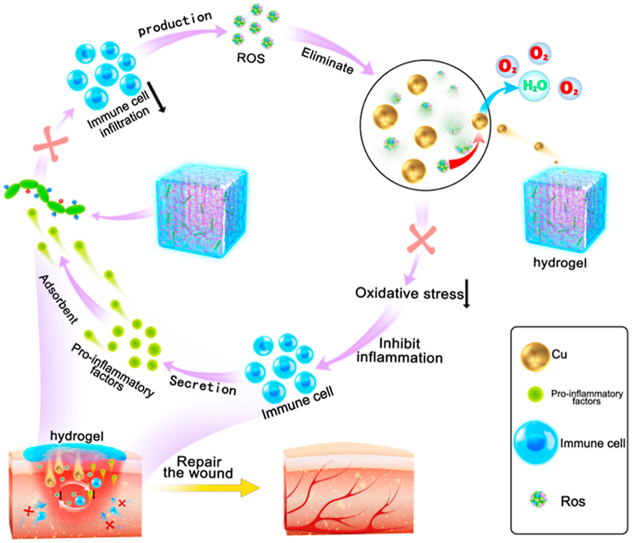
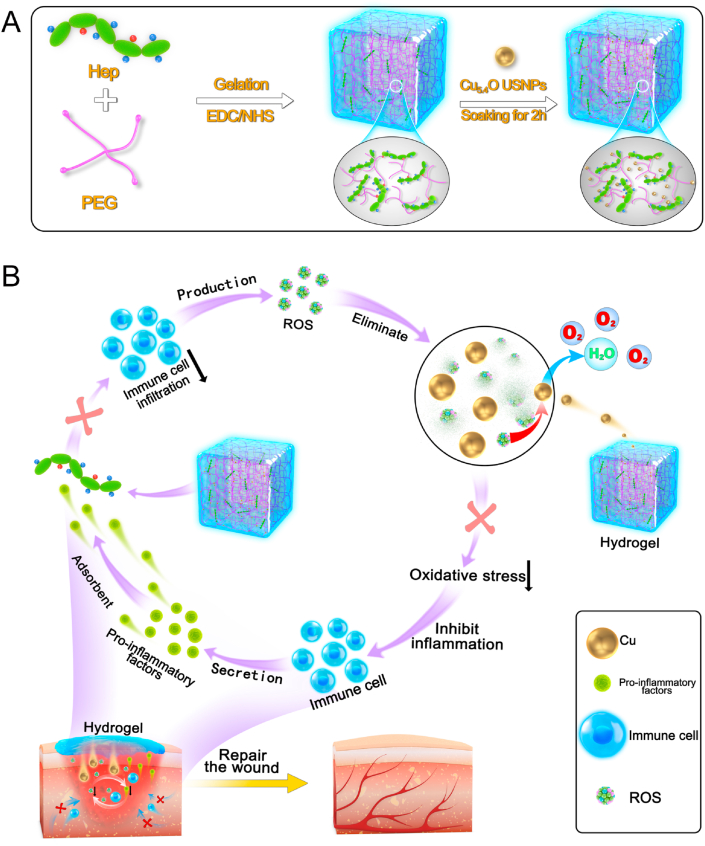
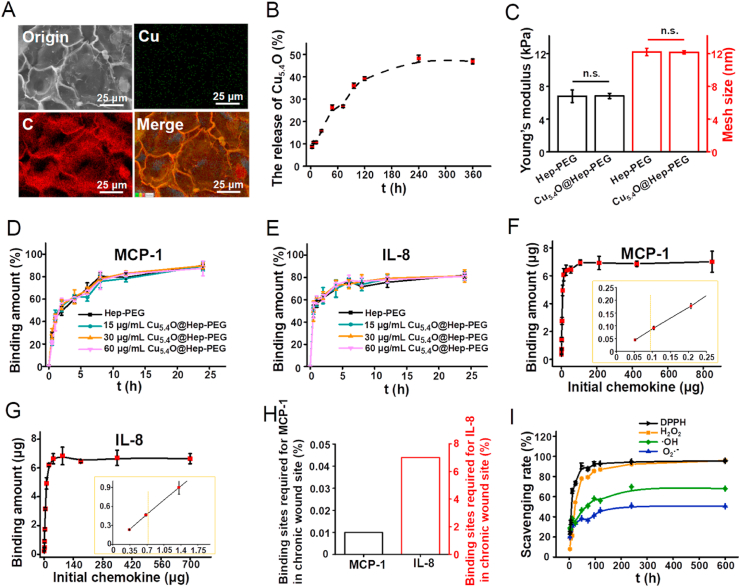
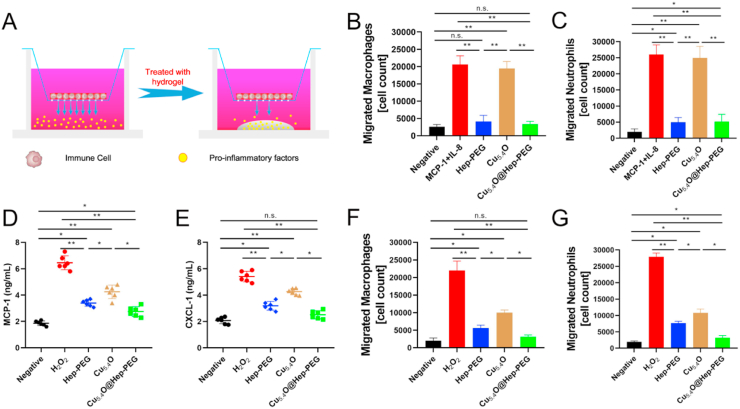
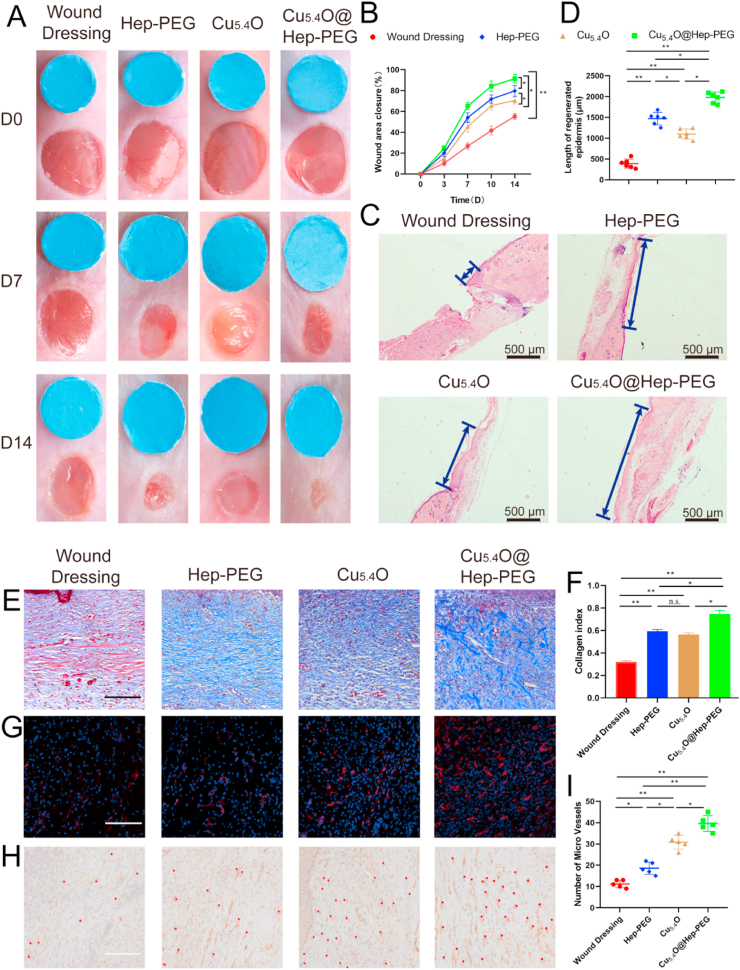
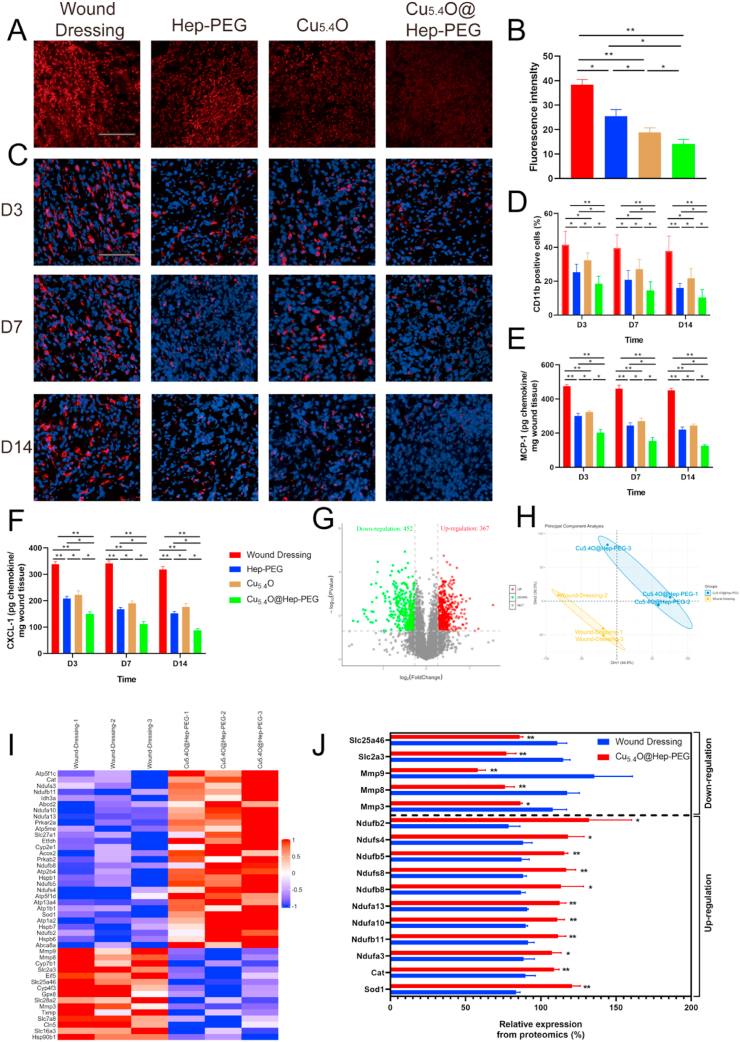
Excessive production of inflammatory chemokines and reactive oxygen species (ROS) can cause a feedback cycle of inflammation response that has a negative effect on cutaneous wound healing. The use of wound-dressing materials that simultaneously absorb chemokines and scavenge ROS constitutes a novel 'weeding and uprooting' treatment strategy for inflammatory conditions. In the present study, a composite hydrogel comprising an amine-functionalized star-shaped polyethylene glycol (starPEG) and heparin for chemokine sequestration as well as Cu5.4O ultrasmall nanozymes for ROS scavenging (Cu5.4O@Hep-PEG) was developed. The material effectively adsorbs the inflammatory chemokines monocyte chemoattractant protein-1 and interleukin-8, decreasing the migratory activity of macrophages and neutrophils. Furthermore, it scavenges the ROS in wound fluids to mitigate oxidative stress, and the sustained release of Cu5.4O promotes angiogenesis. In acute wounds and impaired-healing wounds (diabetic wounds), Cu5.4O@Hep-PEG hydrogels outperform the standard-of-care product Promogram® in terms of inflammation reduction, increased epidermis regeneration, vascularization, and wound closure.
Keywords: Hydrogels; Inflammatory chemokines; Nanozymes; Reactive oxygen species; Wound healing.
© 2021 The Authors.
Conflict of interest statement
The authors have no competing financial interests or personal relationships that could influence the work published in this paper.
Figures
References
-
- Singer A.J., Clark R.A. Cutaneous wound healing. N. Engl. J. Med. 1999;1:738–746. - PubMed
-
- Armstrong D.G., Boulton A.J.M., Bus S.A. Diabetic foot ulcers and their recurrence. N. Engl. J. Med. 2017;376(24):2367–2375. - PubMed
-
- Kurita M., Araoka T., Hishida T., O'Keefe D.D., Takahashi Y., Sakamoto A., Sakurai M., Suzuki K., Wu J., Yamamoto M., Hernandez-Benitez R., Ocampo A., Reddy P., Shokhirev M.N., Magistretti P., Delicado E.N., Eto H., Harii K., Belmonte J.C.I. In vivo reprogramming of wound-resident cells generates skin epithelial tissue. Nature. 2018;561(7722):243–247. - PMC - PubMed
-
- Shiekh P.A., Singh A., Kumar A. Exosome laden oxygen releasing antioxidant and antibacterial cryogel wound dressing OxOBand alleviate diabetic and infectious wound healing. Biomaterials. 2020;249:120020. - PubMed
-
- Tang Q., Lim T., Wei X.J., Wang Q.Y., Xu J.C., Shen L.Y., Zhu Z.Z., Zhang C.Q. A free-standing multilayer film as a novel delivery carrier of platelet lysates for potential wound-dressing applications. Biomaterials. 2020;255:120138. - PubMed
LinkOut - more resources
Full Text Sources
Other Literature Sources
Research Materials
