


Neural correlates of the impulse dyscontrol domain of mild behavioral impairment
- PMID: 33778998
- PMCID: PMC9292816
- DOI: 10.1002/gps.5540
Neural correlates of the impulse dyscontrol domain of mild behavioral impairment
Abstract
Objectives: Agitation and aggression are common in dementia and pre-dementia. The dementia risk syndrome mild behavioral impairment (MBI) includes these symptoms in the impulse dyscontrol domain. However, the neural circuitry associated with impulse dyscontrol in neurodegenerative disease is not well understood. The objective of this work was to investigate if regional micro- and macro-structural brain properties were associated with impulse dyscontrol symptoms in older adults with normal cognition, mild cognitive impairment, and Alzheimer's disease (AD).
Methods: Clinical, neuropsychiatric, and T1-weighted and diffusion-tensor magnetic resonance imaging (DTI) data from 80 individuals with and 123 individuals without impulse dyscontrol were obtained from the AD Neuroimaging Initiative. Linear mixed effect models were used to assess if impulse dyscontrol was related to regional DTI and volumetric parameters.
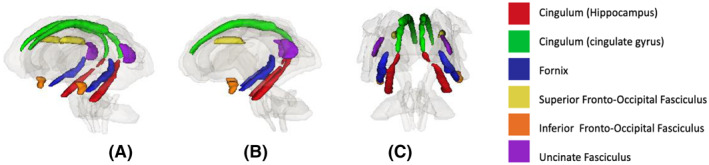
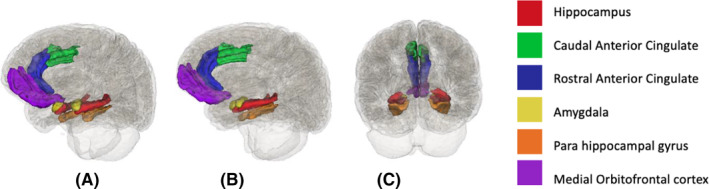
Results: Impulse dyscontrol was present in 17% of participants with NC, 43% with MCI, and 66% with AD. Impulse dyscontrol was associated with: (1) lower fractional anisotropy (FA), and greater mean, axial, and radial diffusivity in the fornix; (2) lesser FA and greater radial diffusivity in the superior fronto-occipital fasciculus; (3) greater axial diffusivity in the cingulum; (4) greater axial and radial diffusivity in the uncinate fasciculus; (5) gray matter atrophy, specifically, lower cortical thickness in the parahippocampal gyrus.
Conclusion: Our findings provide evidence that well-established atrophy patterns of AD are prominent in the presence of impulse dyscontrol, even when disease status is controlled for, and possibly in advance of dementia. Our findings support the growing evidence for impulse dyscontrol symptoms as an early manifestation of AD.
Keywords: Alzheimer's disease; aggression; agitation; geriatric psychiatry; impulse dyscontrol; mild behavioral impairment.
© 2021 The Authors. International Journal of Geriatric =Psychiatry published by John Wiley & Sons Ltd.
Conflict of interest statement
Dr. Ismail reports consultation fees and honoraria from Janssen, Lundbeck, and Otsuka, outside the submitted work; Dr. Smith reports personal fees from Alnylman Pharmaceuticals and Biogen, outside the submitted work; no other authors have financial interests with commercial interests.
SG analyzed and interpreted the data and contributed in writing the manuscript. PM, MW, DR, and TS were involved in the statistical analyses. FPM, EES, NDF, and ZI critically analyzed the results and made intellectual contributions to writing the manuscript. All authors read and approved the final manuscript.
Figures
References
-
- Creese B, Griffiths A, Brooker H, et al. Profile of mild behavioral impairment and factor structure of the mild behavioral impairment checklist in cognitively normal older adults. Int Psychogeriatr. 2020;32(6):705‐717. - PubMed
-
- Creese B, Brooker H, Ismail Z, et al. Mild behavioral impairment as a marker of cognitive decline in cognitively normal older adults. Am J Geriatric Psychiatry. 2019;27(8):823‐834. - PubMed
-
- Mallo SC, Ismail Z, Pereiro AX, et al. Assessing mild behavioral impairment with the mild behavioral impairment‐checklist in people with mild cognitive impairment. J Alzheimer's Dis. 2018;66(1):83‐95. - PubMed
-
- Mallo SC, Ismail Z, Pereiro AX, et al. Assessing mild behavioral impairment with the mild behavioral impairment checklist in people with subjective cognitive decline. Int Psychogeriatr. 2018:1‐9. - PubMed
Publication types
MeSH terms
Grants and funding
LinkOut - more resources
Full Text Sources
Other Literature Sources
Medical
