Racism and Resistance: A Qualitative Study of Bias As a Barrier to Breastfeeding
- PMID: 33784475
- PMCID: PMC8215417
- DOI: 10.1089/bfm.2020.0307
Racism and Resistance: A Qualitative Study of Bias As a Barrier to Breastfeeding
Abstract
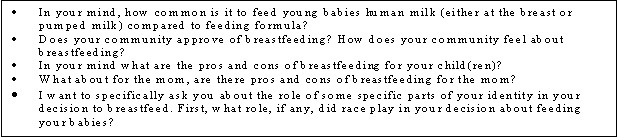
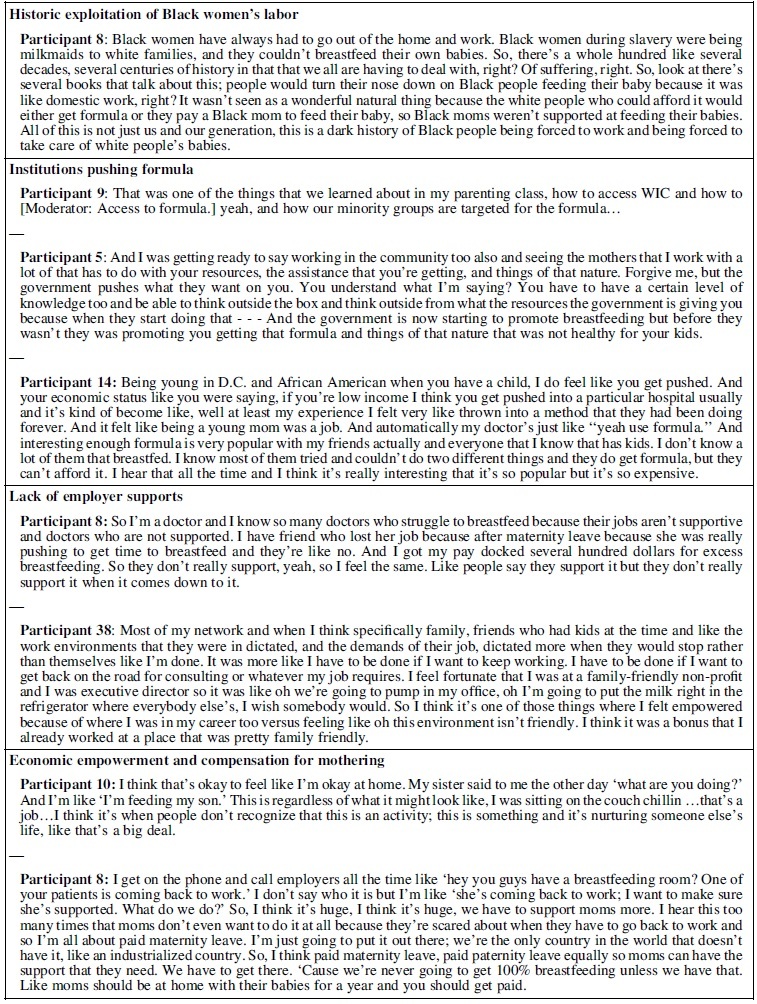
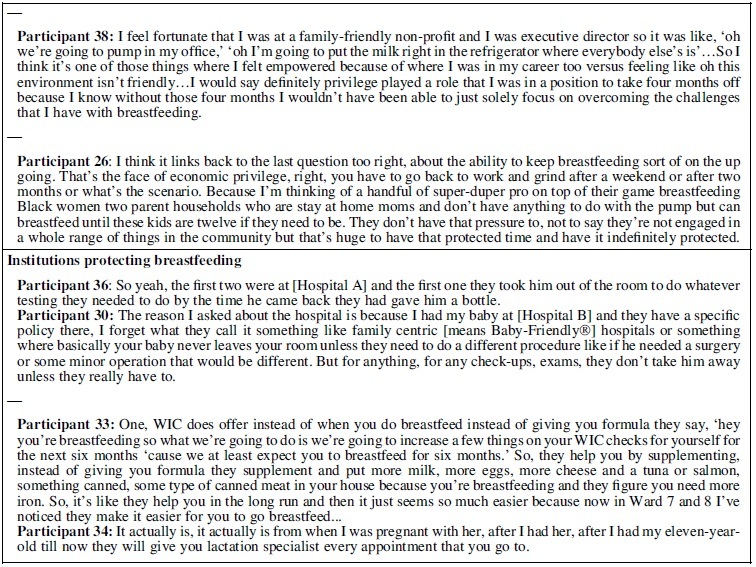
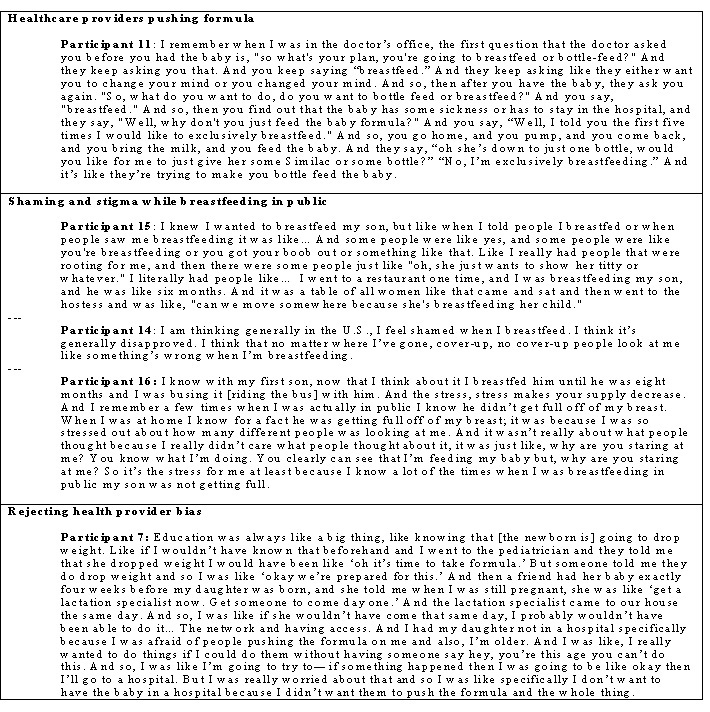
Background: Nearly 75% of Black non-Hispanic babies born in 2016 ever breastfed. However, Black mothers still experience barriers to breastfeeding, perpetuating disparities in exclusivity and duration. Subjects and Methods: Using data collected from five focus groups with Black mothers (N = 30) in Washington, District of Columbia during summer 2019, we critically examine the influence of institutionalized and personally mediated racism on breastfeeding. We also explore the counter-narratives Black women use to resist oppression and deal with these barriers. Results: Themes surrounding institutionalized racism included historic exploitation, institutions pushing formula, and lack of economic and employment supports. Themes regarding how personally mediated racism manifested included health care interactions and shaming/stigma while feeding in public. At each level examined, themes of resistance were also identified. Themes of resistance to institutionalized racism were economic empowerment and institutions protecting breastfeeding. Themes of resistance to personally mediated biases were rejecting health provider bias and building community. Conclusions: There are opportunities for health providers and systems to break down barriers to breastfeeding for Black women. These include changes in clinical training and practice as well as clinicians leveraging their position and lending their voices in advocacy efforts.
Keywords: Black mothers; breastfeeding; critical race theory; racism.
Conflict of interest statement
No competing financial interests exist.
Figures
References
-
- DeVane-Johnson S, Woods-Giscombé C, Thoyre S, et al. . Integrative literature review of factors related to breastfeeding in African American women: Evidence for a potential paradigm shift. J Hum Lact 2017;33:435–447 - PubMed
-
- Hillard TK. A Black woman's commentary on breastfeeding. Breastfeed Med 2014;9:349–351 - PubMed
-
- Crenshaw K. Mapping the margins: Intersectionality, identity, politics, and violence against women of color. Stanford Law Rev 1991;43:1241–1299
-
- Spencer B, Wambach K, Domain EW. African American women's breastfeeding experiences: Cultural, personal, and political voices. Qual Health Res 2015;25:974–987 - PubMed
Publication types
MeSH terms
Grants and funding
LinkOut - more resources
Full Text Sources
Other Literature Sources
Medical
Research Materials