Disease burden and quality of life of patients with chronic cough in Japan: a population-based cross-sectional survey
- PMID: 33785505
- PMCID: PMC8011713
- DOI: 10.1136/bmjresp-2020-000764
Disease burden and quality of life of patients with chronic cough in Japan: a population-based cross-sectional survey
Abstract
Background: Cough lasting 3-8 and >8 weeks are defined as subacute/prolonged cough and chronic cough (CC), respectively. Studies have revealed that CC negatively impact patients' quality of life (QoL). In Japan, there is limited data on the impact of CC on health-related quality of life (HRQoL), work productivity and activity impairment (WPAI) and healthcare resource utilisation (HRU) using validated instruments. This study aimed to estimate the burden of CC and to compare the burden among patients with CC between subgroups.
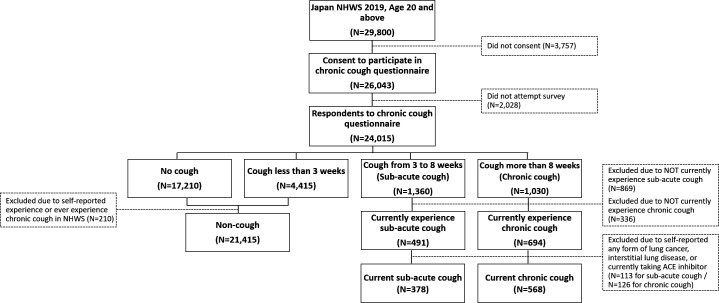
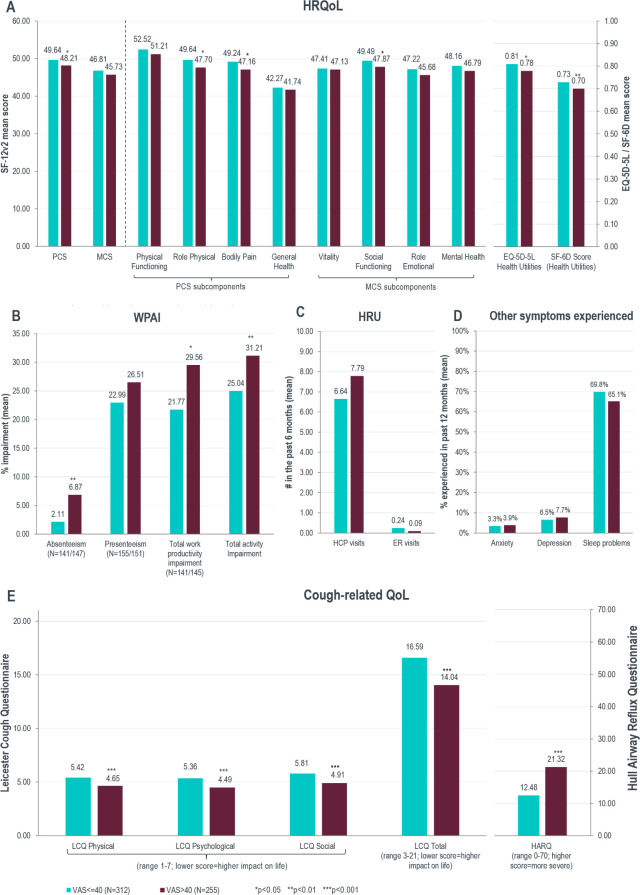
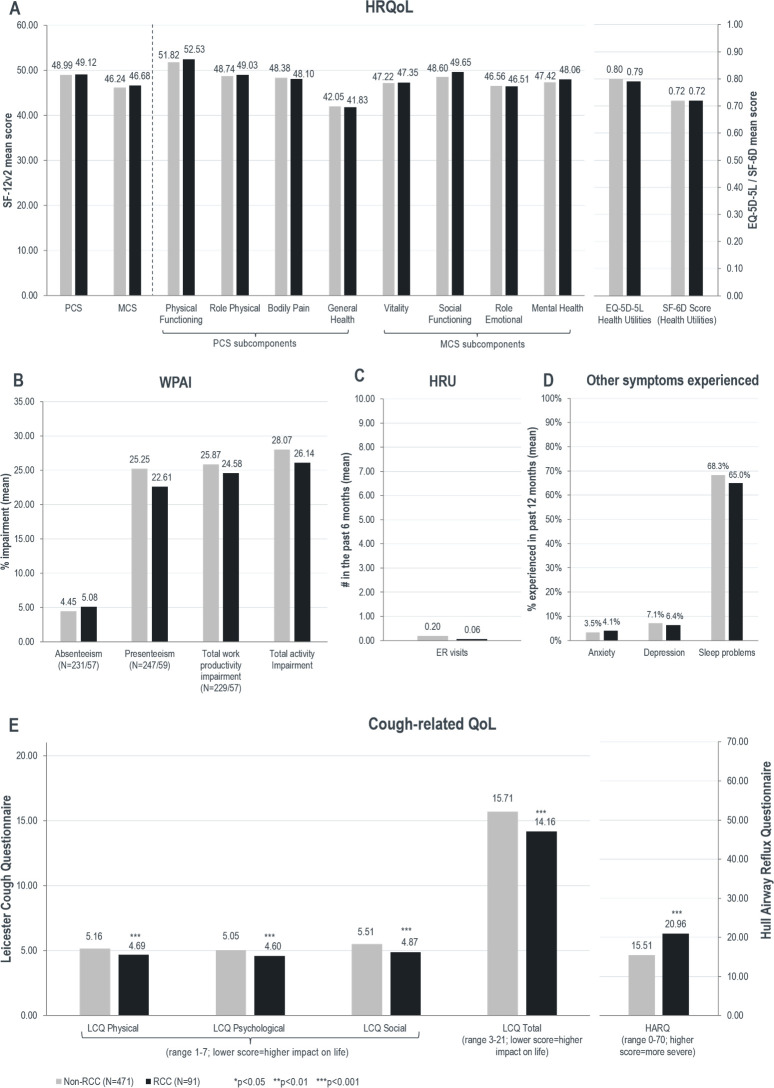
Methods: Data from two cross-sectional online surveys conducted between September and November 2019 were combined for the analysis. Eligible patients with cough were propensity score matched to non-cough respondents. Comparisons of general HRQoL, WPAI, HRU and other symptoms experienced were conducted between matched non-cough respondents and patients with cough. Among patients with CC, subgroup comparisons were performed to understand general HRQoL, WPAI, HRU, cough-related QoL (Leicester Cough Questionnaire and Hull Airway Reflux Questionnaire) between patients with CC of different severities, patients with refractory CC and patients with non-refractory CC and patients with CC whose underlying diseases were unknown and others.
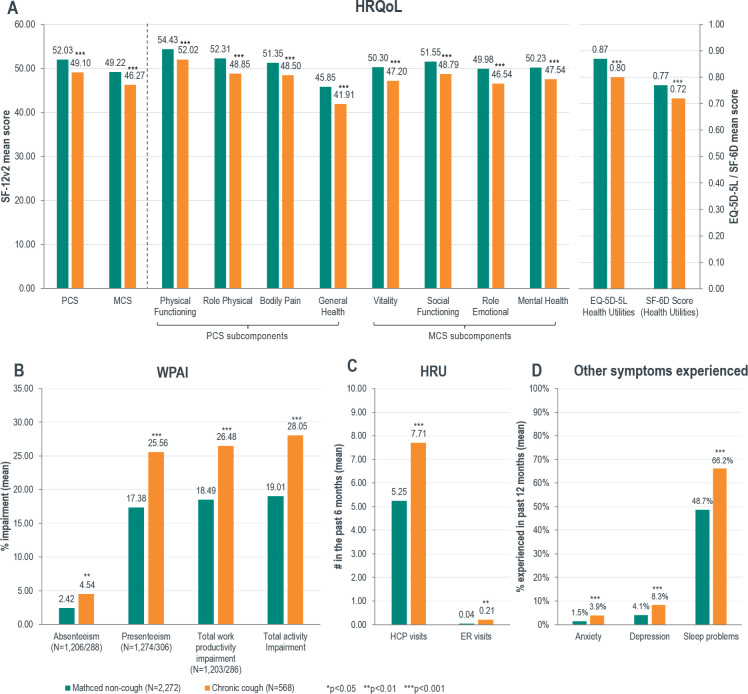
Results: Patients with CC (n=568) in Japan reported significantly poorer HRQoL, increased WPAI, more HRU and higher proportion of psychological and sleep problems, compared with matched non-cough respondents selected from 21 415 non-cough respondents. More patients with severe CC reported significantly poorer HRQoL, increased WPAI and worse cough-related QoL. Patients with refractory CC experienced significantly greater burden measured by cough-related QoL. No significant differences were observed between patients with CC whose underlying diseases were unknown and other patients with CC in terms of general HRQoL and cough-related QoL.
Conclusions: This study showed that patients with CC in Japan experienced significant burden compared with non-cough respondents. Patients with more severe cough and refractory CC experienced worse cough-related QoL. These results highlighted the unmet need for better interventions and treatments to reduce the burden among patients with CC.
Keywords: cough/mechanisms/pharmacology.
© Author(s) (or their employer(s)) 2021. Re-use permitted under CC BY-NC. No commercial re-use. See rights and permissions. Published by BMJ.
Conflict of interest statement
Competing interests: TK, KT, KO, MK, MA, ST are employees at MSD KK, Tokyo, Japan. JS is an employee at Merck Sharp & Dohme Corp., a subsidiary of Merck & Co., Inc., Kenilworth, New Jersey, USA. YC is an employee at Kantar, Health Division, Singapore. Kantar received funding from MSD KK, Tokyo, Japan for conduction of the study, analysis and manuscript development.
Figures
References
Publication types
MeSH terms
LinkOut - more resources
Full Text Sources
Other Literature Sources