


Evaluation of a Yoga-Based Mind-Body Intervention for Resident Physicians: A Randomized Clinical Trial
- PMID: 33786209
- PMCID: PMC7961714
- DOI: 10.1177/21649561211001038
Evaluation of a Yoga-Based Mind-Body Intervention for Resident Physicians: A Randomized Clinical Trial
Abstract
Background and objective: Mind-body interventions (MBIs) have been shown to be effective individual-level interventions for mitigating physician burnout, but there are no controlled studies of yoga-based MBIs in resident physicians. We assessed the feasibility of a yoga-based MBI called RISE (resilience, integration, self-awareness, engagement) for residents among multiple specialties and academic medical centers.
Methods: We conducted a waitlist controlled randomized clinical trial of the RISE program with residents from multiple specialty departments at three academic medical centers. The RISE program consisted of six weekly sessions with suggested home practice. Feasibility was assessed across six domains: demand, implementation, practicality, acceptability, adaptation, and integration. Self-reported measures of psychological health were collected at baseline, post-program, and two-month follow-up.
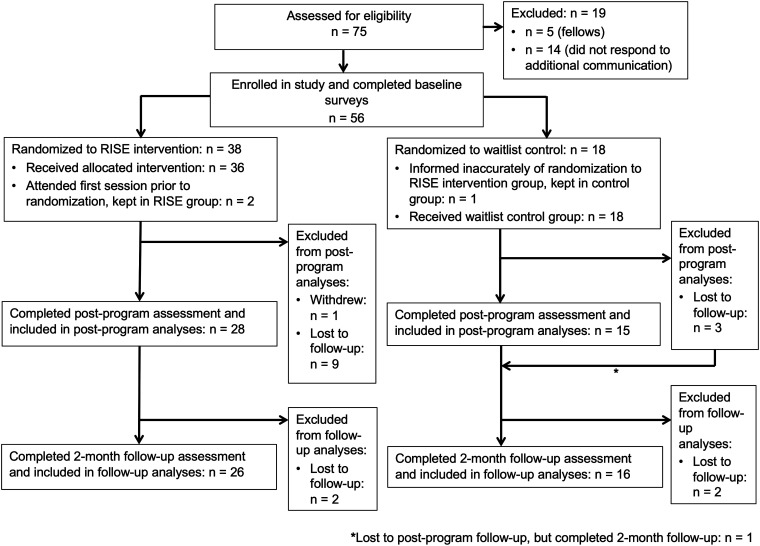
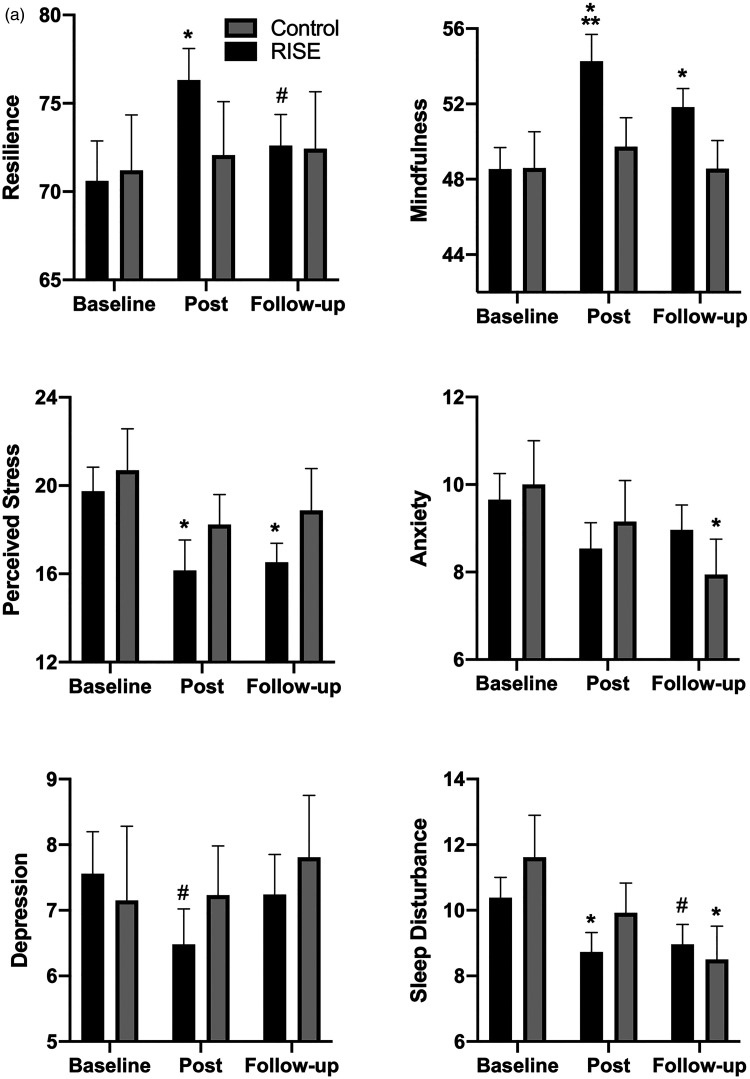
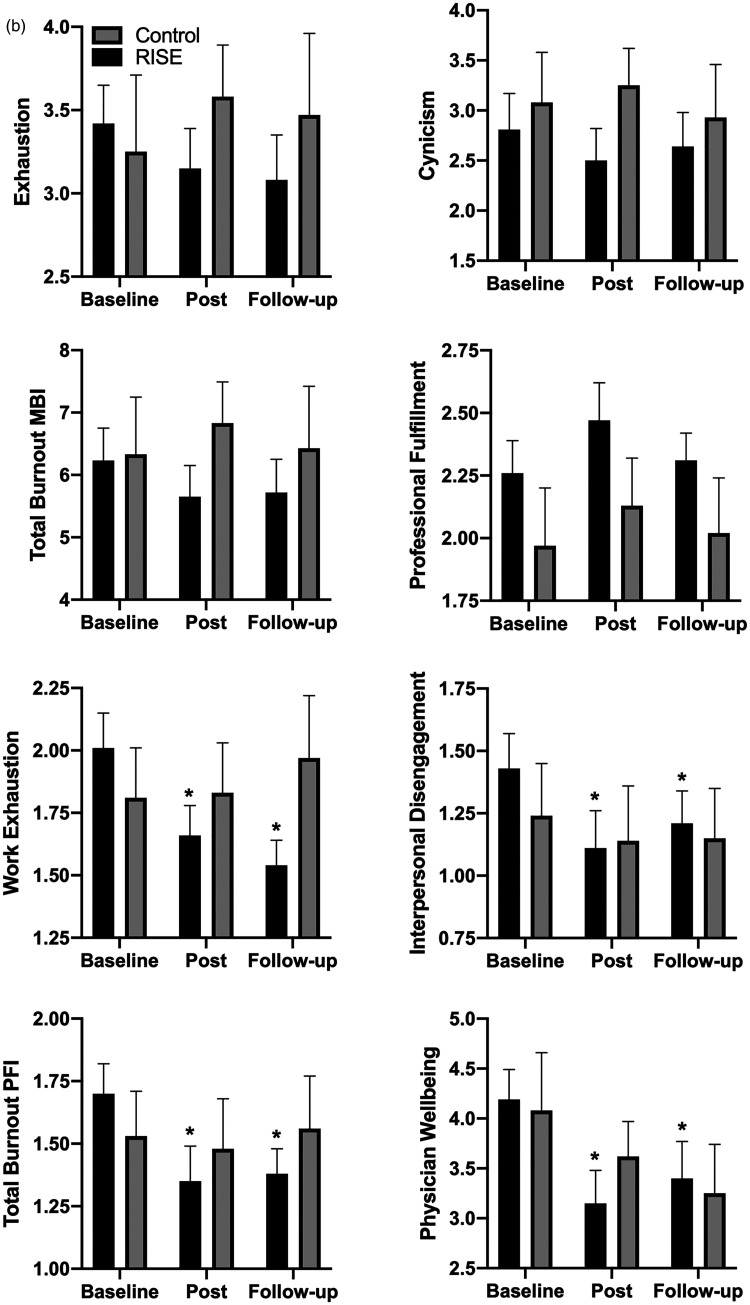
Results: Among 2,000 residents contacted, 75 were assessed for eligibility and 56 were enrolled. Forty-four participants completed the study and were included in analysis. On average, participants attended two of six sessions. Feasibility of in-person attendance was rated as 28.9 (SD 25.6) on a 100-point visual analogue scale. Participants rated feasibility as 69.2 (SD 26.0) if the program was offered virtually. Those who received RISE reported improvements in mindfulness, stress, burnout, and physician well-being from baseline to post-program, which were sustained at two-month follow-up.
Conclusion: This is the first controlled study of a yoga-based MBI in residents. While the program was not feasible as delivered in this pilot study, initial analyses showed improvement in multiple measures of psychological health. Residents reported that virtual delivery would increase feasibility.
Keywords: Yoga; burnout; graduate medical education; internship and residency; mindfulness; physician.
© The Author(s) 2021.
Conflict of interest statement
Declaration of Conflicting Interests: The author(s) declared the following potential conflicts of interest with respect to the research, authorship, and/or publication of this article: The authors JL, NLD, MLS, SB, DHM, JAD, and SBSK report no conflicts of interest.
Figures
References
-
- Maslach C JS, Leiter MP. Maslach Burnout Inventory Manual. 3rd ed. Menlo Park, CA: Mind Garden Inc; 1996.
-
- Dyrbye LN, Massie FS, Eacker A, et al. Relationship between burnout and professional conduct and attitudes among US medical students. JAMA. 2010; 304(11):11737–1180. - PubMed
-
- Dyrbye LN, Thomas MR, Power DV, et al. Burnout and serious thoughts of dropping out of medical school: a multi-institutional study. Acad Med. 2010; 85(1):947–102. - PubMed
-
- West CP, Huschka MM, Novotny PJ, et al. Association of perceived medical errors with resident distress and empathy: a prospective longitudinal study. JAMA. 2006; 296(9):1071–1078. - PubMed
-
- Dyrbye LN, Freischlag J, Kaups KL, et al. Work-home conflicts have a substantial impact on career decisions that affect the adequacy of the surgical workforce. Arch Surg. 2012; 147(10):933–939. - PubMed
LinkOut - more resources
Full Text Sources
Other Literature Sources
