Meta-Analysis
. 2021 Mar 31;12(2):461-489.
doi: 10.1093/advances/nmaa107.

Early-Life Nutrition Interventions and Associated Long-Term Cardiometabolic Outcomes: A Systematic Review and Meta-Analysis of Randomized Controlled Trials

Affiliations
Meta-Analysis

Early-Life Nutrition Interventions and Associated Long-Term Cardiometabolic Outcomes: A Systematic Review and Meta-Analysis of Randomized Controlled Trials

Siran He et al. Adv Nutr. .

Abstract

Early-life nutrition interventions can have lifelong cardiometabolic benefits. Most evidence on this topic is derived from observational studies. We evaluated the association of randomized controlled nutritional trials in early life and long-term cardiometabolic outcomes. Through literature search of PubMed, CABI Global Health, Embase, and Cochrane, with manual reference check and weekly alert from PubMed, we identified 8312 records, and included 53 records from 40 cohorts in 21 countries. The total number of participants was 33,551. Interventions were initiated as early as conception, and the longest until 7 y (except 1 study from infancy to 20 y). The cohorts were followed up for between 3 and 73 y. We identified 7 types of interventions (protein-energy supplements, long-chain PUFAs, single micronutrient, multiple micronutrients, infant and young child feeding, dietary counseling, and other) and 4 categories of cardiometabolic outcomes (biomarkers, cardiovascular, body size and composition, and subclinical/clinical outcomes). Most findings were null. Fasting glucose concentration was 0.04 mmol/L lower (95% CI: -0.05, -0.02 mmol/L; I2 = 0%) in the intervention groups than in the control groups (15 studies). BMI (kg/m2) was 0.20 higher (95% CI: 0.12, 0.28; I2 = 54%) in the intervention groups than control groups (14 studies). No significant effect was observed for total cholesterol (12 studies) or blood pressure (17 studies). Ongoing and personalized dietary counseling was associated with lower glucose and cholesterol, better endothelial function, and reduced risk of metabolic syndrome. The timing of intervention mattered, with earlier initiation conferring greater benefit (improved lipid profile and marginally lower glucose concentration) based on 2 studies. In sum, glucose concentration was lower following early-life nutrition interventions, but there is a risk of unintended consequences, including higher BMI. Maternal and child nutrition interventions must be evidence-based and tailored to each population to promote long-term cardiometabolic health.

Keywords: DOHaD; cardiometabolic diseases; cohort studies; early life; life course; longitudinal studies; maternal and child nutrition; noncommunicable diseases; nutrition intervention; randomized controlled trials.


Figures

FIGURE 1
FIGURE 1
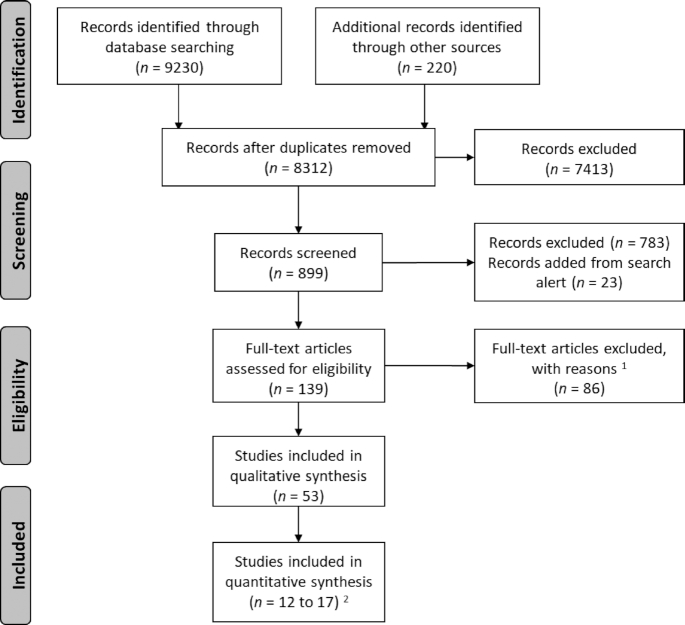
Preferred Reporting Items for Systematic Reviews and Meta-Analyses flow chart study inclusion/exclusion. 1Reasons for exclusion: see Methods. 2For each category of outcome, the number of included studies varied in meta-analysis: 15 included for fasting glucose concentration (21–35); 12 for total cholesterol concentration (21–24,27, 28, 31, 34–38); 17 for blood pressure, same for systolic and diastolic blood pressure (21–23, 27, 31,34, 37, 39–41, 42–45, 46–48); and 14 for BMI (21–23, 25–27,31, 34, 39, 42, 46, 47, 49, 50).
FIGURE 2
FIGURE 2
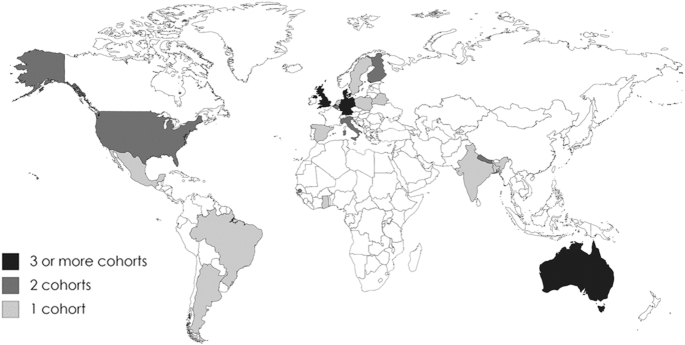
Map of the world indicating the countries and cohorts included. Created with www.mapchart.net.
FIGURE 3
FIGURE 3
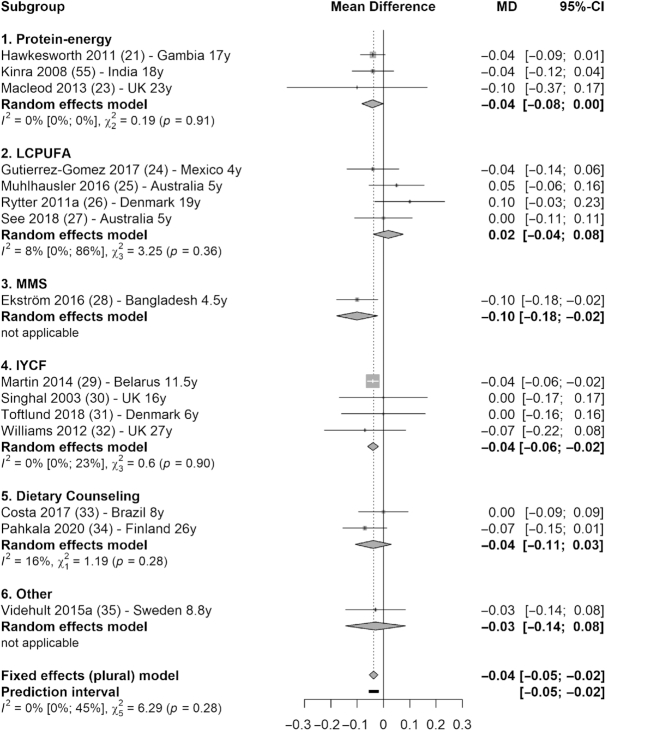
Forest plot with subgroup analysis of the effect of early-life nutrition interventions on long-term fasting glucose concentration (millimoles per liter). Study identification: last name of the first author and publication year, followed by reference number, country (or region if multisite study), and the duration of follow-up (in years). Different articles by the same author and in the same year are distinguished by a (or b). Hawkesworth et al. (21): the first trial in the article (protein-energy supplementation) was included in this analysis. Macleod et al. (23): the first arm of the intervention was included in this analysis (protein, carbohydrate, and vitamin compared with vitamin only). Ekström et al. (28): the second trial (multiple-micronutrient supplementation compared with iron and folic acid supplementation) was included in this analysis. “Other” denotes other interventions (in this case, probiotics). IYCF, infant and young child feeding; LCPUFA, long-chain polyunsaturated fatty acid supplementation; MD, mean difference; MMS, multiple-micronutrient supplementation.
FIGURE 4
FIGURE 4
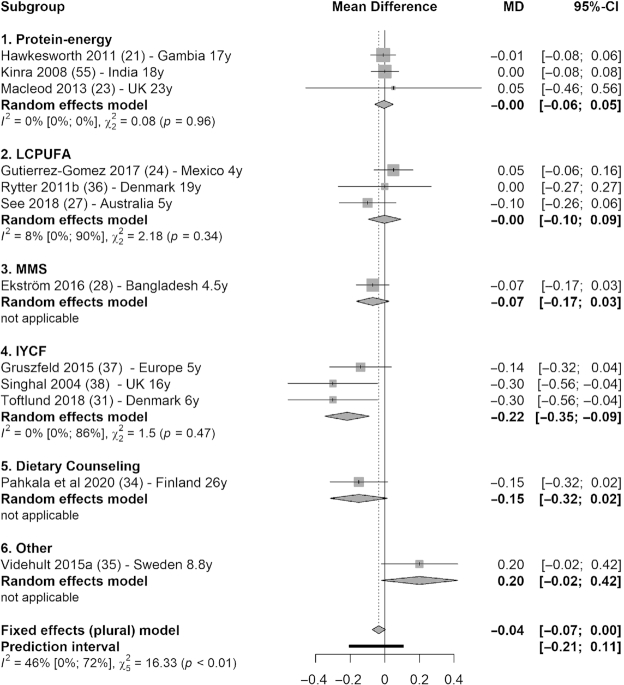
Forest plot with subgroup analysis of the effect of early-life nutrition interventions on long-term total cholesterol concentration (millimoles per liter). Study identification: last name of the first author and publication year, followed by reference number, country (or region if multisite study), and the duration of follow-up (in years). Different articles by the same author and in the same year are distinguished by a (or b). Hawkesworth et al. (21): the first trial in the article (protein-energy supplementation) was included in this analysis. Macleod et al. (23): the first arm of the intervention was included in this analysis (protein, carbohydrate, and vitamin compared with vitamin only). Ekström et al. (28): the second trial (multiple micronutrient supplementation compared with iron and folic acid supplementation) was included in this analysis. “Other” denotes other interventions (in this case, probiotics). IYCF, infant and young child feeding; LCPUFA, long-chain polyunsaturated fatty acid supplementation; MD, mean difference; MMS, multiple-micronutrient supplementation.
FIGURE 5
FIGURE 5
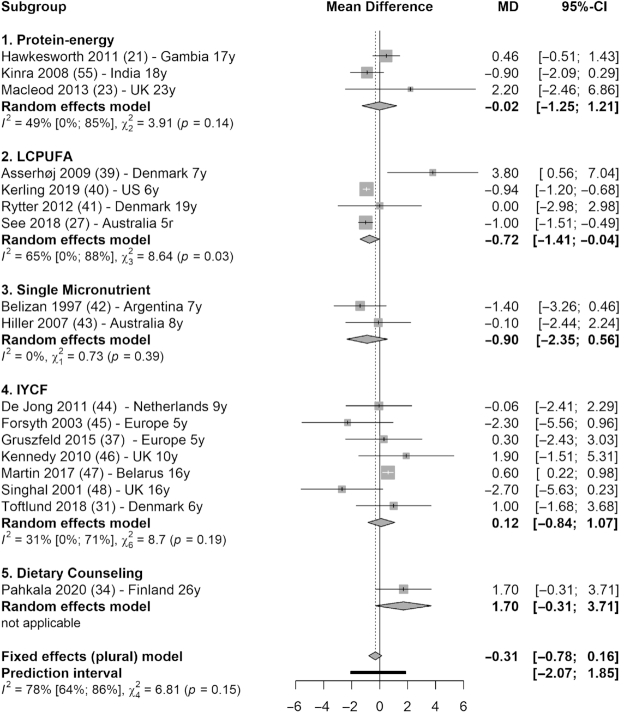
Forest plot with subgroup analysis of the effect of early-life nutrition interventions on long-term systolic blood pressure (mmHg). Study identification: last name of the first author and publication year, followed by reference number, country (or region if multisite study), and the duration of follow-up (in years). Hawkesworth et al. (21): the first trial in the article (protein-energy supplementation) was included in this analysis. Macleod et al. (23): the first arm of the intervention was included in this analysis (protein, carbohydrate, and vitamin compared with vitamin only). de Jong et al. (44): the first arm of the intervention was selected (LCPUFA-enriched formula, compared with control formula). IYCF, infant and young child feeding; LCPUFA, long-chain polyunsaturated fatty acid supplementation; MD, mean difference.
FIGURE 6
FIGURE 6
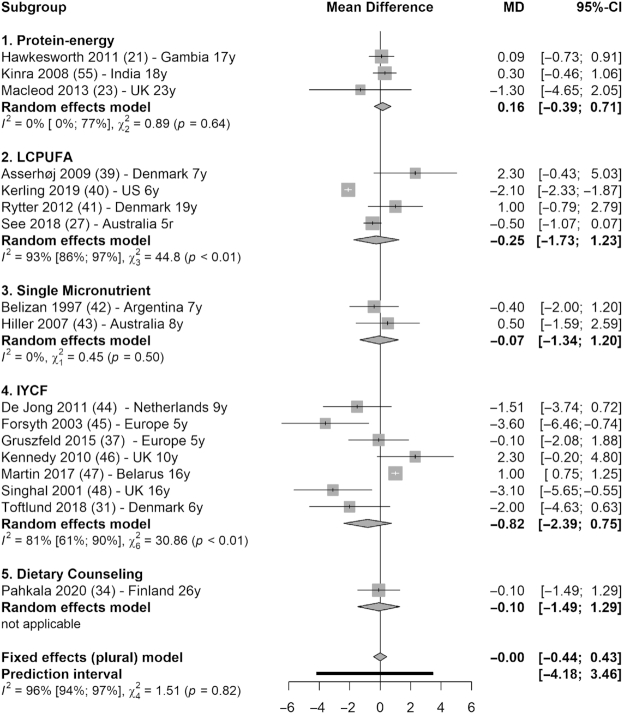
Forest plot with subgroup analysis of the effect of early-life nutrition interventions on long-term diastolic blood pressure (mmHg). Study identification: last name of the first author and publication year, followed by reference number, country (or region if multisite study), and the duration of follow-up (in years). Hawkesworth et al. (21): the first trial in the article (protein-energy supplementation) was included in this analysis. Macleod et al. (23): the first arm of the intervention was included in this analysis (protein, carbohydrate, and vitamin compared with vitamin only). de Jong et al. (44): the first arm of the intervention was selected (LCPUFA-enriched formula, compared with control formula). IYCF, infant and young child feeding; LCPUFA, long-chain polyunsaturated fatty acid supplementation; MD, mean difference.
FIGURE 7
FIGURE 7
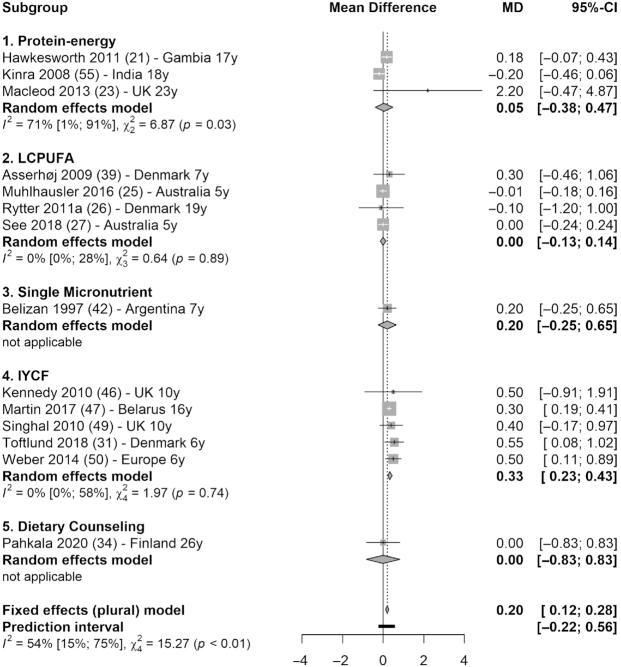
Forest plot with subgroup analysis of the effect of early-life nutrition interventions on long-term BMI (kg/m2). Study identification: last name of the first author and publication year, followed by reference number, country (or region if multisite study), and the duration of follow-up (in years). Different articles by the same author and in the same year are distinguished by a (or b). Hawkesworth et al. (21): the first trial in the article (protein-energy supplementation) was included in this analysis. Macleod et al. (23): the first arm of the intervention was included in this analysis (protein, carbohydrate, and vitamin compared with vitamin only). IYCF, infant and young child feeding; LCPUFA, long-chain polyunsaturated fatty acid supplementation; MD, mean difference.

References

    1. Martorell R. Improved nutrition in the first 1000 days and adult human capital and health. Am J Hum Biol. 2017;29(2):e22952. - PMC - PubMed
    1. Ravelli G-P, Stein ZA, Susser MW. Obesity in young men after famine exposure in utero and early infancy. N Engl J Med. 1976;295(7):349–53. - PubMed
    1. Barker DJ. The fetal and infant origins of adult disease. BMJ. 1990;301(6761):1111. - PMC - PubMed
    1. Barker DJP. The developmental origins of adult disease. Eur J Epidemiol. 2002;18(8):733–6. - PubMed
    1. Hoffman DJ, Reynolds RM, Hardy DB. Developmental origins of health and disease: current knowledge and potential mechanisms. Nutr Rev. 2017;75(12):951–70. - PubMed

Publication types