


Trends in the incidence and prevalence of end-stage renal disease with hemodialysis in entire Korean population: A nationwide population-based study
- PMID: 33787616
- PMCID: PMC8021352
- DOI: 10.1097/MD.0000000000025293
Trends in the incidence and prevalence of end-stage renal disease with hemodialysis in entire Korean population: A nationwide population-based study
Abstract
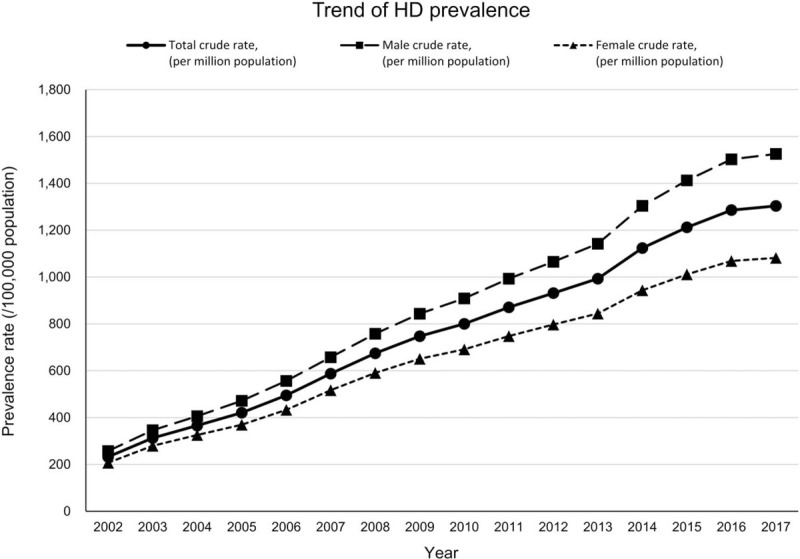
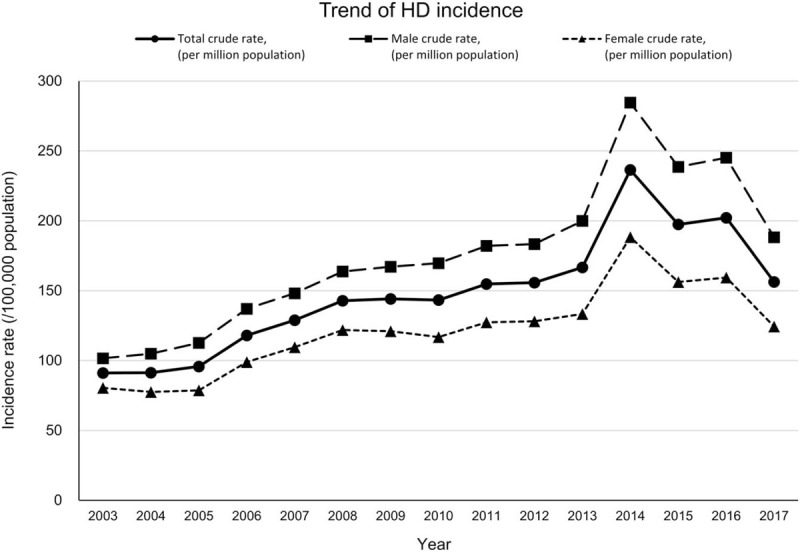
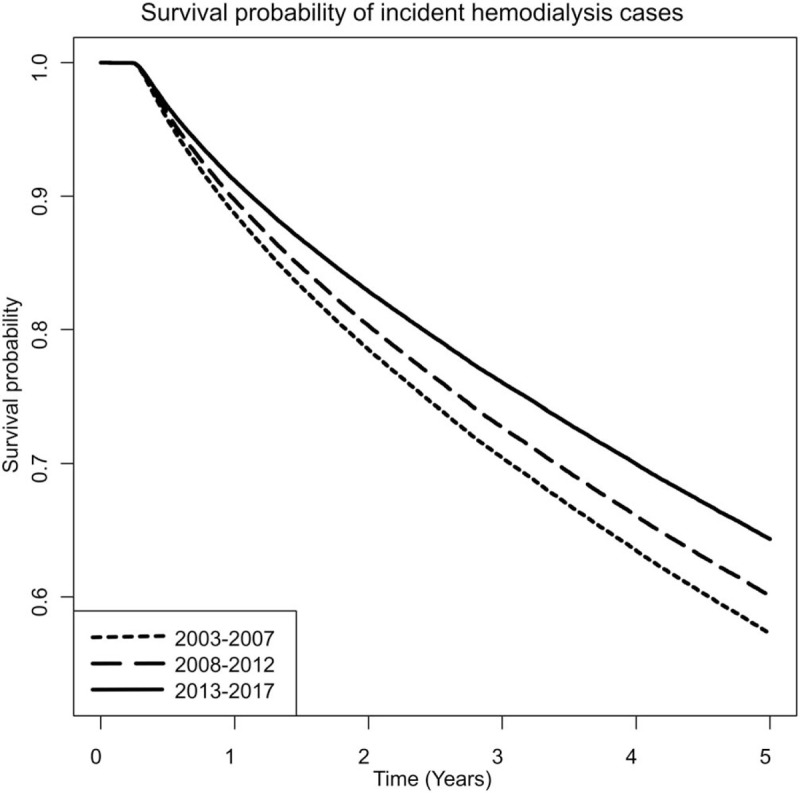
Data on the overall epidemiology and temporal trends of end-stage renal disease (ESRD) requiring hemodialysis in Korea are scarce. We aimed to estimate the prevalence and incidence of ESRD requiring hemodialysis in Korea between 2002 and 2017.Using the National Health Insurance Service database, we analyzed data from the entire Korean population between 2002 and 2017. Hemodialysis patients were identified using rare incurable disease codes (V001) or prescription of medical fee codes of hemodialysis (O7020 and O7021). We only included patients who had been maintained on hemodialysis for more than 90 days from the date of dialysis initiation, to exclude patients who required short-term dialysis for acute kidney injury, conversion to peritoneal dialysis, or kidney transplantation.During the 16-year follow-up, the number of hemodialysis patients in Korea has steadily increased from 11,215 in 2002 to 67,486 in 2017. The mean age of these patients has gradually increased from 55.57 ± 13.31 years in 2002 to 62.13 ± 13.23 years in 2017. In 2017, the crude prevalence rate of hemodialysis was 1303.4 per million population. Overall, the number of men tended to be somewhat higher than that of women, and the proportion of men increased slightly from 55.56% in 2002 to 58.45% in 2017. The proportion of diabetic patients increased rapidly from 23.84% to 47.84%, and the percentage of dyslipidemic patients rose from 18.9% to 86.7%. The number of incident hemodialysis patients increased significantly from 4406 in 2003 to 12,134 in 2014, and then decreased to 8090 in 2017. In the incident cases of hemodialysis, the observed increase in the proportion of male patients and in diabetes and dyslipidemia were similar to that of prevalent patients. The more recent era of hemodialysis initiation, the better 5-year survival rates were observed.The prevalence and incidence of hemodialysis in Korea gradually increased between 2002 and 2017. The proportion of men, and patients with diabetes and dyslipidemia requiring hemodialysis also increased continuously. The survival rate of hemodialysis patients was gradually improving. These findings may serve as a reference for future epidemiological studies on hemodialysis in Korea.
Copyright © 2021 the Author(s). Published by Wolters Kluwer Health, Inc.
Conflict of interest statement
The authors have no conflict of interest to disclose.
Figures
References
-
- Levey AS, Atkins R, Coresh J, et al. Chronic kidney disease as a global public health problem: approaches and initiatives—a position statement from kidney disease improving global outcomes. Kidney Int 2007;72:247–59. - PubMed
MeSH terms
Grants and funding
- 2017M3A9E8023001/the Bio & Medical Development Program of the National Research Foundation (NRF) funded by the Korean government (MSIT)
- 2017M3A9E8023016/the Bio & Medical Development Program of the National Research Foundation (NRF) funded by the Korean government (MSIT)
- HI18C0331, HR20C0021/the Korea Health Technology R&D Project through the Korea Health Industry Development Institute (KHIDI), funded by the Ministry of Health & Welfare, Republic of Korea
- BCRI20041, BCRI20076/Chonnam National University Hospital Biomedical Research Institute
LinkOut - more resources
Full Text Sources
Other Literature Sources
Medical
