


Cyberbullying Among Adolescents and Children: A Comprehensive Review of the Global Situation, Risk Factors, and Preventive Measures
- PMID: 33791270
- PMCID: PMC8006937
- DOI: 10.3389/fpubh.2021.634909
Cyberbullying Among Adolescents and Children: A Comprehensive Review of the Global Situation, Risk Factors, and Preventive Measures
Abstract
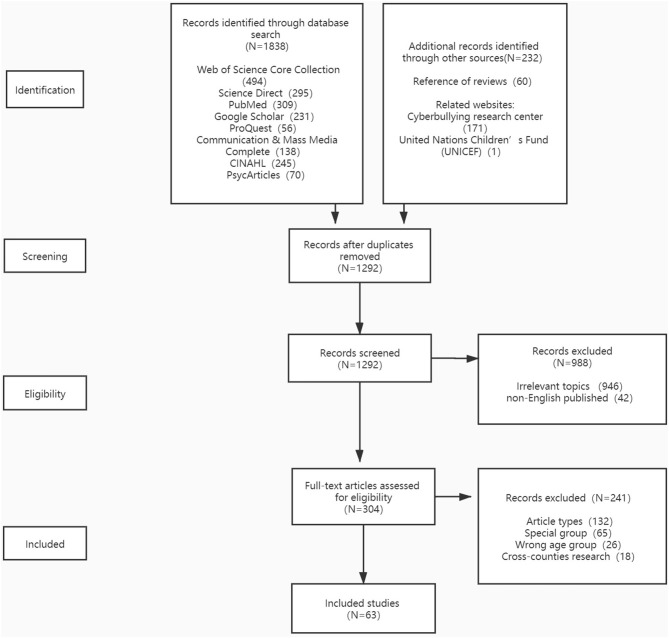
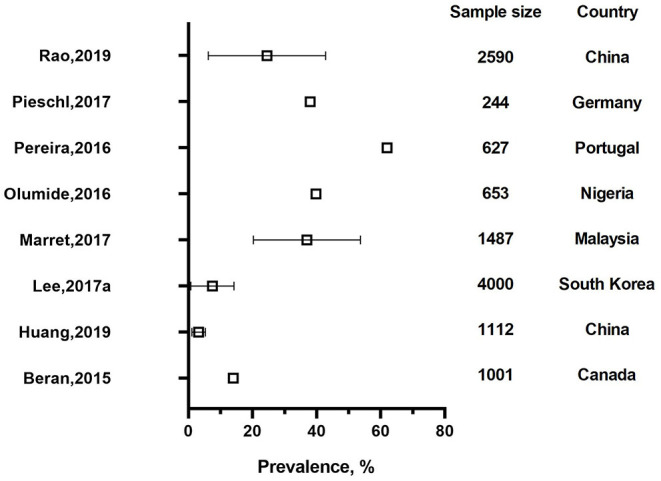
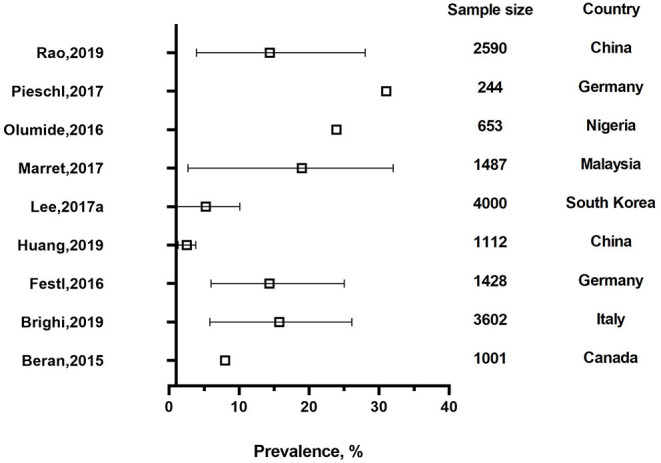
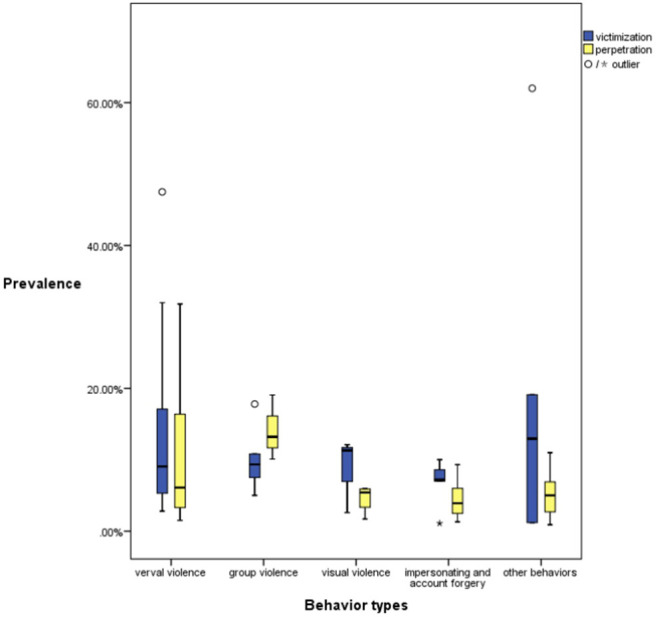
Background: Cyberbullying is well-recognized as a severe public health issue which affects both adolescents and children. Most extant studies have focused on national and regional effects of cyberbullying, with few examining the global perspective of cyberbullying. This systematic review comprehensively examines the global situation, risk factors, and preventive measures taken worldwide to fight cyberbullying among adolescents and children. Methods: A systematic review of available literature was completed following PRISMA guidelines using the search themes "cyberbullying" and "adolescent or children"; the time frame was from January 1st, 2015 to December 31st, 2019. Eight academic databases pertaining to public health, and communication and psychology were consulted, namely: Web of Science, Science Direct, PubMed, Google Scholar, ProQuest, Communication & Mass Media Complete, CINAHL, and PsycArticles. Additional records identified through other sources included the references of reviews and two websites, Cyberbullying Research Center and United Nations Children's Fund. A total of 63 studies out of 2070 were included in our final review focusing on cyberbullying prevalence and risk factors. Results: The prevalence rates of cyberbullying preparation ranged from 6.0 to 46.3%, while the rates of cyberbullying victimization ranged from 13.99 to 57.5%, based on 63 references. Verbal violence was the most common type of cyberbullying. Fourteen risk factors and three protective factors were revealed in this study. At the personal level, variables associated with cyberbullying including age, gender, online behavior, race, health condition, past experience of victimization, and impulsiveness were reviewed as risk factors. Likewise, at the situational level, parent-child relationship, interpersonal relationships, and geographical location were also reviewed in relation to cyberbullying. As for protective factors, empathy and emotional intelligence, parent-child relationship, and school climate were frequently mentioned. Conclusion: The prevalence rate of cyberbullying has increased significantly in the observed 5-year period, and it is imperative that researchers from low and middle income countries focus sufficient attention on cyberbullying of children and adolescents. Despite a lack of scientific intervention research on cyberbullying, the review also identified several promising strategies for its prevention from the perspectives of youths, parents and schools. More research on cyberbullying is needed, especially on the issue of cross-national cyberbullying. International cooperation, multi-pronged and systematic approaches are highly encouraged to deal with cyberbullying.
Keywords: adolescents; children; cyberbullying; globalization; preventive measures; risk factors.
Copyright © 2021 Zhu, Huang, Evans and Zhang.
Conflict of interest statement
The authors declare that the research was conducted in the absence of any commercial or financial relationships that could be construed as a potential conflict of interest.
Figures
References
-
- Ang RP. Adolescent cyberbullying: a review of characteristics, prevention and intervention strategies. Aggress Violent Behav. (2015) 25:35–42. 10.1016/j.avb.2015.07.011 - DOI
-
- UNICEF ed . Children in a Digital World. New York, NY: UNICEF; (2017).
-
- Thomas HJ, Connor JP, Scott JG. Integrating traditional bullying and cyberbullying: challenges of definition and measurement in adolescents - a review. Educ Psychol Rev. (2015) 27:135–52. 10.1007/s10648-014-9261-7 - DOI
-
- Baldry AC, Farrington DP, Sorrentino A. Am I at risk of cyberbullying? A narrative review and conceptual framework for research on risk of cyberbullying and cybervictimization: the risk and needs assessment approach. Aggress Violent Behav. (2015) 23:36–51. 10.1016/j.avb.2015.05.014 - DOI
Publication types
MeSH terms
LinkOut - more resources
Full Text Sources
Other Literature Sources
Medical
Research Materials
Miscellaneous
