


Does telemedicine reduce the carbon footprint of healthcare? A systematic review
- PMID: 33791483
- PMCID: PMC8004323
- DOI: 10.7861/fhj.2020-0080
Does telemedicine reduce the carbon footprint of healthcare? A systematic review
Abstract
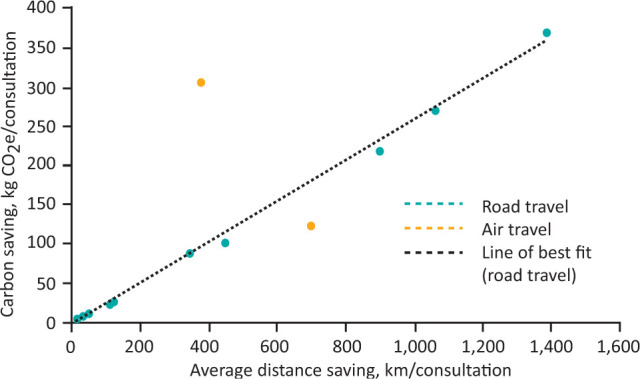
In the rapidly progressing field of telemedicine, there is a multitude of evidence assessing the effectiveness and financial costs of telemedicine projects; however, there is very little assessing the environmental impact despite the increasing threat of the climate emergency. This report provides a systematic review of the evidence on the carbon footprint of telemedicine. The identified papers unanimously report that telemedicine does reduce the carbon footprint of healthcare, primarily by reduction in transport-associated emissions. The carbon footprint savings range between 0.70-372 kg CO2e per consultation. However, these values are highly context specific. The carbon emissions produced from the use of the telemedicine systems themselves were found to be very low in comparison to emissions saved from travel reductions. This could have wide implications in reducing the carbon footprint of healthcare services globally. In order for telemedicine services to be successfully implemented, further research is necessary to determine context-specific considerations and potential rebound effects.
Keywords: carbon footprint; e-health; sustainability; telemedicine.
© Royal College of Physicians 2021. All rights reserved.
Figures
References
-
- World Health Organization . Telemedicine: Opportunities and developments in Member States. Geneva: WHO, 2010.
-
- Mounessa JS, Chapman S, Braunberger T, et al. A systematic review of satisfaction with teledermatology. J Telemed Telecare 2018;24:263–70. - PubMed
Publication types
LinkOut - more resources
Full Text Sources
Other Literature Sources
Medical
