


The Global Registry for Hereditary Angioedema due to C1-Inhibitor Deficiency
- PMID: 33791951
- PMCID: PMC8282542
- DOI: 10.1007/s12016-021-08855-4
The Global Registry for Hereditary Angioedema due to C1-Inhibitor Deficiency
Abstract
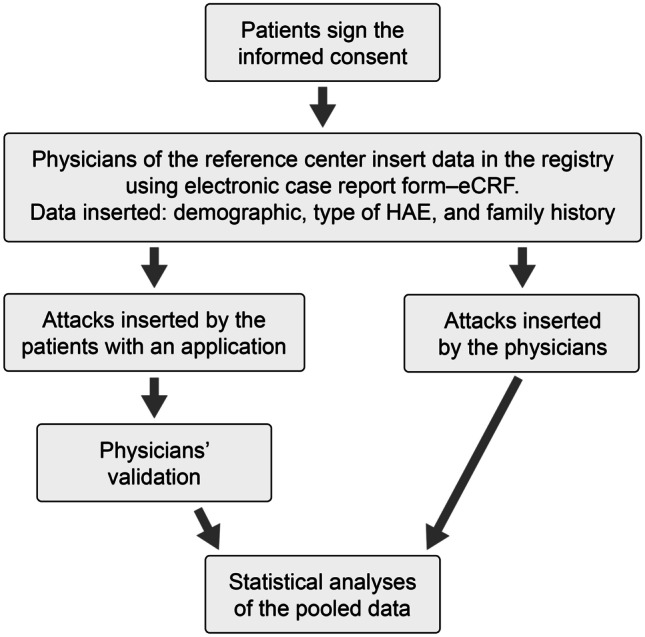
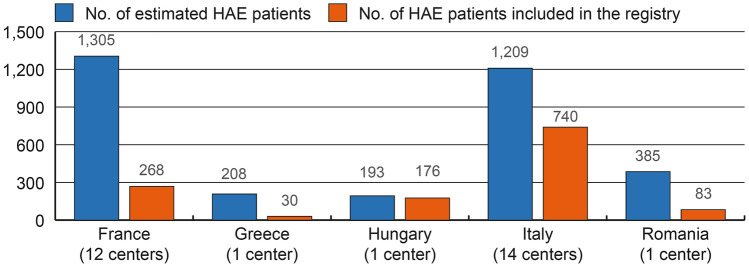
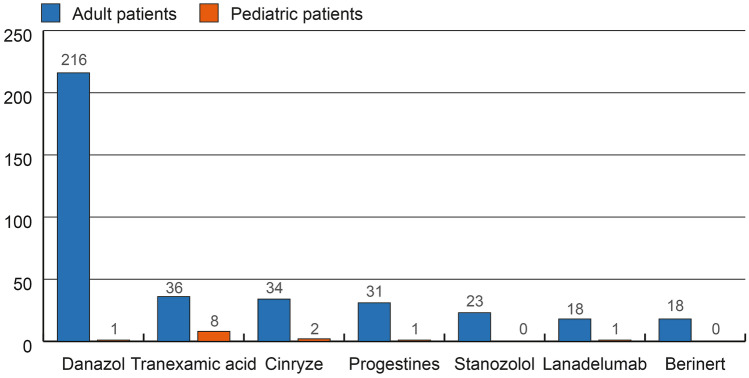
Hereditary angioedema (HAE) is a rare condition, mostly due to genetic deficiency of complement C1 inhibitor (C1-INH). The rarity of HAE impedes extensive data collection and assessment of the impact of certain factors known to affect the course of this disabling and life-threatening disease. Establishing a global registry could assist to overcome such issues and provides valuable patient data from different countries. The HAE Global Registry is a disease-specific registry, with web-based electronic support, where data are provided by physicians and patients through a dedicated application. We collected data between January 1, 2018, and August 31, 2020. Data on 1297 patients from 29 centers in 5 European countries were collected. At least one attack was recorded for 497 patients during the study period. Overall, 1182 patients were diagnosed with HAE type 1 and 115 with type 2. At the time of database lock, 389 patients were taking long-term prophylactic medication, 217 of which were on danazol. Most recorded attacks affected the abdomen, were generally moderate in severity, and occurred in patients who were not on prophylactic treatment (70.6%, 6244/8848). The median duration of attacks was 780 min (IQR 290-1740) in patients on prophylactic medication and 780 min (IQR 300-1920) in patients not on continuous prophylactic medication. In conclusion, the establishment of a registry for C1-INH-HAE allowed collection of a large amount of data that may help to better understand the clinical characteristics of this disease. This information may enhance patient care and guide future therapeutic decisions.
Keywords: Attacks; C1-inhibitor; Database; Global; Hereditary angioedema; Prophylaxis; Registry.
© 2021. The Author(s).
Conflict of interest statement
AZ received speaker/ consultancy fees from BioCryst, CSL Behring, Pharming, and Takeda. HF received honoraria and travel grants from CSL Behring, Shire/Takeda, Swedish Orphan Biovitrum, Octapharma, Kalvista and Pharming; and/or served as a consultant for these companies and has participated in clinical trials/registries for BioCryst, CSL Behring, Pharming, Kalvista and Shire. LB received honoraria and travel grants from CSL Behring, Novartis, Pharming and Takeda, and her institute received research funding from CSL Behring, Novartis and Takeda. NB received travel grants from CSL Behring, Shire-Takeda, Pharming Group NV, Chiesi Pharmaceuticals GmbH and speaker fees from Shire-Takeda and Glaxo-Smith Klein. AEG received research grants from Shire-Takeda. FP received speaker fees from Shire-Takeda, Novartis, CSL Behring. IB-G- reports grants, personal fees and non-financial support from Shire-Takeda and Biocryst, and non-financial support from Pharming and CSL Behring. MC received travel grants from CSL Behring, Menarini, Novartis, Shire-Takeda and consultancy fees from Biocryst, CSL Behring, Shire-Takeda. His Institution received scientific grants from CSL Behring and Shire-Takeda. LV, NA, MR, and MCR report no conflicts of interest.
Figures
References
-
- Cicardi M, Zuraw BL (2018) Angioedema Due to Bradykinin Dysregulation, The Journal of Allergy and Clinical Immunology: In Practice, Volume 6, Issue 4, Pages 1132–1141, ISSN 2213–2198, https://doi.org/10.1016/j.jaip.2018.04.022. - PubMed
-
- Laires P, Barros A, Lopes F, et al. Regispt: Registry of Registries In Portugal. Value Health. 2015;18:A563. doi: 10.1016/j.jval.2015.09.1837. - DOI
MeSH terms
Substances
LinkOut - more resources
Full Text Sources
Other Literature Sources
