. 2021 Apr 1;11(2):1759-1783.
doi: 10.1002/cphy.c200013.

Glucagon's Metabolic Action in Health and Disease

Affiliations

Glucagon's Metabolic Action in Health and Disease

Anja Zeigerer et al. Compr Physiol. .

Abstract

Discovered almost simultaneously with insulin, glucagon is a pleiotropic hormone with metabolic action that goes far beyond its classical role to increase blood glucose. Albeit best known for its ability to directly act on the liver to increase de novo glucose production and to inhibit glycogen breakdown, glucagon lowers body weight by decreasing food intake and by increasing metabolic rate. Glucagon further promotes lipolysis and lipid oxidation and has positive chronotropic and inotropic effects in the heart. Interestingly, recent decades have witnessed a remarkable renaissance of glucagon's biology with the acknowledgment that glucagon has pharmacological value beyond its classical use as rescue medication to treat severe hypoglycemia. In this article, we summarize the multifaceted nature of glucagon with a special focus on its hepatic action and discuss the pharmacological potential of either agonizing or antagonizing the glucagon receptor for health and disease. © 2021 American Physiological Society. Compr Physiol 11:1759-1783, 2021.


Figures

Figure 1
Figure 1
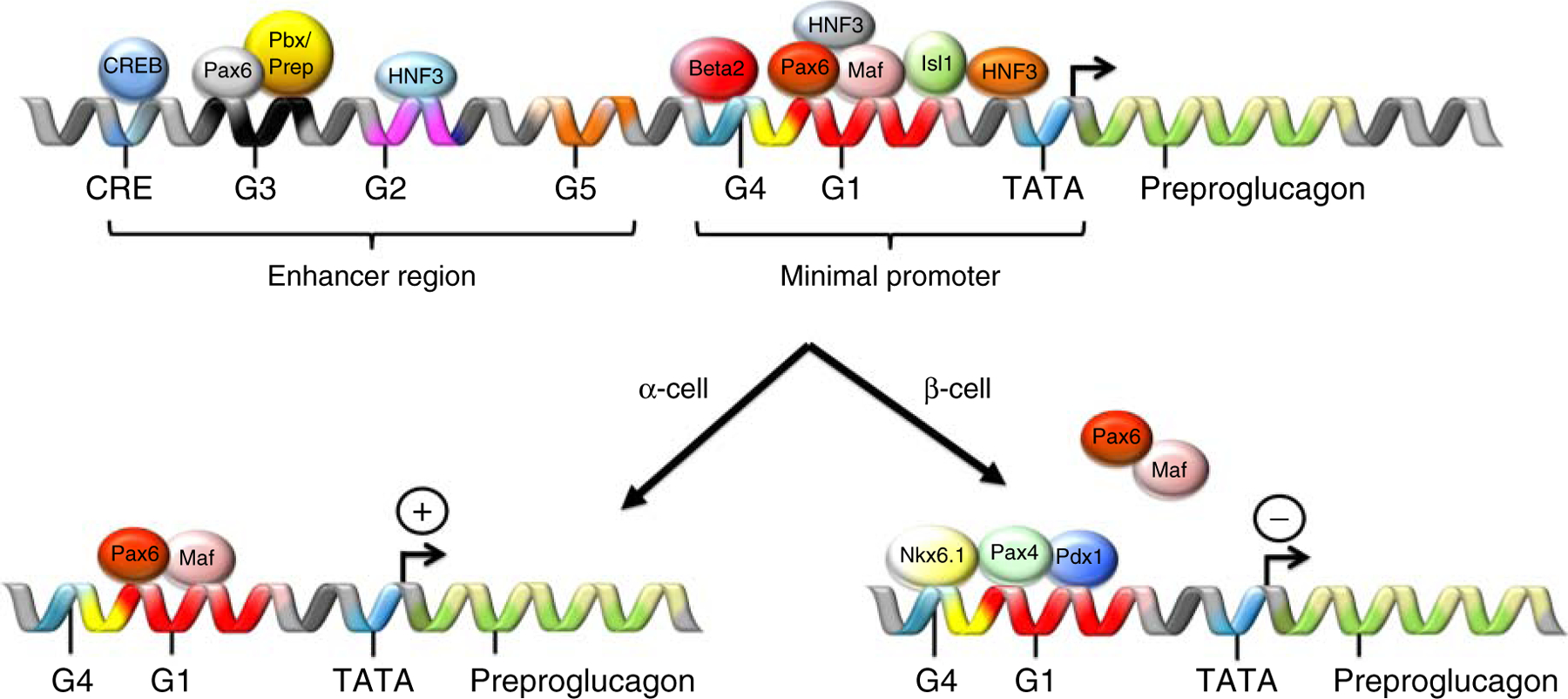
Schematic on the transcriptional regulation of preproglucagon in the pancreatic α- and β-cells. The expression of preproglucagon is regulated through interaction of home domain proteins that bind to the preproglucagon promoter region, which comprises a minimal promoter region and an enhancer region. For further explanations please see text.
Figure 2
Figure 2
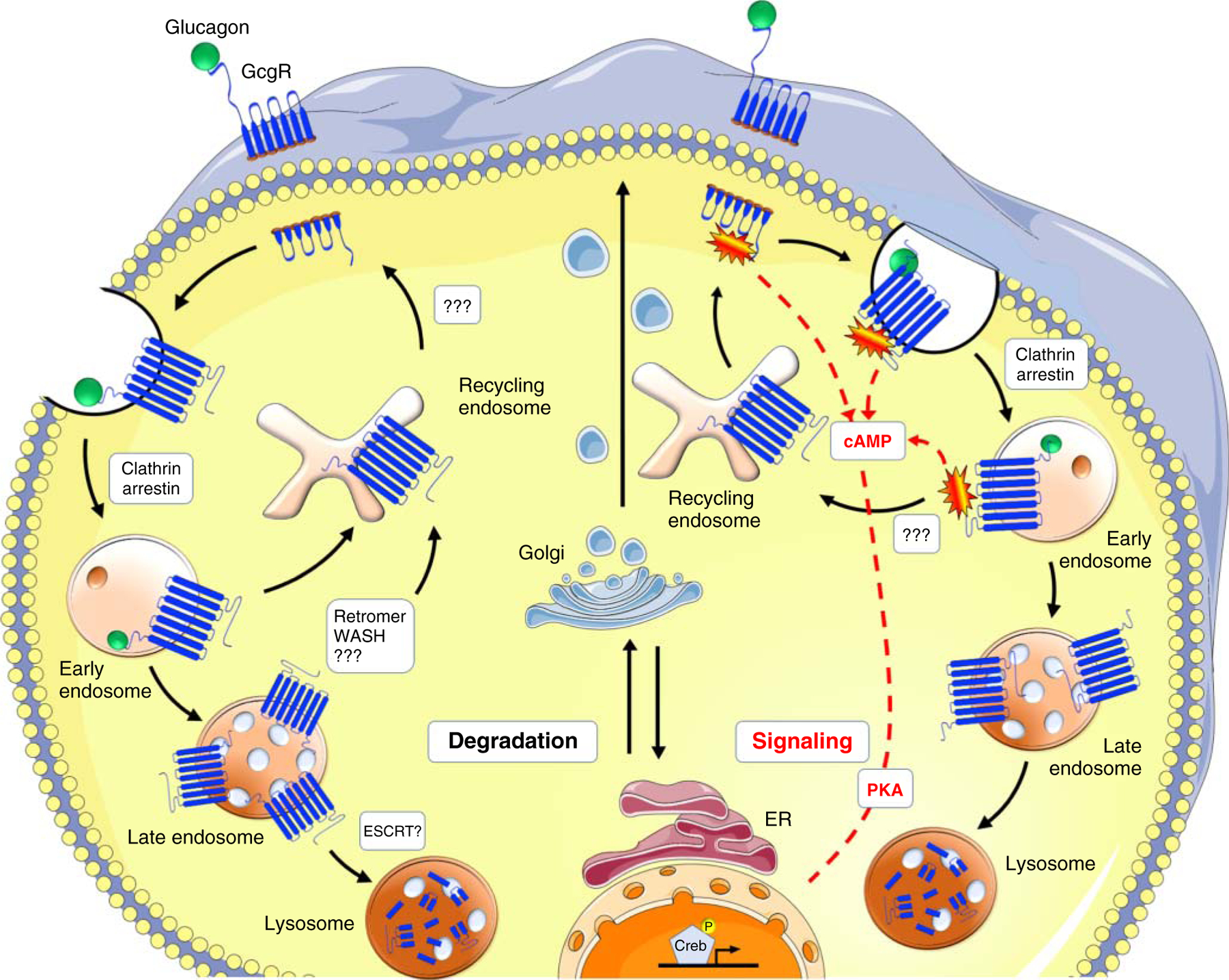
Proposed model of Gcgr trafficking and signaling. Stimulations with glucagon induce glucagon receptor recruitment into clathrin-coated vesicles on the plasma membrane through the interaction of β-arrestins with the cytoplasmic tail of the receptor and subsequent interaction with the clathrin coat. Short-term stimulations with glucagon increase glucagon receptor presence in early endosomes and enhanced signaling, followed by receptor recycling. Upon long-term treatments, reoccurrence of the receptor on the membrane is reduced, and its lysosomal degradation increases. Regulators of these sorting mechanisms on early and late endosomes, such as retromer and WASH complex for recycling and ESCRTs for degradation have been shown to be involved in other GPCR trafficking, however, the knowledge on Gcgr is still very limited and represented by question marks.
Figure 3
Figure 3
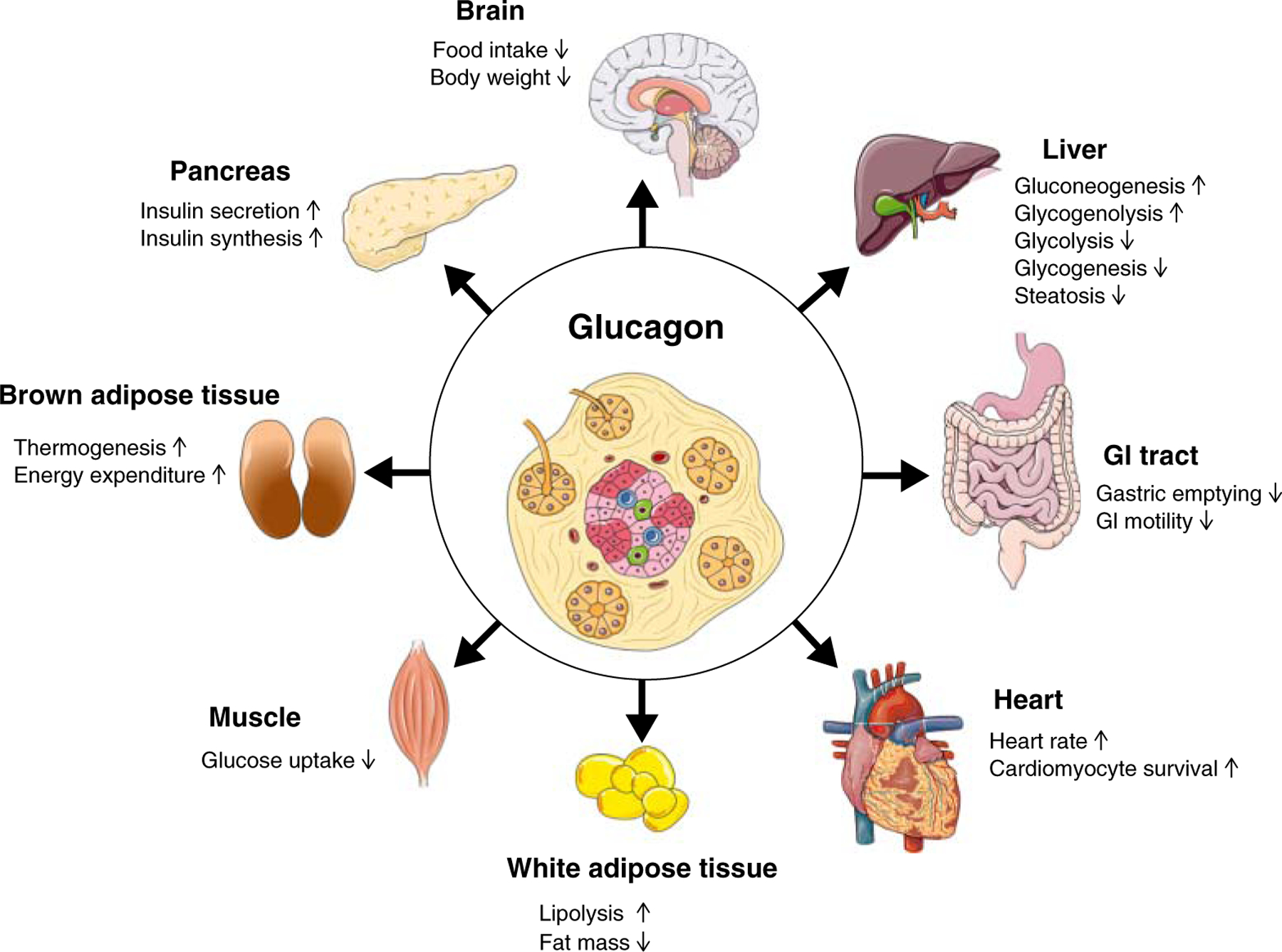
Schematic on the direct and indirect metabolic effects of glucagon.
Figure 4
Figure 4
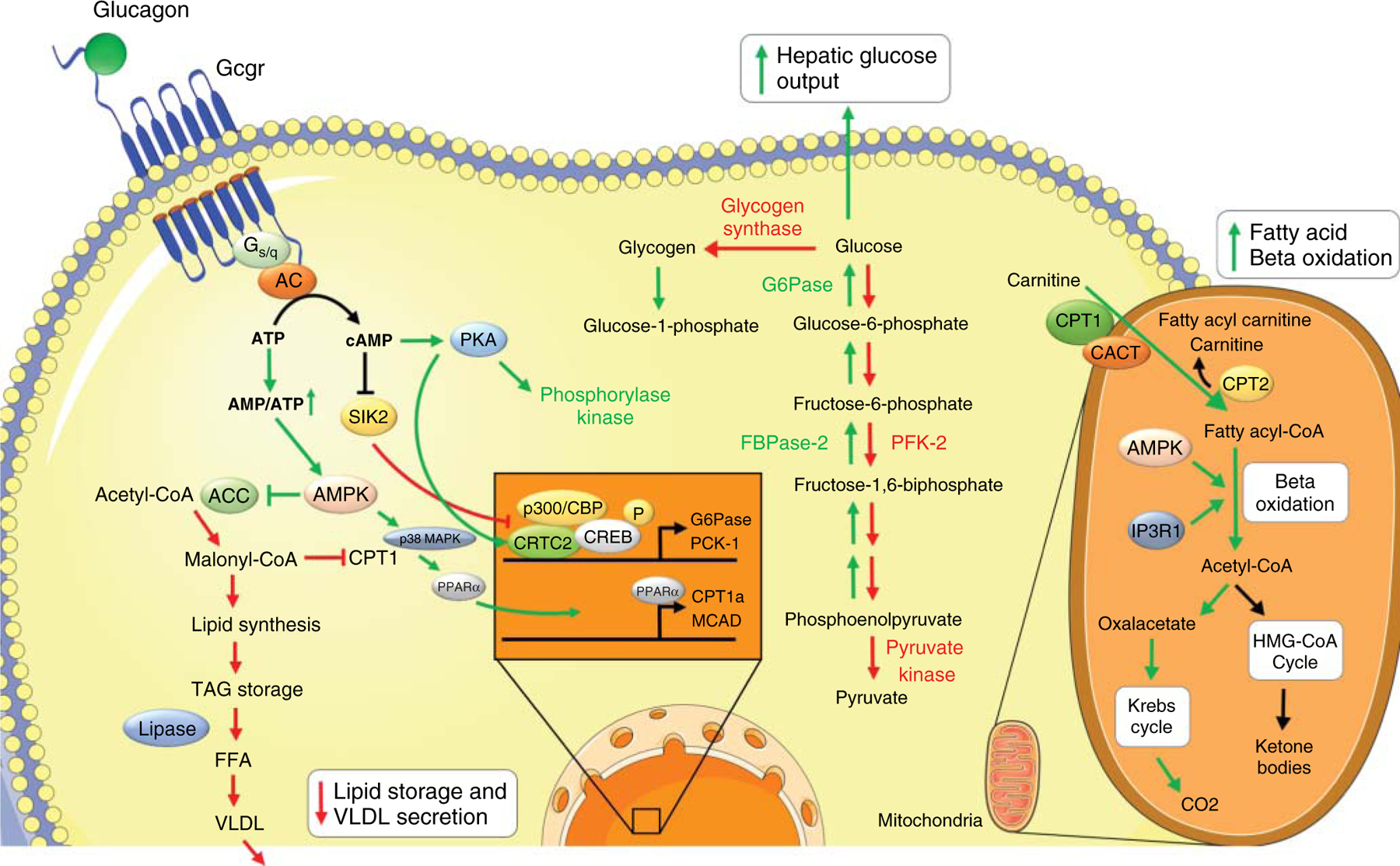
Glucagon effects on hepatic glucose and lipid metabolism. Activation of glucagon receptor by glucagon in hepatocyte stimulates adenylate cyclase-/cAMP-/PKA-dependent phosphorylation of Creb and dephosphorylation/nuclear translocation of Crtc2. p-Creb induces transcription of gluconeogenic genes G6Pase and Pck1. PKA activates phosphorylase synthase and inhibits glycogen synthase, thus stimulating glycogen breakdown. In addition, PKA activates FBPase2 and inhibits PFK-1 and pyruvate kinase, thereby enhancing gluconeogenesis and inhibiting glycolysis. By AC dependent inhibition of SIK2, glucagon stimulates activation of p300, which facilitates transcription of gluconeogenic genes. p-CREB induces transcription of Ppar-α that enhances transcription of β-oxidation genes Cpt1 and Mcad. ATP to cAMP conversion leads to enhanced AMP/ATP ratio leading to AMPK activation and inhibition of ACC. This results in inhibiting the conversion of acetyl-CoA to malonyl-CoA by ACC and subsequent decreases the lipid synthesis pathway. As a consequence malonyl-CoA formation is reduced which induces an accumulation of Cpt1. Cpt1 enhances fatty acyl-CoA transport into mitochondria and induces β-oxidation. In addition, glucagon stimulates AMPK and mitochondrial IP3R1 further activating β-oxidation. Acetyl-CoA subsequently enters Krebs cycle for ketone body formation during prolonged starvation. Abbreviations, AC, adenylyl cyclase; cAMP, cyclic adenosine monophosphate; PKA, protein kinase A; Creb, cAMP-responsive element-binding protein; G6Pase, glucose 6 phosphatase; Pck1, phosphoenol pyruvate carboxykinase 1; FBPase 2, fructose 2,6-bisphosphatase; PFK-1, phospho-fructokinase 1; Crtc2, Creb-regulated transcription coactivator 2; SIK2, salt-inducible kinase 2; Ppar-α, peroxisome proliferator-activated receptor alpha; Cpt1, carnitine palmitoyltransferase 1; Mcad, medium-chain acyl-CoA dehydrogenase; ATP, adenosine triphosphate; AMP, adenosine monophosphate; AMPK, AMP-activated protein kinase; ACC, acetyl-CoA carboxylase; IP3R1, inositol triphosphate receptor 1; FFA, free fatty acid; TAG, tri-acyl glycerol; VLDL, very low-density-lipoprotein; LCAD, long-chain acyl-CoA dehydrogenase.

References

    1. Ali S, Ussher JR, Baggio LL, Kabir MG, Charron MJ, Ilkayeva O, Newgard CB, Drucker DJ. Cardiomyocyte glucagon receptor signaling modulates outcomes in mice with experimental myocardial infarction. Mol Metab 4 (2): 132–143, 2015. - PMC - PubMed
    1. Almdal TP, Holst JJ, Heindorff H, Vilstrup H. Glucagon immunoneutralization in diabetic rats normalizes urea synthesis and decreases nitrogen wasting. Diabetes 41 (1): 12–16, 1992. - PubMed
    1. Altarejos JY, Montminy M. CREB and the CRTC co-activators: Sensors for hormonal and metabolic signals. Nat Rev Mol Cell Biol 12 (3): 141–151, 2011. - PMC - PubMed
    1. Amatuzio DS, Grande F, Wada S. Effect of glucagon on the serum lipids in essential hyperlipemia and in hypercholesterolemia. Metabolism 11: 1240–1249, 1962. - PubMed
    1. Ambery PD, Klammt S, Posch MG, Petrone M, Pu W, Rondinone C, Jermutus L, Hirshberg B. MEDI0382, a GLP-1/glucagon receptor dual agonist, meets safety and tolerability endpoints in a single-dose, healthy-subject, randomized, phase 1 study. Br J Clin Pharmacol 84 (10): 2325–2335, 2018. - PMC - PubMed

Publication types

LinkOut - more resources