


Designed proteins assemble antibodies into modular nanocages
- PMID: 33795432
- PMCID: PMC8592034
- DOI: 10.1126/science.abd9994
Designed proteins assemble antibodies into modular nanocages
Abstract
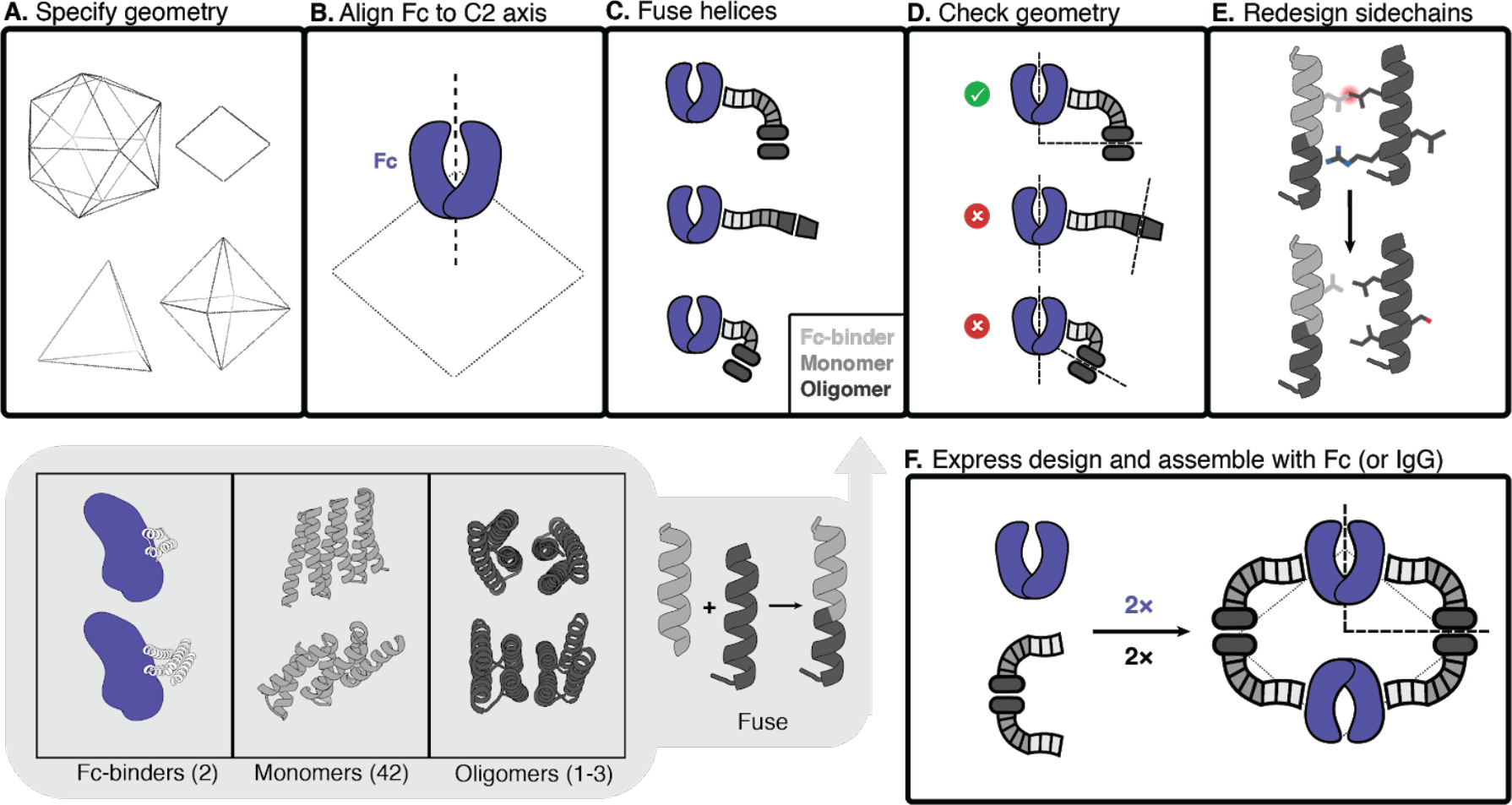
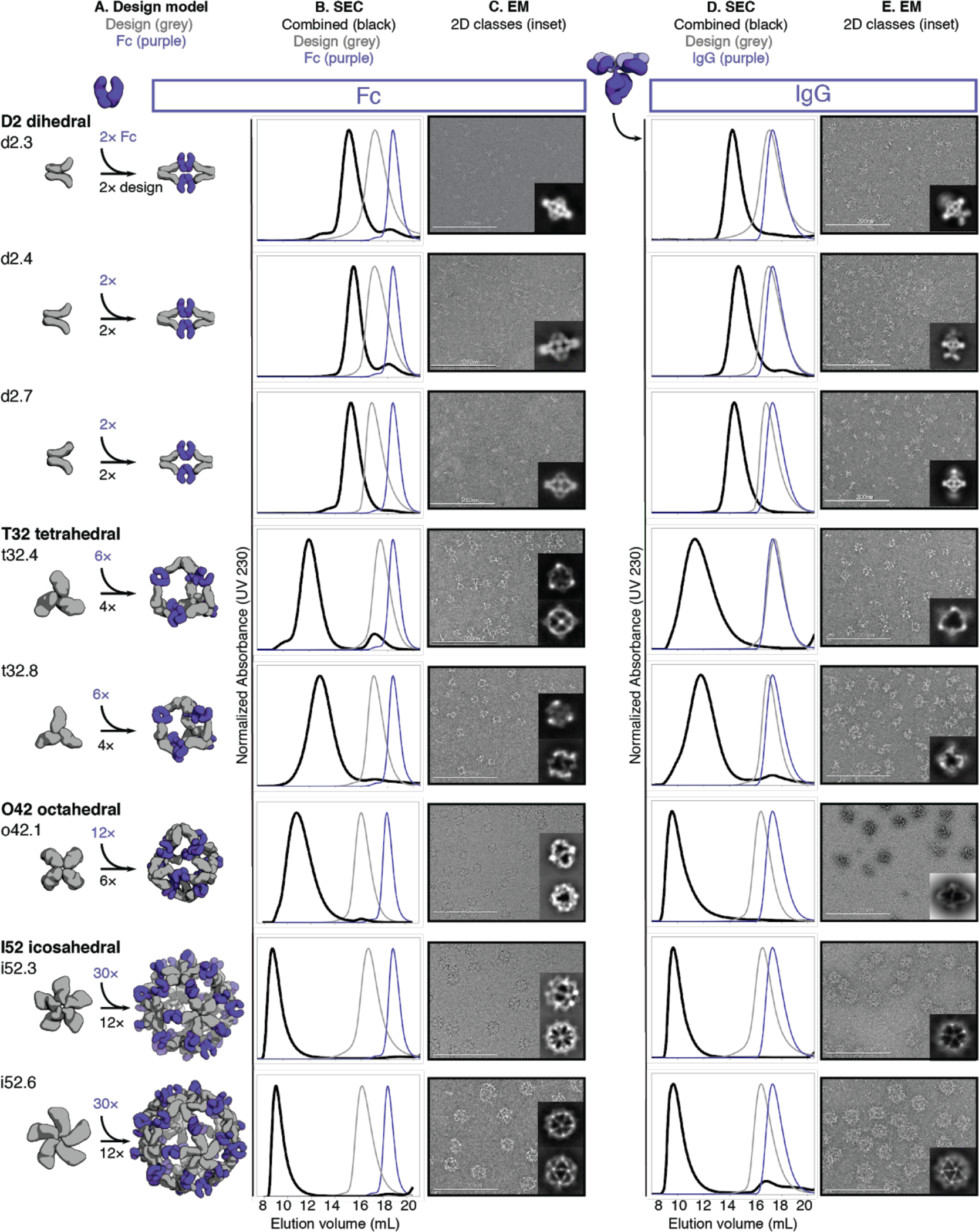
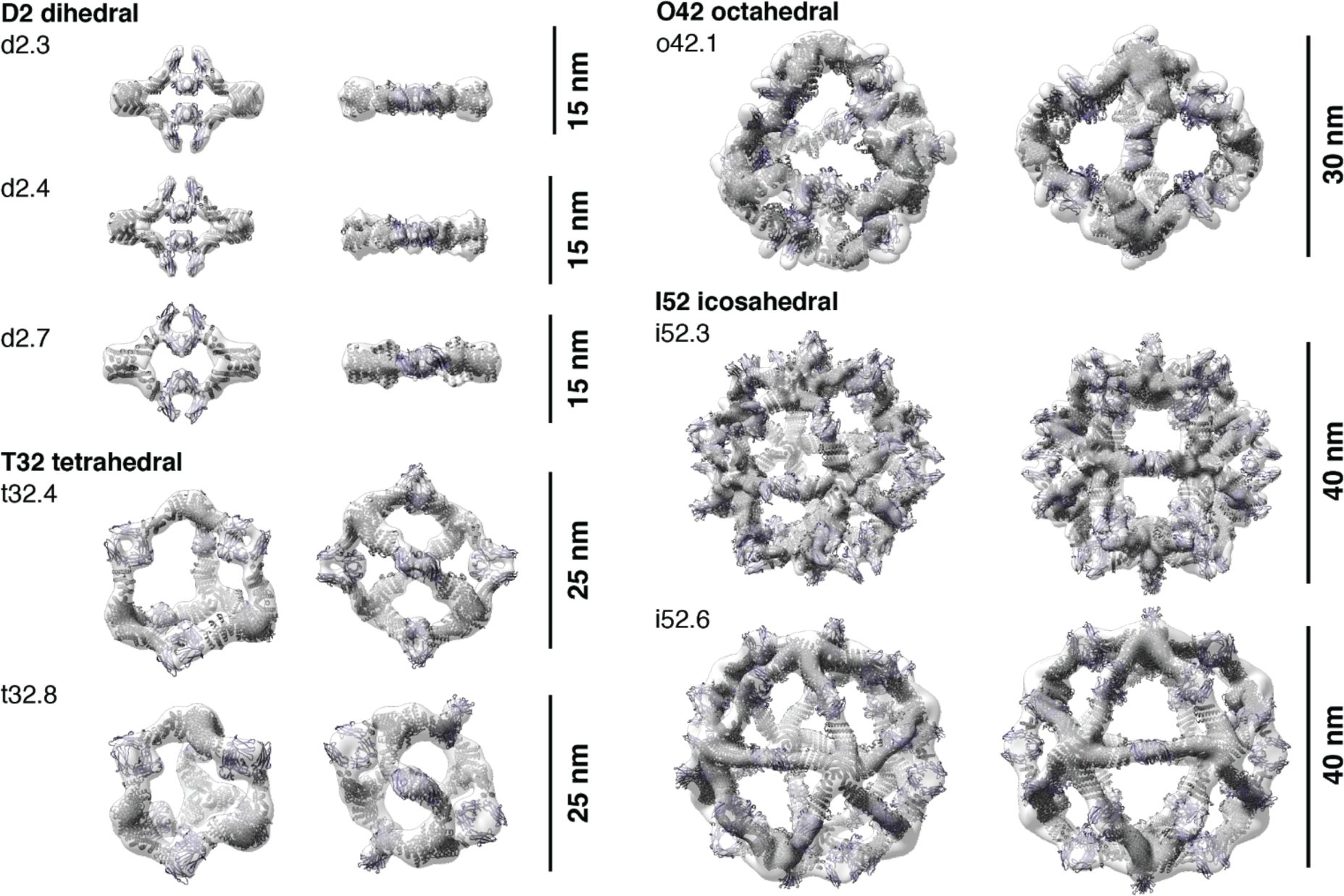
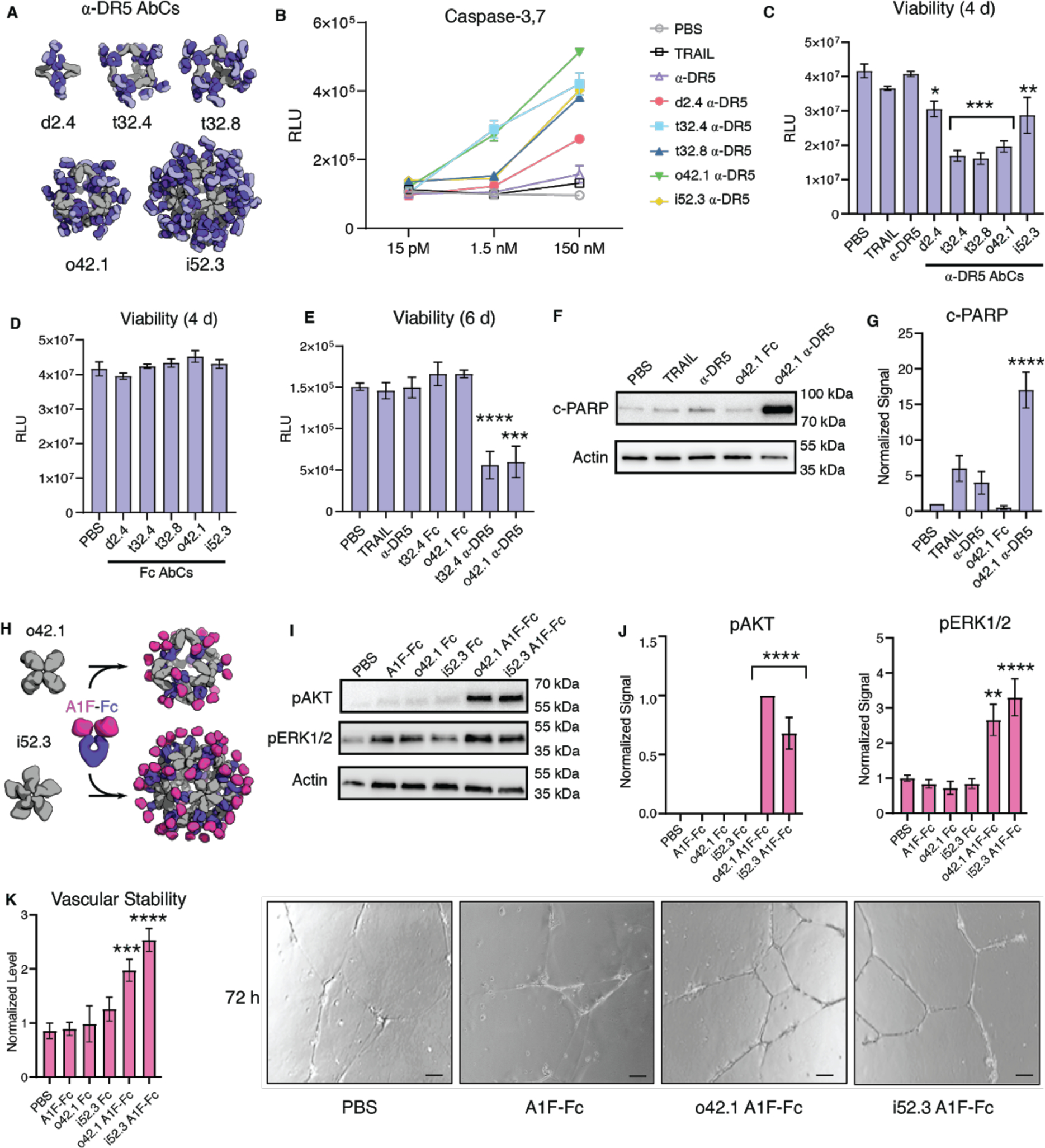
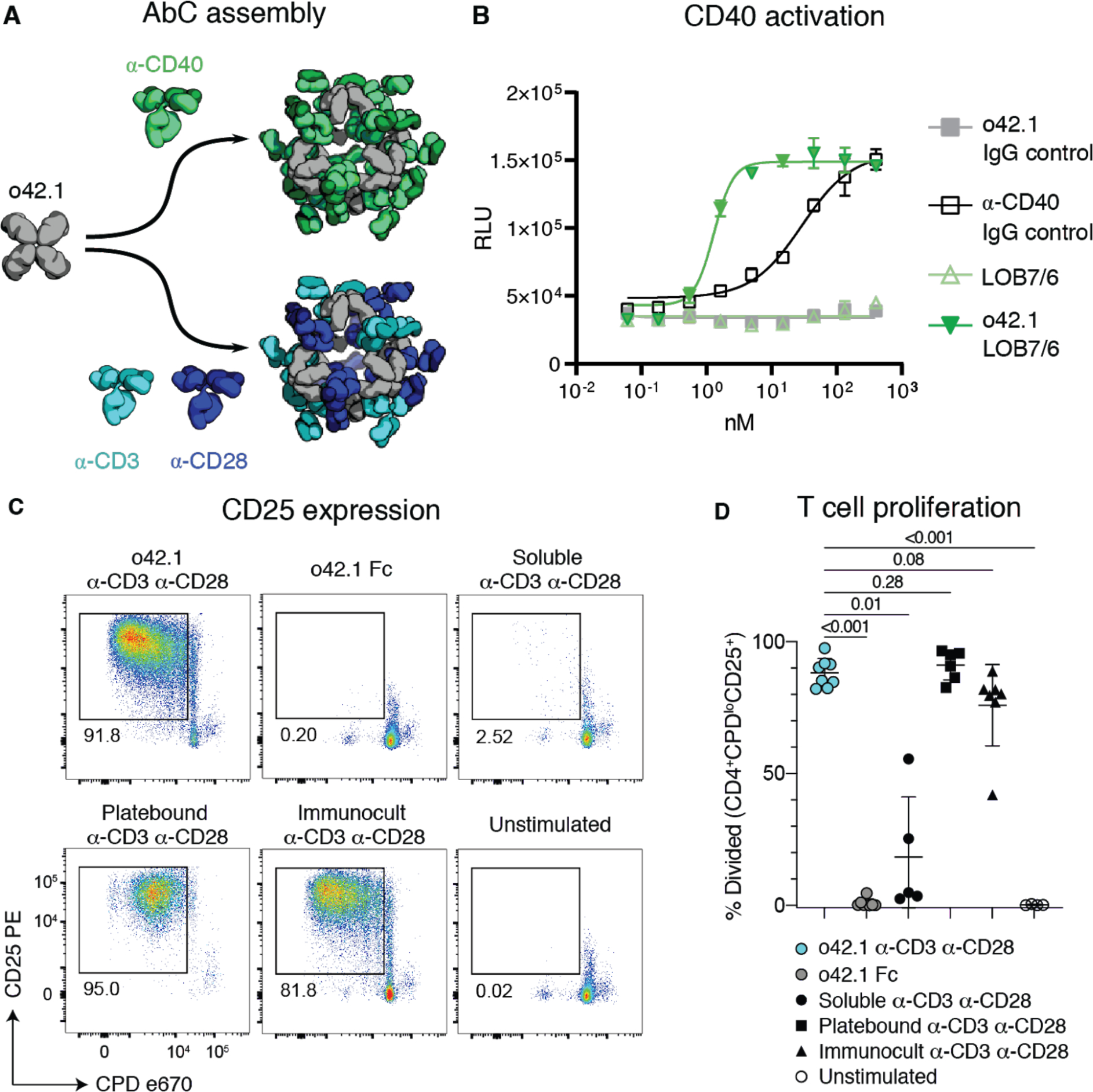
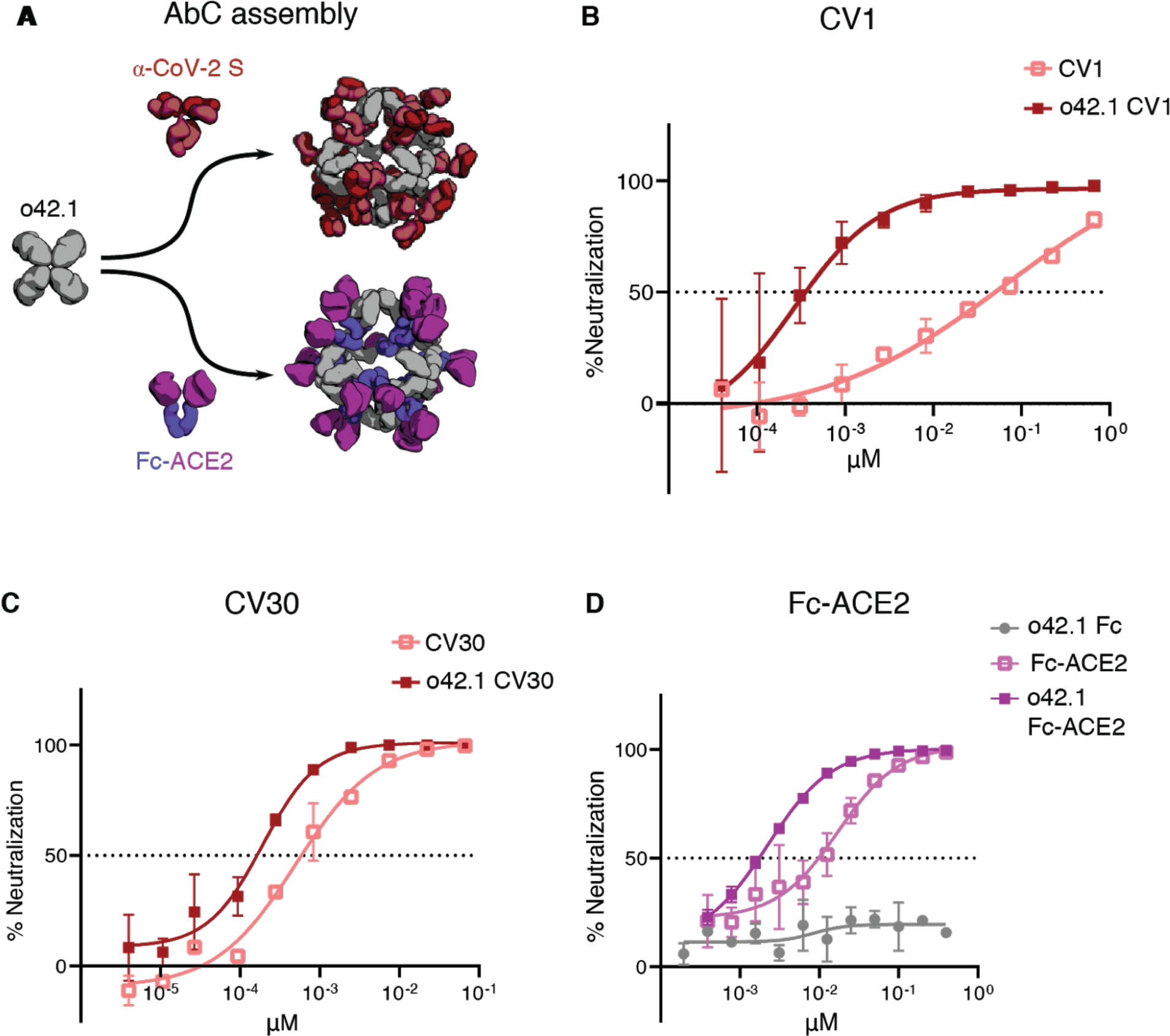
Multivalent display of receptor-engaging antibodies or ligands can enhance their activity. Instead of achieving multivalency by attachment to preexisting scaffolds, here we unite form and function by the computational design of nanocages in which one structural component is an antibody or Fc-ligand fusion and the second is a designed antibody-binding homo-oligomer that drives nanocage assembly. Structures of eight nanocages determined by electron microscopy spanning dihedral, tetrahedral, octahedral, and icosahedral architectures with 2, 6, 12, and 30 antibodies per nanocage, respectively, closely match the corresponding computational models. Antibody nanocages targeting cell surface receptors enhance signaling compared with free antibodies or Fc-fusions in death receptor 5 (DR5)-mediated apoptosis, angiopoietin-1 receptor (Tie2)-mediated angiogenesis, CD40 activation, and T cell proliferation. Nanocage assembly also increases severe acute respiratory syndrome coronavirus 2 (SARS-CoV-2) pseudovirus neutralization by α-SARS-CoV-2 monoclonal antibodies and Fc-angiotensin-converting enzyme 2 (ACE2) fusion proteins.
Copyright © 2021 The Authors, some rights reserved; exclusive licensee American Association for the Advancement of Science. No claim to original U.S. Government Works.
Conflict of interest statement
Competing Interests:
Provisional patents have been filed on the AbC-forming designs, α-DR5 AbCs, A1F-Fc AbCs, α-CD40 AbCs, and α-CoV-2 S AbCs. A provisional patent application (U.S. Provisional Application No. 63/016268) has been filed on the SARS-CoV-2 specific monoclonal antibodies discussed here. D.V. is a consultant for Vir Biotechnology Inc. The Veesler laboratory has received an unrelated sponsored research agreement from Vir Biotechnology Inc. The other authors declare no competing interests.
Figures
Update of
-
Designed proteins assemble antibodies into modular nanocages.bioRxiv [Preprint]. 2020 Dec 1:2020.12.01.406611. doi: 10.1101/2020.12.01.406611. bioRxiv. 2020. Update in: Science. 2021 Apr 2;372(6537):eabd9994. doi: 10.1126/science.abd9994. PMID: 33299994 Free PMC article. Updated. Preprint.
References
-
- Cuesta AM, Sainz-Pastor N, Bonet J, Oliva B, Alvarez-Vallina L, Multivalent antibodies: when design surpasses evolution. Trends Biotechnol. 28, 355–362 (2010). - PubMed
-
- Nuñez-Prado N, Compte M, Harwood S, Álvarez-Méndez A, Lykkemark S, Sanz L, Álvarez-Vallina L, The coming of age of engineered multivalent antibodies. Drug Discov. Today. 20, 588–594 (2015). - PubMed
-
- Laursen NS, Friesen RHE, Zhu X, Jongeneelen M, Blokland S, Vermond J, van Eijgen A, Tang C, van Diepen H, Obmolova G, van M, Kolfschoten der Neut, Zuijdgeest D, Straetemans R, Hoffman RMB, Nieusma T, Pallesen J, Turner HL, Bernard SM, Ward AB, Luo J, Poon LLM, Tretiakova AP, Wilson JM, Limberis MP, Vogels R, Brandenburg B, Kolkman JA, Wilson IA, Universal protection against influenza infection by a multidomain antibody to influenza hemagglutinin. Science. 362, 598–602 (2018). - PMC - PubMed
-
- Seifert O, Plappert A, Fellermeier S, Siegemund M, Pfizenmaier K, Kontermann RE, Tetravalent antibody-scTRAIL fusion proteins with improved properties. Mol. Cancer Ther. 13, 101–111 (2014). - PubMed
Publication types
MeSH terms
Substances
Grants and funding
LinkOut - more resources
Full Text Sources
Other Literature Sources
Research Materials
Miscellaneous
