Review
. 2021 Nov 1;105(11):e191-e201.
doi: 10.1097/TP.0000000000003767.

T-cell Immunometabolism: Therapeutic Implications in Organ Transplantation

Affiliations
Review

T-cell Immunometabolism: Therapeutic Implications in Organ Transplantation

Danh T Tran et al. Transplantation. .

Abstract

Although solid-organ transplantation has evolved steadily with many breakthroughs in the past 110 y, many problems remain to be addressed, and advanced therapeutic strategies need to be considered. T-cell immunometabolism is a rapidly advancing field that has gathered much attention recently, providing ample mechanistic insight from which many novel therapeutic approaches have been developed. Applications from the field include antitumor and antimicrobial therapies, as well as for reversing graft-versus-host disease and autoimmune diseases. However, the immunometabolism of T cells remains underexplored in solid-organ transplantation. In this review, we will highlight key findings from hallmark studies centered around various metabolic modes preferred by different T-cell subtypes (categorized into naive, effector, regulatory, and memory T cells), including glycolysis, glutaminolysis, oxidative phosphorylation, fatty acid synthesis, and oxidation. This review will discuss the underlying cellular signaling components that affect these processes, including the transcription factors myelocytomatosis oncogene, hypoxia-inducible factor 1-alpha, estrogen-related receptor alpha, and sterol regulatory element-binding proteins, along with the mechanistic target of rapamycin and adenosine monophosphate-activated protein kinase signaling. We will also explore potential therapeutic strategies targeting these pathways, as applied to the potential for tolerance induction in solid-organ transplantation.


Conflict of interest statement

The authors declare no conflicts of interest.

Figures
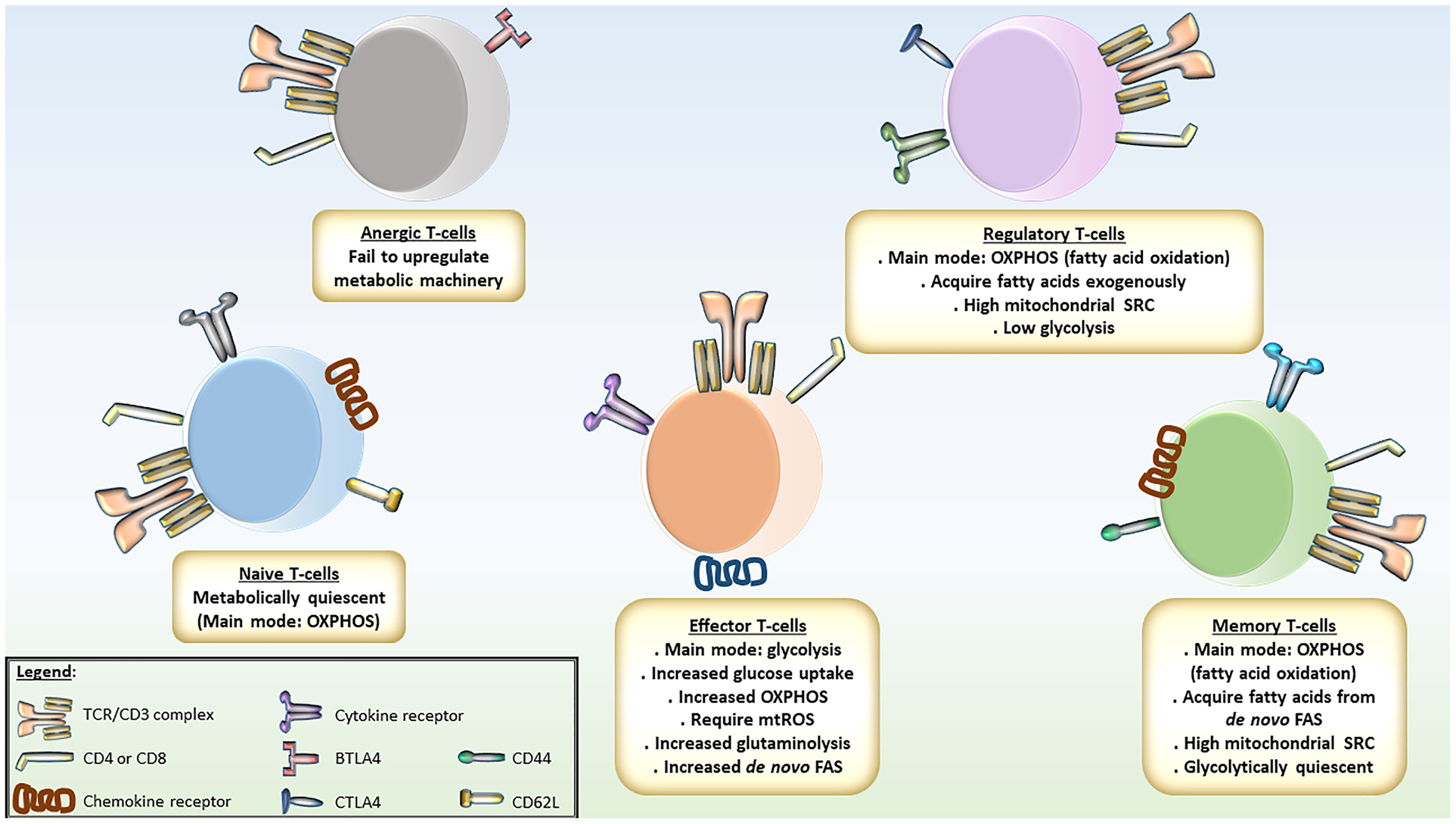
Figure 1:
Figure 1:. Summary of Metabolic Features of T-cells.
Naïve T-cells are metabolically quiescent, using oxidative phosphorylation (OXPHOS) to generate ATPs for basal cellular activities. Upon activation, T-cells increase glucose uptake and commit to glycolysis to rapidly generate ATPs and metabolites for anabolism, including precursors for de novo fatty acid synthesis (FAS) for membrane expansion. OXPHOS is also increased to generate mitochondrial reactive oxygen species (mtROS) necessary for activation. Amino acids, such as glutamine, are fed into the tricarboxylic acid cycle for anaplerosis. After effector phase, memory T-cells adopt fatty acid oxidation (FAO) as the main metabolic mode, metabolizing fatty acids generated from de novo FAS. These cells have high mitochondrial spare respiratory capacity, metabolically ready for reactivation. When becoming anergic, T-cells exhaust their metabolic machinery. Regulatory T-cells are metabolically similar to memory T-cells. They have high mitochondrial capacity and utilize FAO as the main metabolic mode, albeit metabolizing exogenous fatty acids.
Figure 2:
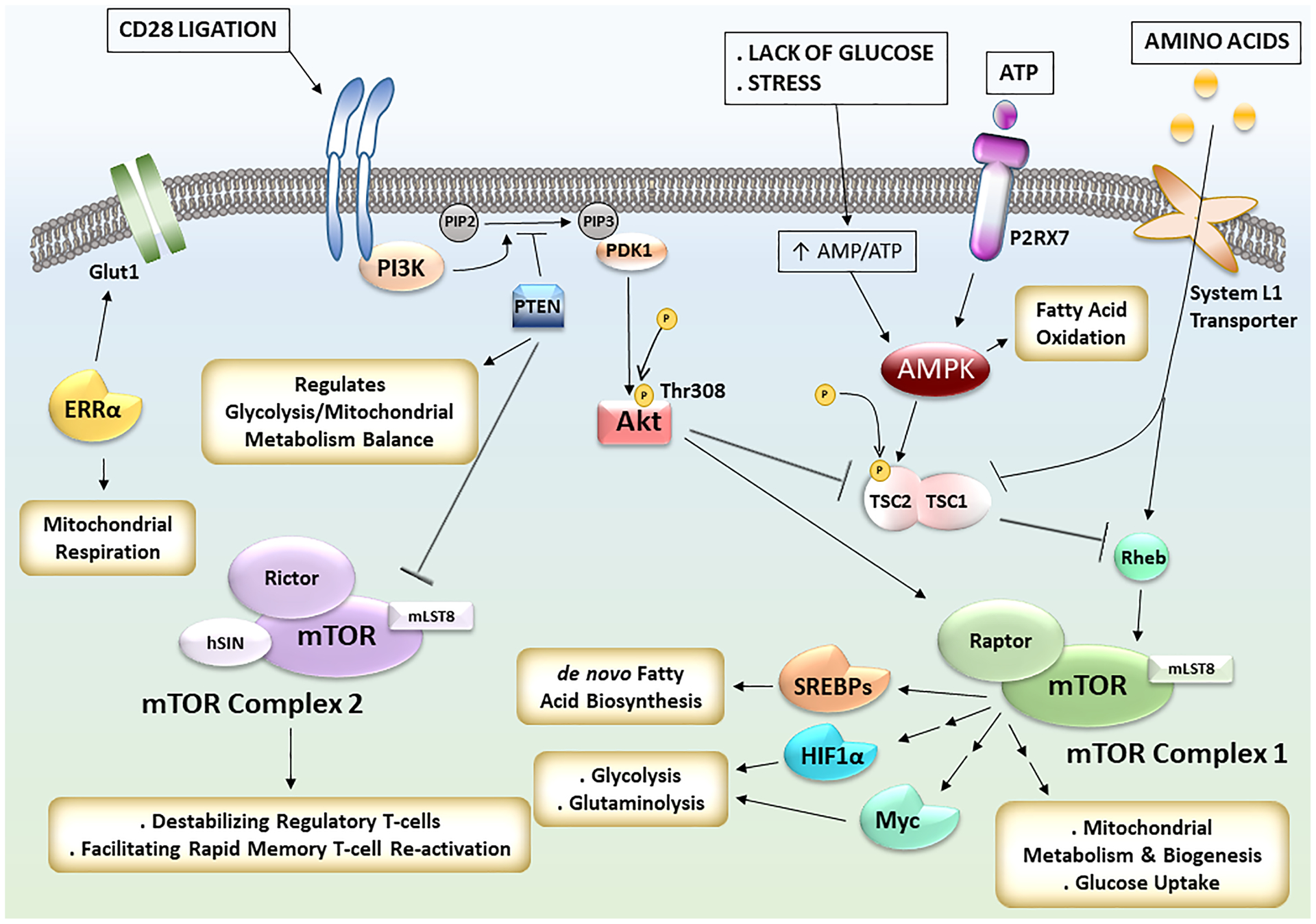
Figure 2:. Signaling Pathways Driving T-cell Metabolism.
Upon CD28 ligation during T-cell activation, the mTOR pathway is activated through PI3K-Akt axis. mTORC1 regulates mitochondrial metabolism, mitochondrial biogenesis, glucose uptake, and activates the transcriptional factors SREBPs for de novo fatty acid synthesis, HIF1α and Myc for glycolysis and glutaminolysis. Amino acids transported into T-cells by System L1 transporters also contribute to mTORC1 activation. The transcription factor ERRα acts in parallel to increase glucose uptake via Glut1 and regulates mitochondrial respiration. During stress and glucose-limiting conditions, as encountered in the core of the inflammatory microenvironment, AMPK is activated, suppresses mTORC1 pathway, and activates fatty acid oxidation to generate ATPs. PTEN acts as an upstream negative regulator of both mTORC1 and mTORC2. It regulates the balance between glycolysis and mitochondrial metabolism, and its presence facilitates regulatory T-cells stability via mTORC2 inhibition.

References

    1. Raigani S, Karimian N, Huang V, et al. Metabolic and lipidomic profiling of steatotic human livers during ex situ normothermic machine perfusion guides resuscitation strategies. PLoS One. 2020;15(1):e0228011. - PMC - PubMed
    1. Minor T, von Horn C, Paul A. Role of temperature in reconditioning and evaluation of cold preserved kidney and liver grafts. Curr Opin Organ Transplant. 2017;22(3):267–273. - PMC - PubMed
    1. Garonzik-Wang JM, Lonze BE, Ruck JM, et al. Mitochondrial membrane potential and delayed graft function following kidney transplantation. Am J Transplant. 2019;19(2):585–590. - PMC - PubMed
    1. Tran DT, Esckilsen S, Mulligan J, et al. Impact of mitochondrial permeability on endothelial cell immunogenicity in transplantation. Transplantation. 2018;102(6):935–944. - PMC - PubMed
    1. Wedel J, Stack MP, Seto T, et al. T cell-specific adaptor protein regulates mitochondrial function and CD4(+) T regulatory cell activity in vivo following transplantation. J Immunol. 2019;203(8):2328–2338. - PMC - PubMed

Publication types