


Research on neck dissection for oral squamous-cell carcinoma: a bibliometric analysis
- PMID: 33795644
- PMCID: PMC8016921
- DOI: 10.1038/s41368-021-00117-5
Research on neck dissection for oral squamous-cell carcinoma: a bibliometric analysis
Abstract
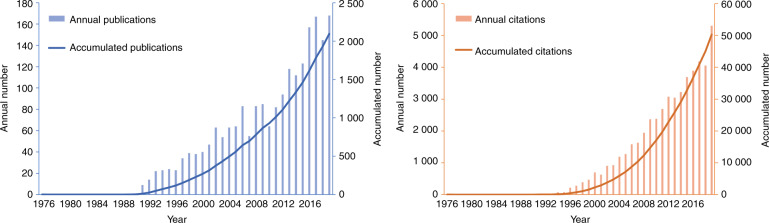
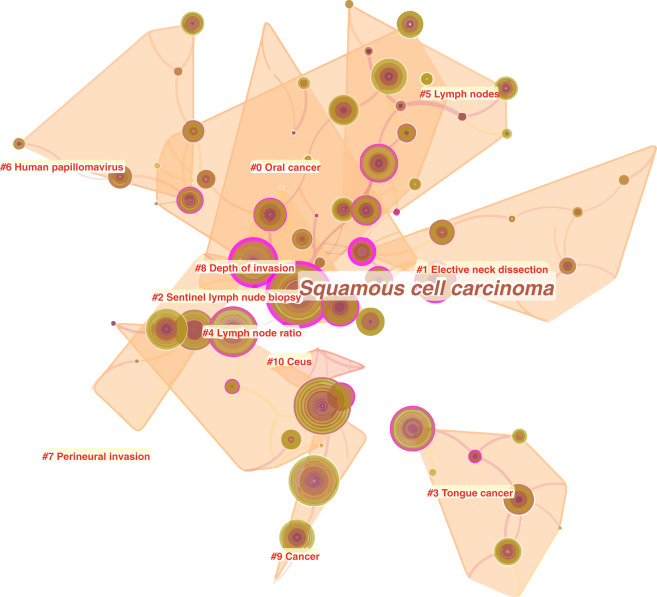
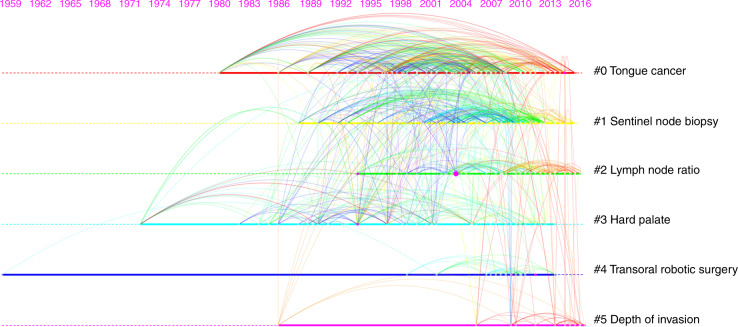
Neck dissection for oral squamous-cell carcinoma (OSCC) is a clinically controversial issue and has therefore been the subject of abundant research. However, no one has performed a bibliometric study on this topic to date. The aim of this study was to assess the development of research on neck dissection for OSCC in terms of the historical evolution, current hotspots and future directions, particularly including research trends and frontiers from 2010 to 2019. Literature records related to research on neck dissection for OSCC were retrieved from the Web of Science Core Collection (WoSCC). CiteSpace was used as a tool to perform a bibliometric analysis of this topic. The survey included 2 096 papers. "Otorhinolaryngology" was the most popular research area. The most active institutions and countries were Memorial Sloan Kettering Cancer Center and the USA, respectively. Shah J.P. was the most cited author. Among the six identified "core journals", Head & Neck ranked first. The top three trending keywords were 'invasion', 'upper aerodigestive' and 'negative neck'. 'D'Cruz AK (2015)' was the most cited and the strongest burst reference in the last decade. The study evaluated the effect on survival of elective versus therapeutic neck dissection in patients with lateralized early-stage OSCC. The depth of invasion and the management of N0 OSCC were research frontiers in this field. The present study provides a comprehensive bibliometric analysis of research on neck dissection for OSCC, which will assist investigators in exploring potential research directions.
Conflict of interest statement
The authors declare no competing interests.
Figures
References
-
- Martinez, V. D., Garnis, C. & Lam, W. L. in Encyclopedia of Cancer (ed. Schwab, M.) 1–4 (Springer Berlin Heidelberg, 2016).
Publication types
MeSH terms
LinkOut - more resources
Full Text Sources
Other Literature Sources
Medical
