


CoachMS, an innovative closed-loop, interdisciplinary platform to monitor and proactively treat MS symptoms: A pilot study
- PMID: 33796329
- PMCID: PMC7970691
- DOI: 10.1177/2055217321988937
CoachMS, an innovative closed-loop, interdisciplinary platform to monitor and proactively treat MS symptoms: A pilot study
Abstract
Background: There are numerous challenges to treating co-occurring symptoms in multiple sclerosis (MS).
Objective: To pilot the feasibility of a novel symptom management platform, CoachMS, to monitor MS symptoms (bladder function, ambulation, and mood: BAM) and respond to changes in real-time.
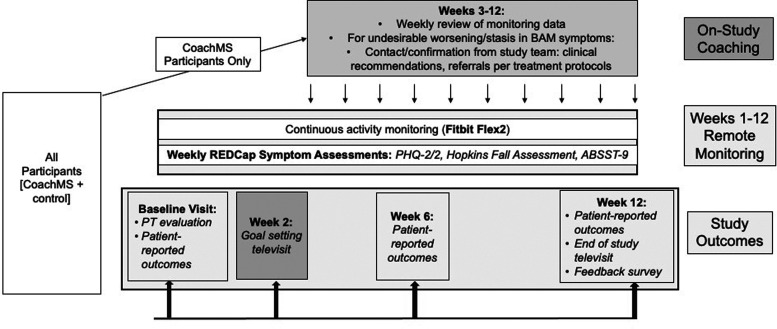
Methods: In this 12-week randomized controlled pilot trial, participants' symptoms were monitored using weekly questionnaires and remote ambulatory monitoring (Fitbit Flex2®). Behavioral change principles used included shared goal setting at 2 weeks. Between weeks 2-12, the CoachMS group received targeted contact and interventions if symptoms worsened; the control group were treated through usual clinic practice. Our outcomes were feasibility (retention, adherence and acceptability; primary) and proportion of recommended treatments pursued (secondary); efficacy was explored.
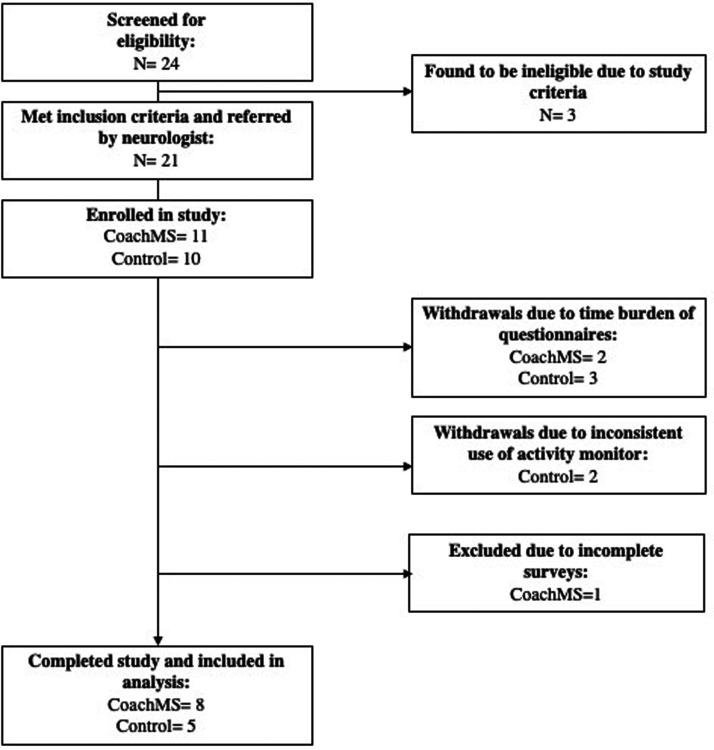
Results: Of 21 participants enrolled, 13 (62%) completed the study; protocol adherence was excellent. CoachMS participants demonstrated greater follow-through with clinical recommendations than controls (OR 9.3, 95% CI (0.9, 97.6)). As a cohort, each BAM symptom tended to improve. Suicidality was detected in one control participant, resulting in urgent evaluation and hospitalization.
Conclusions: The innovative CoachMS platform was feasible and acceptable in this cohort with baseline BAM symptoms. It could represent an accessible, cost-effective tool to monitor MS symptoms in real-time; a larger trial is planned.
Keywords: Multiple sclerosis; clinical trial; digital health; quality of life; rehabilitation; symptomatic treatment.
© The Author(s) 2021.
Figures
References
-
- Hauser SL, Chan JR, Oksenberg JR. Multiple sclerosis: prospects and promise. Ann Neurol 2013; 74: 317–327. - PubMed
-
- Giovannoni G. Disease-modifying treatments for early and advanced multiple sclerosis: a new treatment paradigm. Curr Opin Neurol 2018; 31: 233–243. - PubMed
-
- Gunn H, Creanor S, Haas B, et al. Risk factors for falls in multiple sclerosis: an observational study. Mult Scler 2013; 19: 1913–1922. - PubMed
-
- Block V, Cohen E, Marmarou T, et al. Bladder dysfunction is associated with cognitive symptoms and walking speed in multiple sclerosis. (10-11th Dec, 2014) In: 4th international symposium on gait and balance in multiple sclerosis: the role of cognition, Cleveland, USA.
LinkOut - more resources
Full Text Sources
Other Literature Sources
Research Materials
Miscellaneous
