


Antitumor efficacy of a neoantigen cancer vaccine delivered by electroporation is influenced by microbiota composition
- PMID: 33796408
- PMCID: PMC7993125
- DOI: 10.1080/2162402X.2021.1898832
Antitumor efficacy of a neoantigen cancer vaccine delivered by electroporation is influenced by microbiota composition
Abstract
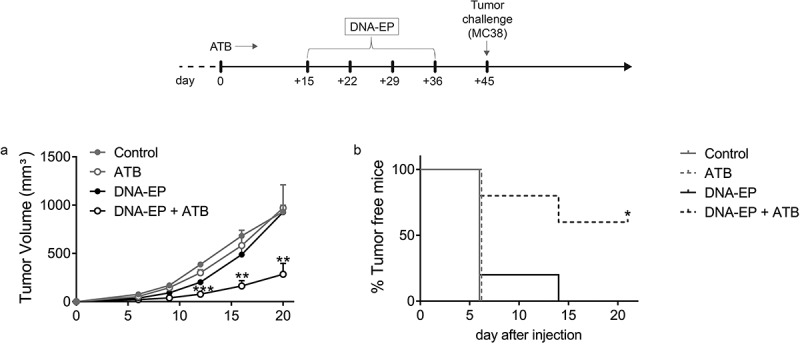
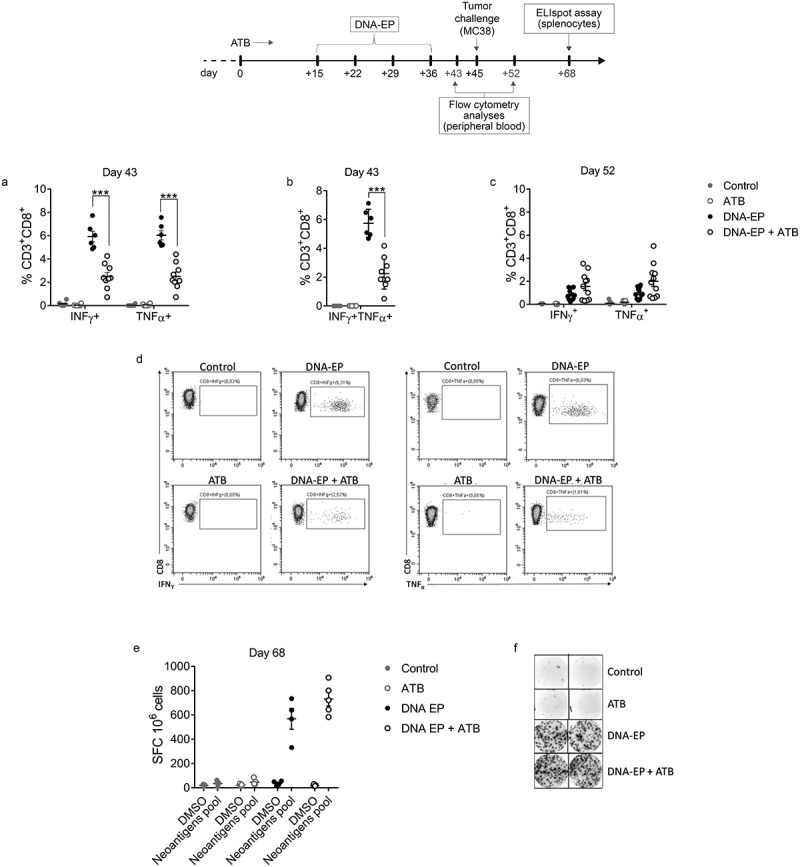
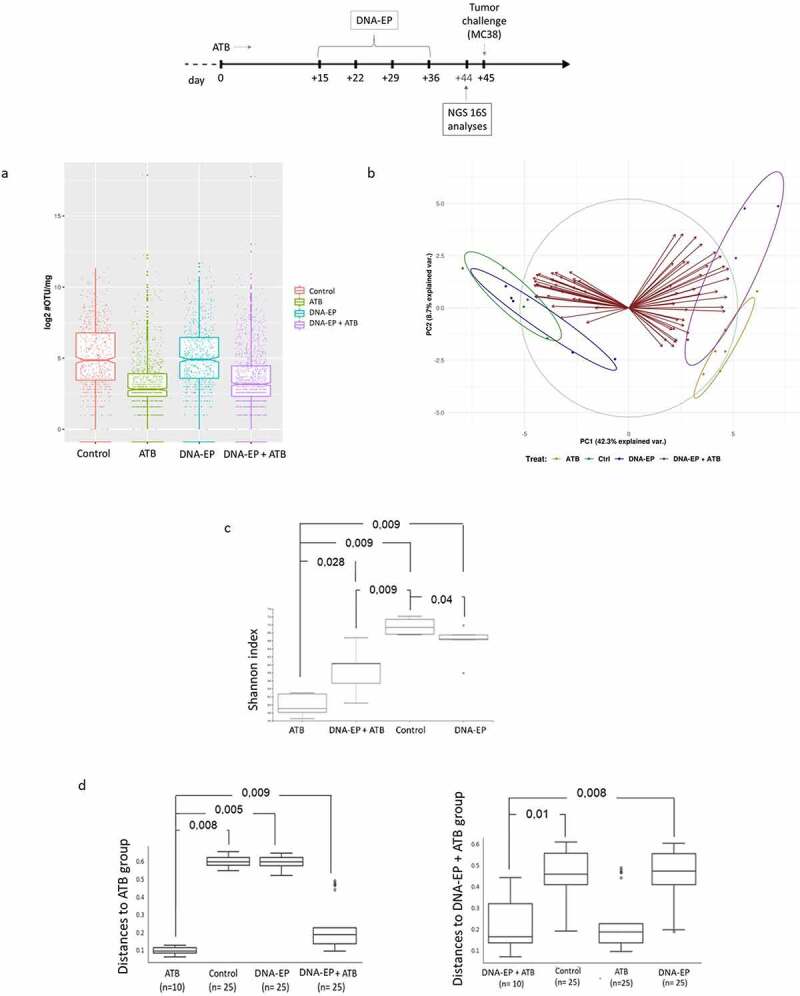
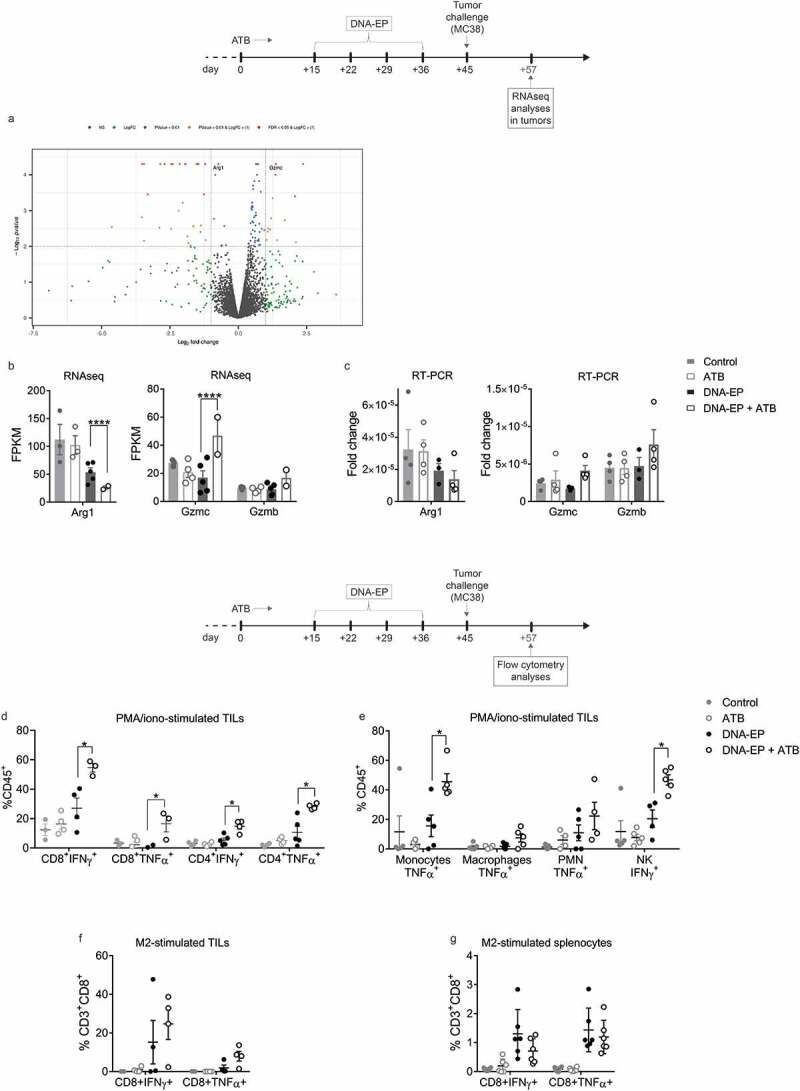
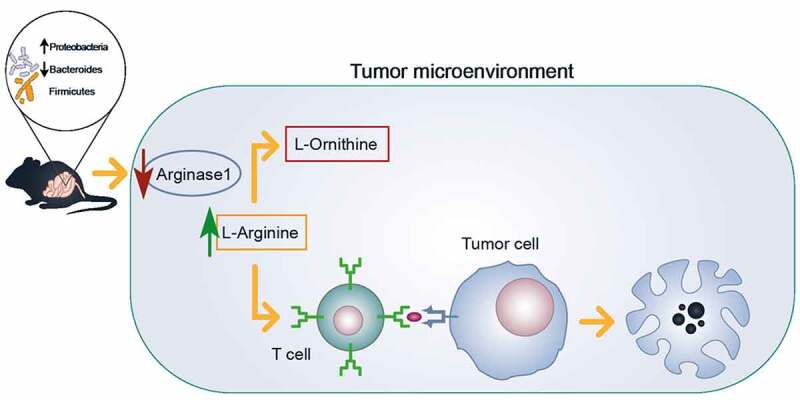
Cancer is a heterogeneous disease and its treatment remains unsatisfactory with inconstant therapeutic responses. This variability could be related, at least in part, to different and highly personalized gut microbiota compositions. Different studies have shown an impact of microbiota on antitumor therapy. It has been demonstrated that some gut bacteria influences the development and differentiation of immune cells, suggesting that different microbiota compositions could affect the efficacy of the antitumor vaccine. Emerging data suggest that recognition of neoantigens for the generation of neoantigen cancer vaccines (NCVs) could have a key role in the activity of clinical immunotherapies. However, it is still unknown whether there is a crosstalk between microbiota and NCV. This study aimed to understand the possible mechanisms of interaction between gut microbiota and NCV delivered by DNA-electroporation (DNA-EP). We found that decreased microbiota diversity induced by prolonged antibiotic (ATB) treatment is associated with higher intratumor specific immune responses and consequently to a better antitumor effect induced by NCV delivered by DNA-EP.
Keywords: Microbiota; T cells; neoantigens; vaccine.
© 2021 The Author(s). Published with license by Taylor & Francis Group, LLC.
Conflict of interest statement
Authors do not have a conflict of interest to be declared.
Figures
References
MeSH terms
Substances
LinkOut - more resources
Full Text Sources
Other Literature Sources
Medical
