


Fostering Metacognition to Support Student Learning and Performance
- PMID: 33797282
- PMCID: PMC8734377
- DOI: 10.1187/cbe.20-12-0289
Fostering Metacognition to Support Student Learning and Performance
Abstract
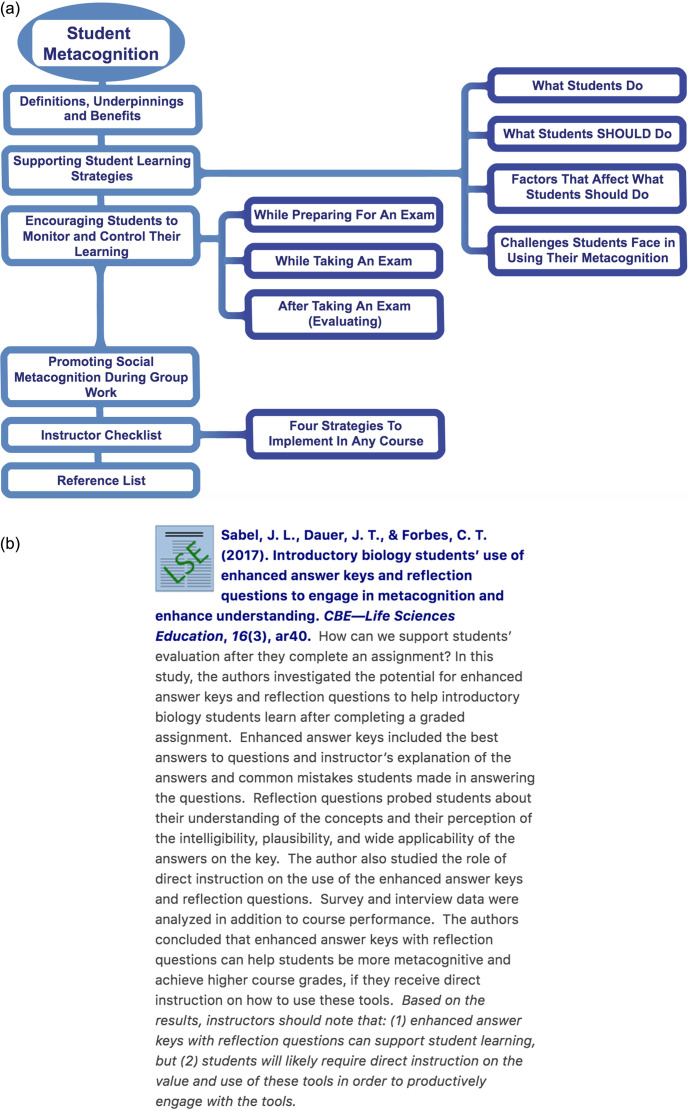
Metacognition is awareness and control of thinking for learning. Strong metacognitive skills have the power to impact student learning and performance. While metacognition can develop over time with practice, many students struggle to meaningfully engage in metacognitive processes. In an evidence-based teaching guide associated with this paper (https://lse.ascb.org/evidence-based-teaching-guides/student-metacognition), we outline the reasons metacognition is critical for learning and summarize relevant research on this topic. We focus on three main areas in which faculty can foster students' metacognition: supporting student learning strategies (i.e., study skills), encouraging monitoring and control of learning, and promoting social metacognition during group work. We distill insights from key papers into general recommendations for instruction, as well as a special list of four recommendations that instructors can implement in any course. We encourage both instructors and researchers to target metacognition to help students improve their learning and performance.
Figures
References
-
- Baeten, M., Kyndt, E., Struyven, K., Dochy, F. (2010). Using student-centred learning environments to stimulate deep approaches to learning: Factors encouraging or discouraging their effectiveness. Educational Research Review, 5(3), 243–260.
-
- Carr, M., Taasoobshirazi, G. (2008). Metacognition in the gifted: Connections to expertise. In Shaughnessy, M. F., Veenman, M., Kleyn-Kennedy, C. (Eds.), Meta-cognition: A recent review of research, theory and perspectives (pp. 109–125). Hauppauge, NY: Nova Sciences Publishers.
-
- Choi, M. M., Kuo, S. W. (2009). Social metacognition in groups: Benefits, difficulties, learning and teaching. In Larson, C. B. (Ed.), Metacognition: New research developments (pp. 117–136). Hauppauge, NY: Nova Science Publishers.
-
- Cross, D. R., Paris, S. G. (1988). Developmental and instructional analyses of children’s metacognition and reading comprehension. Journal of Educational Psychology, 80(2), 131–142.
Publication types
MeSH terms
LinkOut - more resources
Full Text Sources
Other Literature Sources
