


Research priorities for elder abuse screening and intervention: A Geriatric Emergency Care Applied Research (GEAR) network scoping review and consensus statement
- PMID: 33797344
- PMCID: PMC8204570
- DOI: 10.1080/08946566.2021.1904313
Research priorities for elder abuse screening and intervention: A Geriatric Emergency Care Applied Research (GEAR) network scoping review and consensus statement
Abstract
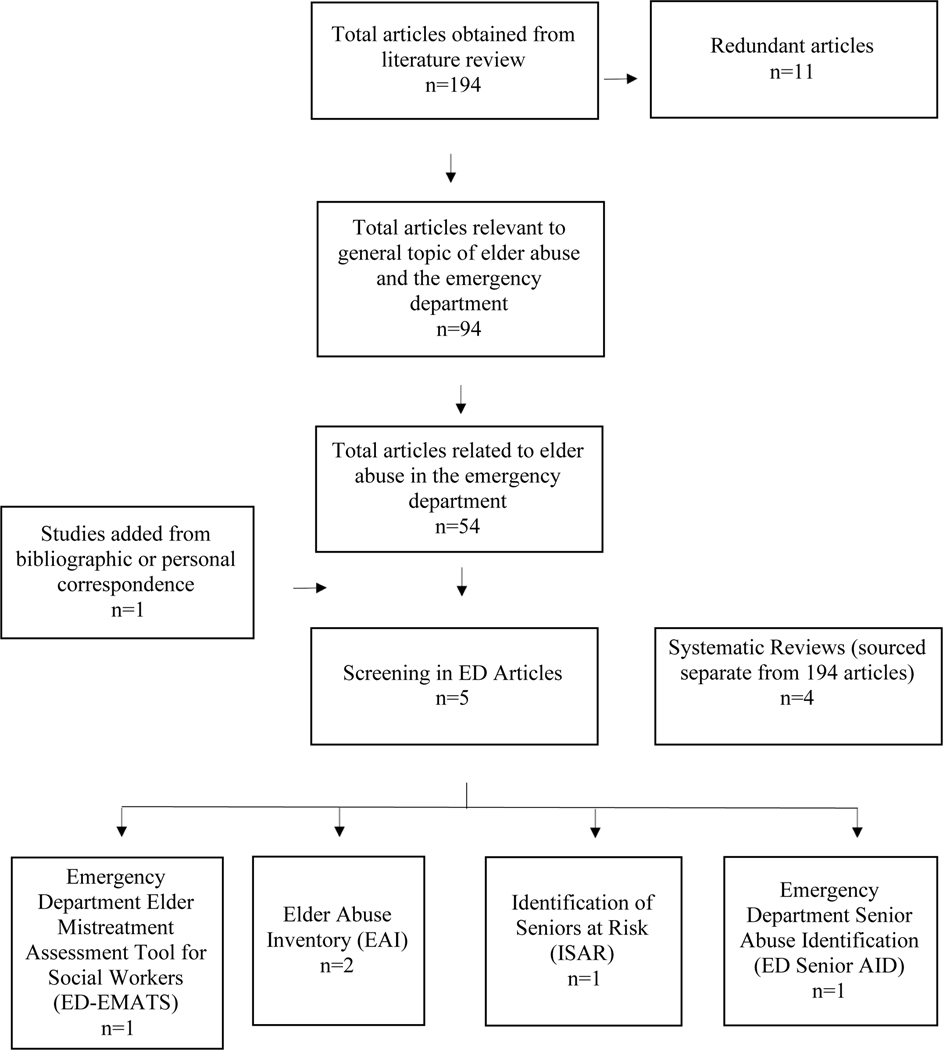
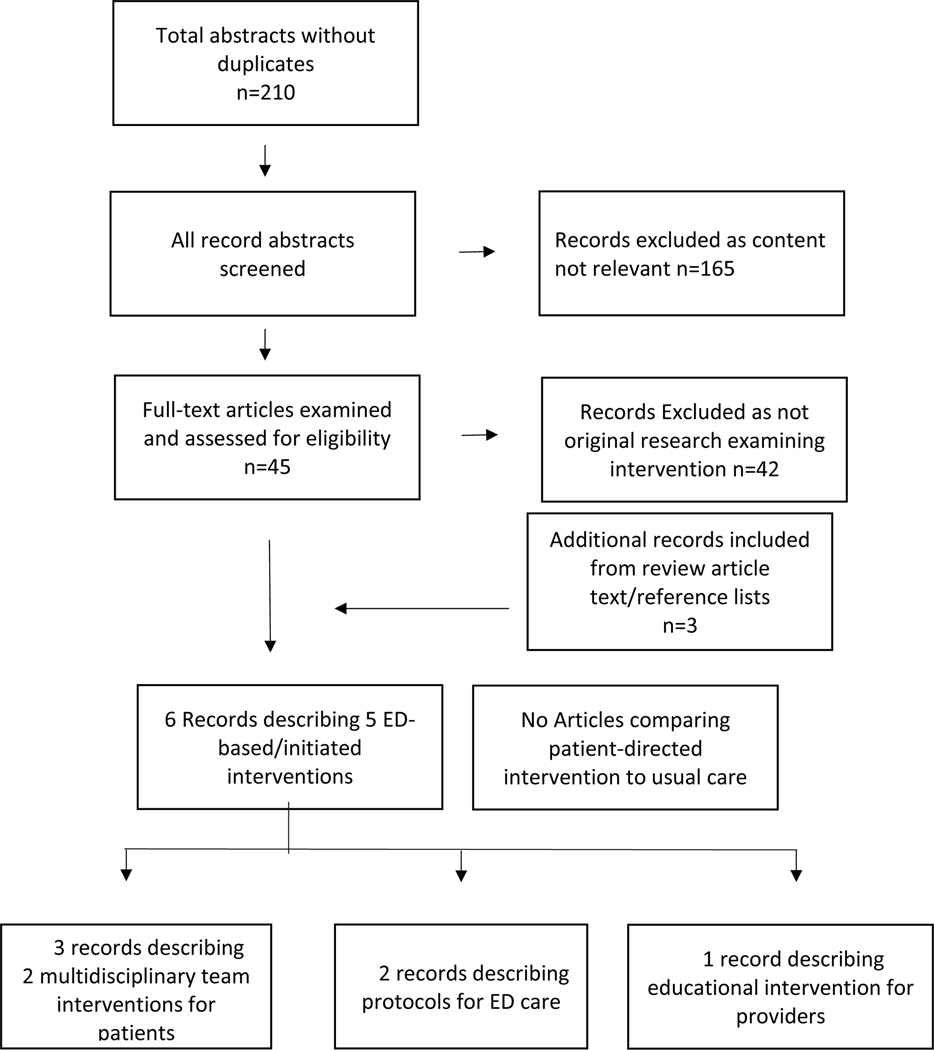
The Geriatric Emergency Care Applied Research (GEAR) Network (1) conducted a scoping review of the current literature on the identification of and interventions to address elder abuse among patients receiving care in emergency departments and (2) used this review to prioritize research questions for knowledge development. Two questions guided the scoping review: What is the effect of universal emergency department screening compared to targeted screening or usual practice on cases of elder abuse identified, safety outcomes, and health care utilization?; and What is the safety, health, legal, and psychosocial impact of emergency department-based interventions vs. usual care for patients experiencing elder abuse? We searched five article databases. Additional material was located through reference lists of identified publications, PsychInfo, and Google Scholar. The results were discussed in a consensus conference; and stakeholders voted to prioritize research questions. No studies were identified that directly addressed the first question regarding assessment strategies, but four instruments used for elder abuse screening in the emergency department were identified. For the second question, we located six articles on interventions for elder abuse in the emergency department; however, none directly addressed the question of comparative effectiveness. Based on these findings, GEAR participants identified five questions as priorities for future research - two related to screening, two related to intervention, and one encompassed both. In sum, research to identify best practices for elder abuse assessment and intervention in emergency departments is still needed. Although there are practical and ethical challenges, rigorous experimental studies are needed.
Keywords: Emergency department; elder abuse; intervention; review; screening.
Figures
References
-
- Acierno R, Hernandez MA, Amstadter AB, Resnick HS, Steve K, Muzzy W, & Kilpatrick DG (2010). Prevalence and correlates of emotional, physical, sexual, and financial abuse and potential neglect in the United States: the National Elder Mistreatment Study. Am J Public Health, 100(2), 292–297. - PMC - PubMed
-
- National Institue on Aging (2016). Elder Abuse. In National Institue on Aging. Health; (Ed.).
Publication types
MeSH terms
Grants and funding
LinkOut - more resources
Full Text Sources
Other Literature Sources
Medical