


Reevaluating the timing of Neanderthal disappearance in Northwest Europe
- PMID: 33798098
- PMCID: PMC7999949
- DOI: 10.1073/pnas.2022466118
Reevaluating the timing of Neanderthal disappearance in Northwest Europe
Abstract
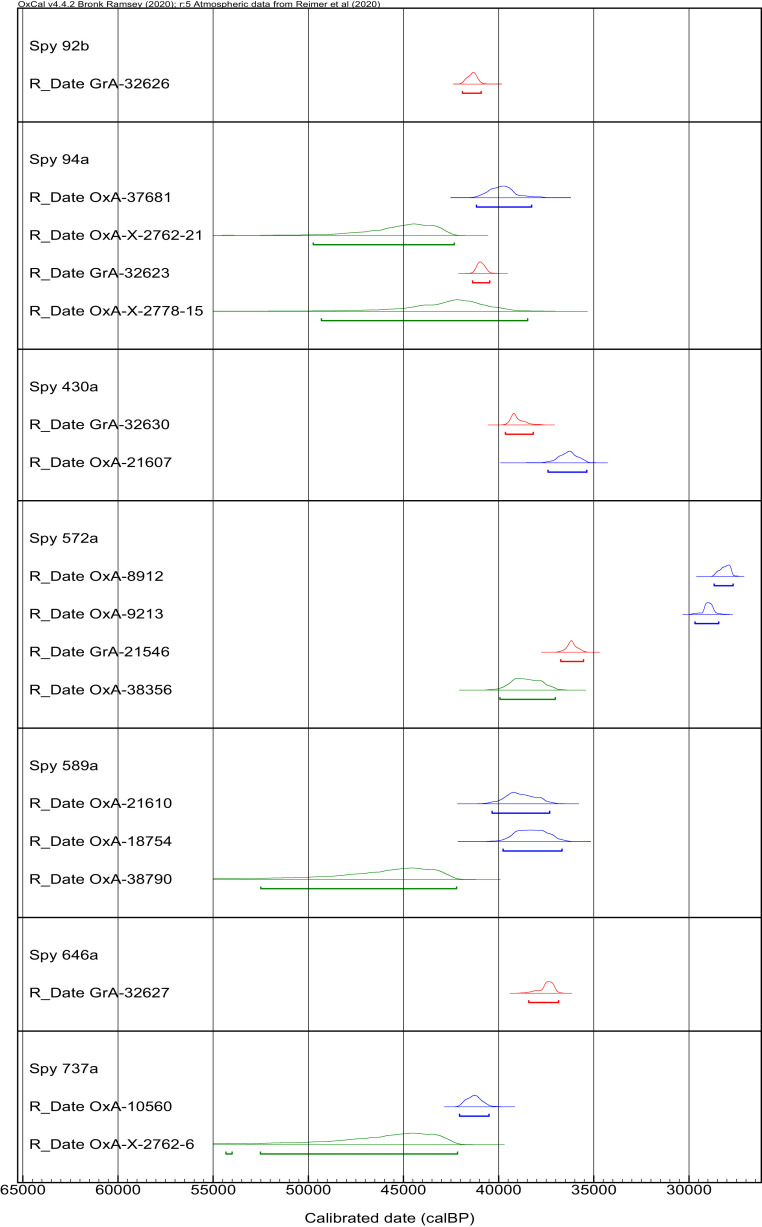
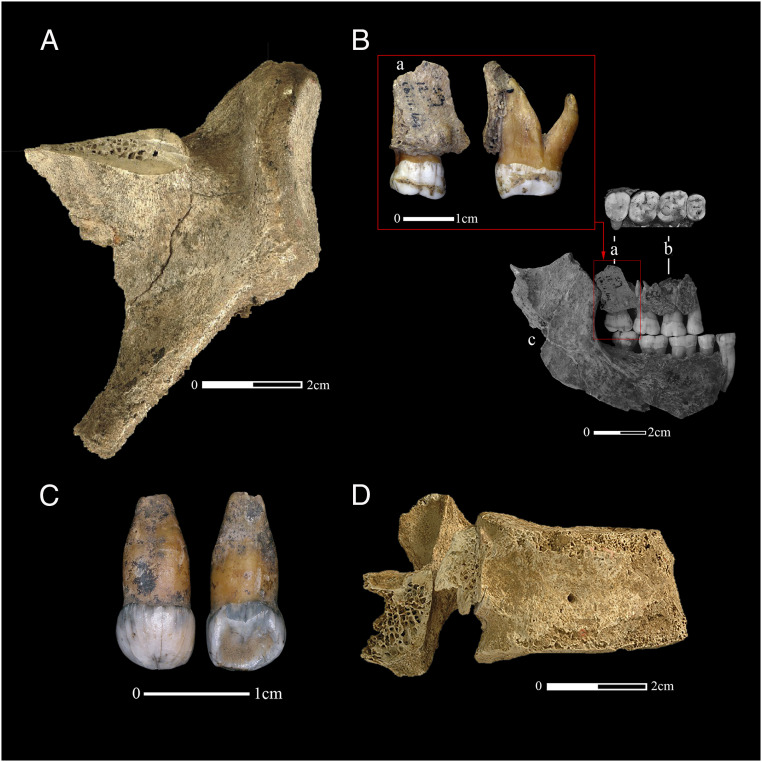
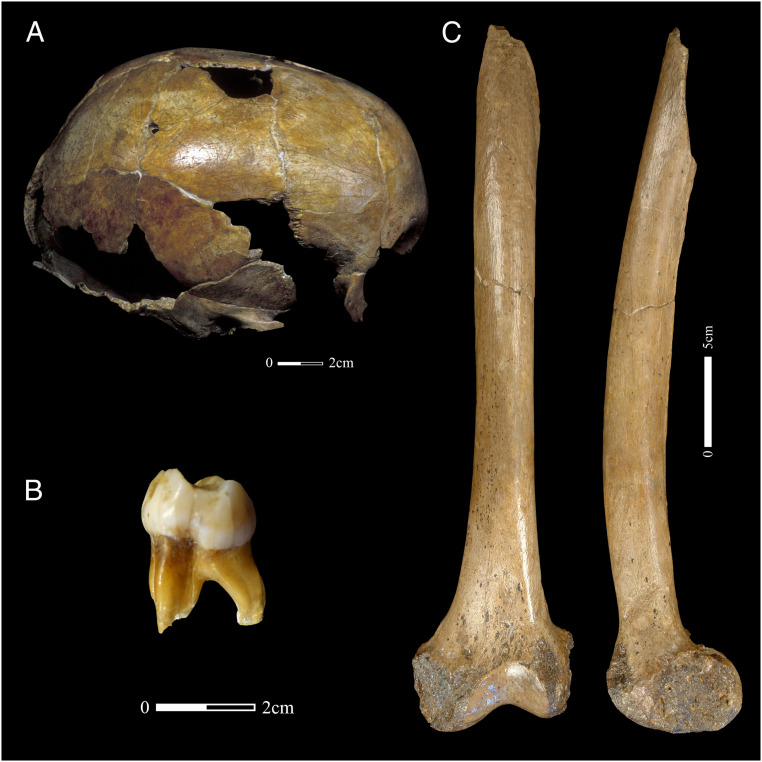
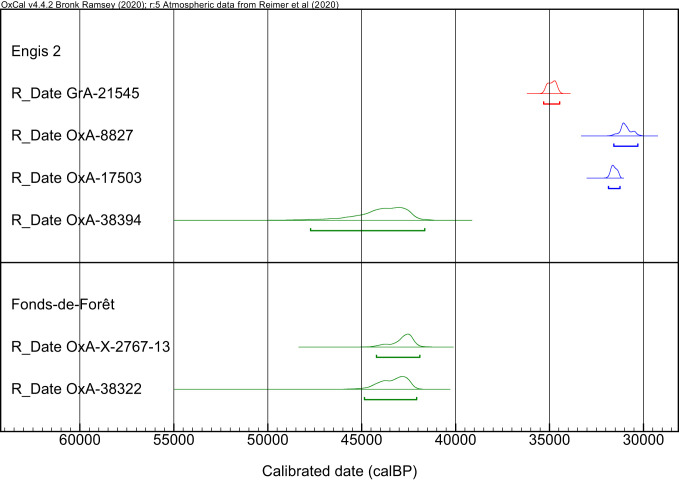
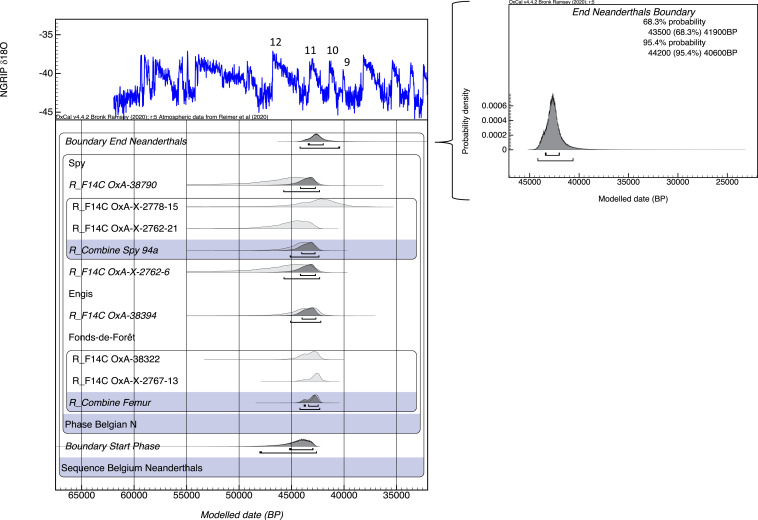
Elucidating when Neanderthal populations disappeared from Eurasia is a key question in paleoanthropology, and Belgium is one of the key regions for studying the Middle to Upper Paleolithic transition. Previous radiocarbon dating placed the Spy Neanderthals among the latest surviving Neanderthals in Northwest Europe with reported dates as young as 23,880 ± 240 B.P. (OxA-8912). Questions were raised, however, regarding the reliability of these dates. Soil contamination and carbon-based conservation products are known to cause problems during the radiocarbon dating of bulk collagen samples. Employing a compound-specific approach that is today the most efficient in removing contamination and ancient genomic analysis, we demonstrate here that previous dates produced on Neanderthal specimens from Spy were inaccurately young by up to 10,000 y due to the presence of unremoved contamination. Our compound-specific radiocarbon dates on the Neanderthals from Spy and those from Engis and Fonds-de-Forêt demonstrate that they disappeared from Northwest Europe at 44,200 to 40,600 cal B.P. (at 95.4% probability), much earlier than previously suggested. Our data contribute significantly to refining models for Neanderthal disappearance in Europe and, more broadly, show that chronometric models regarding the appearance or disappearance of animal or hominin groups should be based only on radiocarbon dates obtained using robust pretreatment methods.
Keywords: Belgium; Neanderthal disappearance; ancient genomic analysis; compound-specific radiocarbon dating.
Conflict of interest statement
The authors declare no competing interest.
Figures
Comment in
-
The stratigraphic context of Spy Cave and the timing of Neanderthal disappearance in Northwest Europe.Proc Natl Acad Sci U S A. 2021 Jun 29;118(26):e2106335118. doi: 10.1073/pnas.2106335118. Proc Natl Acad Sci U S A. 2021. PMID: 34155119 Free PMC article. No abstract available.
-
Reply to Van Peer: Direct radiocarbon dating and ancient genomic analysis reveal the true age of the Neanderthals at Spy Cave.Proc Natl Acad Sci U S A. 2021 Jun 29;118(26):e2107116118. doi: 10.1073/pnas.2107116118. Proc Natl Acad Sci U S A. 2021. PMID: 34155120 Free PMC article. No abstract available.
References
-
- Higham T., et al., The timing and spatiotemporal patterning of Neanderthal disappearance. Nature 512, 306–309 (2014). - PubMed
-
- Di Modica K., Toussaint M., Abrams G., Pirson S., The Middle Palaeolithic from Belgium: Chronostratigraphy, territorial management and culture on a mosaic of contrasting environments. Quat. Int. 411, 77–106 (2016).
-
- Pirson S., et al., Chronostratigraphic context of the Middle to Upper Palaeolithic transition: Recent data from Belgium. Quat. Int. 259, 78–94 (2012).
-
- Semal P., et al., “Radiocarbon dating of human remains and associated archaeological material” in Spy Cave. 125 Years of Multidisciplinary Research at the Betche aux Rotches (Jemeppe-sur-Sambre, Province of Namur, Belgium), Rougier H., Semal P., Eds. (Bull. Soc. Roy. Belge Anthrop. Préhist., 2013), vol. 123/2012, pp. 331–356.
Publication types
MeSH terms
LinkOut - more resources
Full Text Sources
Other Literature Sources
