


Comparison of seroprevalence of SARS-CoV-2 infections with cumulative and imputed COVID-19 cases: Systematic review
- PMID: 33798211
- PMCID: PMC8018669
- DOI: 10.1371/journal.pone.0248946
Comparison of seroprevalence of SARS-CoV-2 infections with cumulative and imputed COVID-19 cases: Systematic review
Abstract
Background: Accurate seroprevalence estimates of SARS-CoV-2 in different populations could clarify the extent to which current testing strategies are identifying all active infection, and hence the true magnitude and spread of the infection. Our primary objective was to identify valid seroprevalence studies of SARS-CoV-2 infection and compare their estimates with the reported, and imputed, COVID-19 case rates within the same population at the same time point.
Methods: We searched PubMed, Embase, the Cochrane COVID-19 trials, and Europe-PMC for published studies and pre-prints that reported anti-SARS-CoV-2 IgG, IgM and/or IgA antibodies for serosurveys of the general community from 1 Jan to 12 Aug 2020.
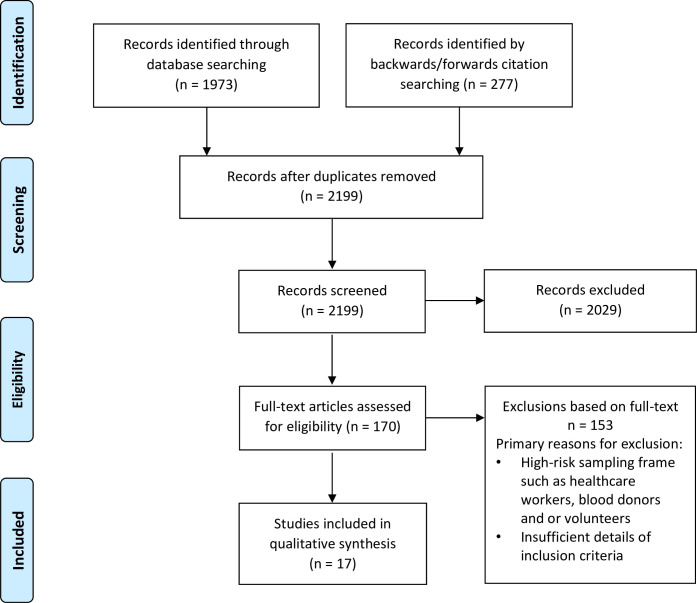
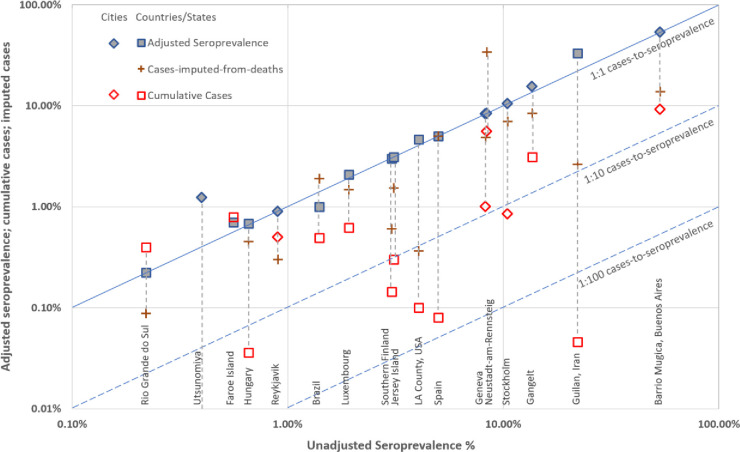
Results: Of the 2199 studies identified, 170 were assessed for full text and 17 studies representing 15 regions and 118,297 subjects were includable. The seroprevalence proportions in 8 studies ranged between 1%-10%, with 5 studies under 1%, and 4 over 10%-from the notably hard-hit regions of Gangelt, Germany; Northwest Iran; Buenos Aires, Argentina; and Stockholm, Sweden. For seropositive cases who were not previously identified as COVID-19 cases, the majority had prior COVID-like symptoms. The estimated seroprevalences ranged from 0.56-717 times greater than the number of reported cumulative cases-half of the studies reported greater than 10 times more SARS-CoV-2 infections than the cumulative number of cases.
Conclusions: The findings show SARS-CoV-2 seroprevalence is well below "herd immunity" in all countries studied. The estimated number of infections, however, were much greater than the number of reported cases and deaths in almost all locations. The majority of seropositive people reported prior COVID-like symptoms, suggesting that undertesting of symptomatic people may be causing a substantial under-ascertainment of SARS-CoV-2 infections.
Conflict of interest statement
All authors have completed the ICMJE disclosure form. Prof Mary-Louise McLaws is a member of World Health Organization (WHO) Health Emergencies Program Experts Advisory Panel for Infection Prevention and Control (IPC) Preparedness, Readiness and Response to COVID-19 and WHO IPC Guidance Development Group for COVID-19. This does not alter our adherence to PLOS ONE policies on sharing data and materials.
Figures
References
-
- World Health Organization. WHO Coronavirus Disease (COVID-19) Dashboard 2020 [Available from: https://covid19.who.int/.
-
- Prevention. CfDCa. Commercial Laboratory Seroprevalence Survey Data 2020 [Available from: https://www.cdc.gov/coronavirus/2019-ncov/cases-updates/commercial-lab-s....
Publication types
MeSH terms
Substances
LinkOut - more resources
Full Text Sources
Other Literature Sources
Medical
Miscellaneous
