


The prevalence of psychiatric comorbidities during the SARS and COVID-19 epidemics: a systematic review and meta-analysis of observational studies
- PMID: 33799032
- PMCID: PMC7948672
- DOI: 10.1016/j.jad.2021.03.016
The prevalence of psychiatric comorbidities during the SARS and COVID-19 epidemics: a systematic review and meta-analysis of observational studies
Abstract
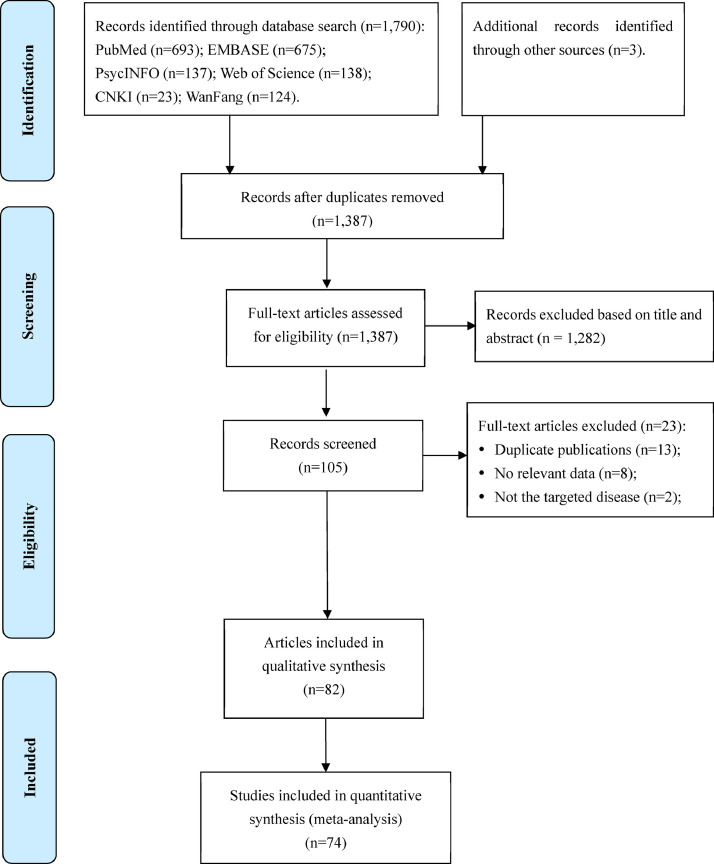
The coronavirus disease 2019 (COVID-19) and Severe Acute Respiratory Syndrome (SARS) are associated with various psychiatric comorbidities. This is a systematic review and meta-analysis comparing the prevalence of psychiatric comorbidities in all subpopulations during the SARS and COVID-19 epidemics. A systematic literature search was conducted in major international (PubMed, EMBASE, Web of Science, PsycINFO) and Chinese (China National Knowledge Internet [CNKI] and Wanfang) databases to identify studies reporting prevalence of psychiatric comorbidities in all subpopulations during the SARS and COVID-19 epidemics. Data analyses were conducted using the Comprehensive Meta-Analysis Version 2.0 (CMA V2.0). Eighty-two studies involving 96,100 participants were included. The overall prevalence of depressive symptoms (depression hereinafter), anxiety symptoms (anxiety hereinafter), stress, distress, insomnia symptoms, post-traumatic stress symptoms (PTSS) and poor mental health during the COVID-19 epidemic were 23.9% (95% CI: 18.4%-30.3%), 23.4% (95% CI: 19.9%-27.3%), 14.2% (95% CI: 8.4%-22.9%), 16.0% (95% CI: 8.4%-28.5%), 26.5% (95% CI: 19.1%-35.5%), 24.9% (95% CI: 11.0%-46.8%), and 19.9% (95% CI: 11.7%-31.9%), respectively. Prevalence of poor mental health was higher in general populations than in health professionals (29.0% vs. 11.6%; Q=10.99, p=0.001). The prevalence of depression, anxiety, PTSS and poor mental health were similar between SARS and COVID-19 epidemics (all p values>0.05). Psychiatric comorbidities were common in different subpopulations during both the SARS and COVID-19 epidemics. Considering the negative impact of psychiatric comorbidities on health and wellbeing, timely screening and appropriate interventions for psychiatric comorbidities should be conducted for subpopulations affected by such serious epidemics.
Keywords: COVID-19; Psychiatric comorbidities; SARS; anxiety; depression; stress.
Copyright © 2021 Elsevier B.V. All rights reserved.
Conflict of interest statement
There is no conflict of interest related to the topic of this manuscript.
References
-
- World Health Organization, 2020. Novel Coronavirus – China. https://www.who.int/csr/don/12-january-2020-novel-coronavirus-china/en/ (access 12 January 2020).
-
- World Health Organization, 2020. Naming the coronavirus disease (COVID-19) and the virus that causes it. https://www.who.int/emergencies/diseases/novel-coronavirus-2019/technica... (assess 11 February 2020).
-
- World Health Organization, 2020. Novel Coronavirus(2019-nCoV): Situation Report-10. https://www.who.int/docs/default-source/coronaviruse/situation-reports/2... (access 30 January 2020).
-
- World Health Organization, 2020. Statement on the second meeting of the International Health Regulations (2005) Emergency Committee regarding the outbreak of novel coronavirus (2019-nCoV). https://www.who.int/news-room/detail/30-01-2020-statement-on-the-second-... (access 30 January 2020).
-
- Johns Hopkins University, 2021. COVID-19 Dashboard by the Center for Systems Science and Engineering (CSSE) at Johns Hopkins University (JHU). https://gisanddata.maps.arcgis.com/apps/opsdashboard/index.html#/bda7594... (access 28 February 2021).
Publication types
MeSH terms
LinkOut - more resources
Full Text Sources
Other Literature Sources
Medical
Miscellaneous
