


Associations of Body Mass Index with Ventilation Management and Clinical Outcomes in Invasively Ventilated Patients with ARDS Related to COVID-19-Insights from the PRoVENT-COVID Study
- PMID: 33799735
- PMCID: PMC8000207
- DOI: 10.3390/jcm10061176
Associations of Body Mass Index with Ventilation Management and Clinical Outcomes in Invasively Ventilated Patients with ARDS Related to COVID-19-Insights from the PRoVENT-COVID Study
Abstract
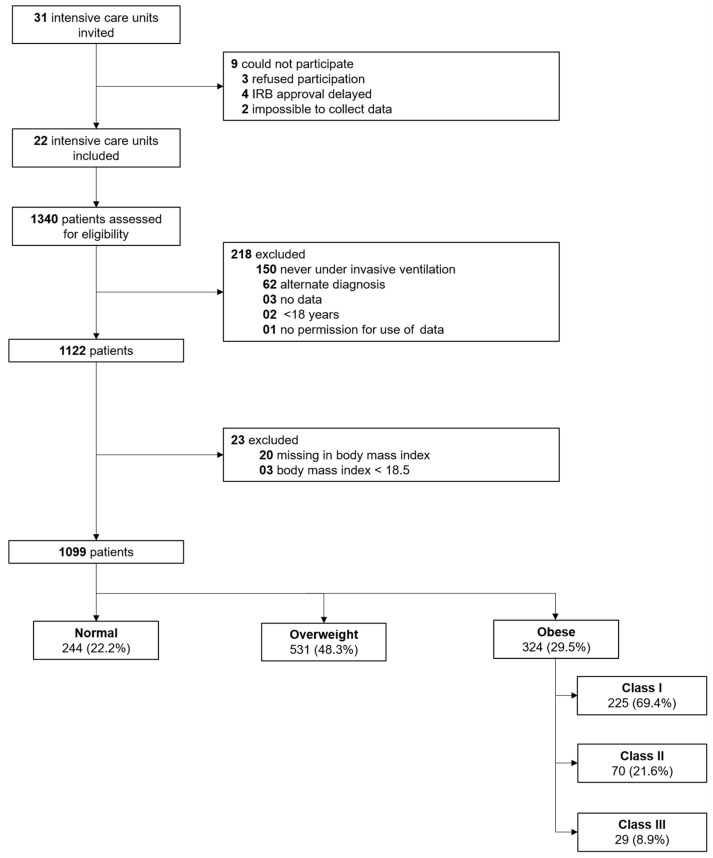
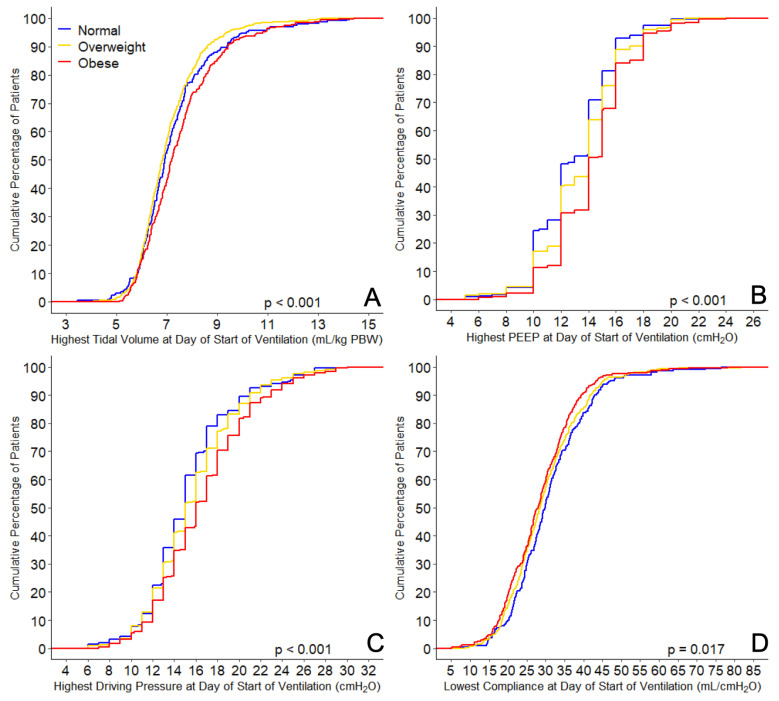
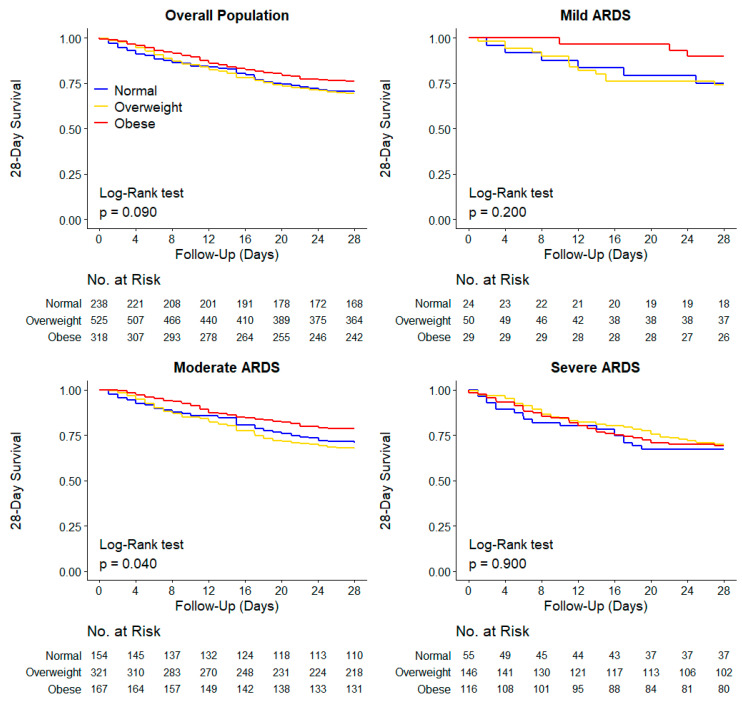
We describe the practice of ventilation and mortality rates in invasively ventilated normal-weight (18.5 ≤ BMI ≤ 24.9 kg/m2), overweight (25.0 ≤ BMI ≤ 29.9 kg/m2), and obese (BMI > 30 kg/m2) COVID-19 ARDS patients in a national, multicenter observational study, performed at 22 intensive care units in the Netherlands. The primary outcome was a combination of ventilation variables and parameters over the first four calendar days of ventilation, including tidal volume, positive end-expiratory pressure (PEEP), respiratory system compliance, and driving pressure in normal-weight, overweight, and obese patients. Secondary outcomes included the use of adjunctive treatments for refractory hypoxaemia and mortality rates. Between 1 March 2020 and 1 June 2020, 1122 patients were included in the study: 244 (21.3%) normal-weight patients, 531 (47.3%) overweight patients, and 324 (28.8%) obese patients. Most patients received a tidal volume < 8 mL/kg PBW; only on the first day was the tidal volume higher in obese patients. PEEP and driving pressure were higher, and compliance of the respiratory system was lower in obese patients on all four days. Adjunctive therapies for refractory hypoxemia were used equally in the three BMI groups. Adjusted mortality rates were not different between BMI categories. The findings of this study suggest that lung-protective ventilation with a lower tidal volume and prone positioning is similarly feasible in normal-weight, overweight, and obese patients with ARDS related to COVID-19. A patient's BMI should not be used in decisions to forgo or proceed with invasive ventilation.
Keywords: ARDS; BMI; COVID-19; artificial ventilation; body mass index; coronavirus disease 2019; critical care; intensive care; mortality; normal-weight overweight; obesity; obesity paradox.
Conflict of interest statement
The authors declare no conflict of interest. The funders had no role in the design of the study; in the collection, analyses, or interpretation of data; in the writing of the manuscript, or in the decision to publish the results.
Figures
References
-
- Goodman K.E., Magder L.S., Baghdadi J.D., Pineles L., Levine A.R., Perencevich E.N., Harris A.D. Impact of Sex and Metabolic Comorbidities on COVID-19 Mortality Risk Across Age Groups: 66,646 Inpatients Across 613 U.S. Hospitals. Clin. Infect. Dis. 2020 doi: 10.1093/cid/ciaa1787. - DOI - PMC - PubMed
-
- Petrilli C.M., Jones S.A., Yang J., Rajagopalan H., O’Donnell L., Chernyak Y., Tobin K.A., Cerfolio R.J., Francois F., Horwitz L.I. Factors associated with hospital admission and critical illness among 5279 people with coronavirus disease 2019 in New York City: Prospective cohort study. BMJ. 2020;369:m1966. doi: 10.1136/bmj.m1966. - DOI - PMC - PubMed
-
- Simonnet A., Chetboun M., Poissy J., Raverdy V., Noulette J., Duhamel A., Labreuche J., Mathieu D., Pattou F., Jourdain M. High Prevalence of Obesity in Severe Acute Respiratory Syndrome Coronavirus-2 (SARS-CoV-2) Requiring Invasive Mechanical Ventilation. Obesity (Silver Spring) 2020;28:1195–1199. doi: 10.1002/oby.22831. - DOI - PMC - PubMed
Grants and funding
LinkOut - more resources
Full Text Sources
Other Literature Sources
Medical
