


From Pathogenesis to Therapy in Knee Osteoarthritis: Bench-to-Bedside
- PMID: 33800057
- PMCID: PMC7962130
- DOI: 10.3390/ijms22052697
From Pathogenesis to Therapy in Knee Osteoarthritis: Bench-to-Bedside
Abstract
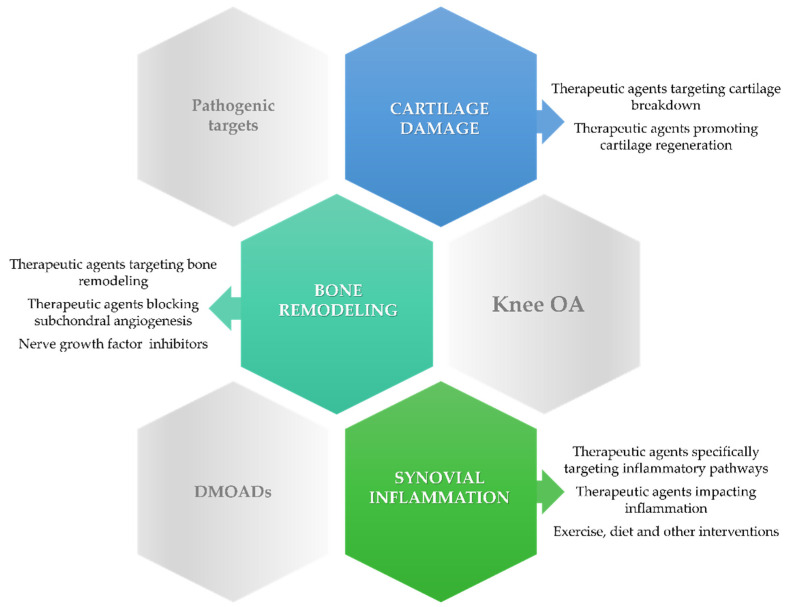
Osteoarthritis (OA) is currently the most widespread musculoskeletal condition and primarily affects weight-bearing joints such as the knees and hips. Importantly, knee OA remains a multifactorial whole-joint disease, the appearance and progression of which involves the alteration of articular cartilage as well as the synovium, subchondral bone, ligaments, and muscles through intricate pathomechanisms. Whereas it was initially depicted as a predominantly aging-related and mechanically driven condition given its clear association with old age, high body mass index (BMI), and joint malalignment, more recent research identified and described a plethora of further factors contributing to knee OA pathogenesis. However, the pathogenic intricacies between the molecular pathways involved in OA prompted the study of certain drugs for more than one therapeutic target (amelioration of cartilage and bone changes, and synovial inflammation). Most clinical studies regarding knee OA focus mainly on improvement in pain and joint function and thus do not provide sufficient evidence on the possible disease-modifying properties of the tested drugs. Currently, there is an unmet need for further research regarding OA pathogenesis as well as the introduction and exhaustive testing of potential disease-modifying pharmacotherapies in order to structure an effective treatment plan for these patients.
Keywords: bone remodeling; cartilage; disease modifying drugs; hyaluronic acid; inflammation; knee joint; mesenchymal stem cells; osteoarthritis; ozone; platelet-rich plasma.
Conflict of interest statement
The authors declare no conflict of interest.
Figures
References
-
- Malfait A.-M., Tortorella M.D. The “elusive DMOAD”: Aggrecanase inhibition from laboratory to clinic. Clin. Exp. Rheumatol. 2019;37:130–134. - PubMed
-
- Castrogiovanni P., Di Rosa M., Ravalli S., Castorina A., Guglielmino C., Imbesi R., Vecchio M., Drago F., Szychlinska M.A., Musumeci G. Moderate Physical Activity as a Prevention Method for Knee Osteoarthritis and the Role of Synoviocytes as Biological Key. Int. J. Mol. Sci. 2019;20:511. doi: 10.3390/ijms20030511. - DOI - PMC - PubMed
-
- Yeap S.S. Current DMOAD options for the treatment of osteoarthritis. Clin. Exp. Rheumatol. 2020;38:802. - PubMed
Publication types
MeSH terms
Substances
LinkOut - more resources
Full Text Sources
Other Literature Sources
