


A Novel Approach for Tuning the Physicochemical, Textural, and Sensory Characteristics of Plant-Based Meat Analogs with Different Levels of Methylcellulose Concentration
- PMID: 33800417
- PMCID: PMC8000783
- DOI: 10.3390/foods10030560
A Novel Approach for Tuning the Physicochemical, Textural, and Sensory Characteristics of Plant-Based Meat Analogs with Different Levels of Methylcellulose Concentration
Abstract
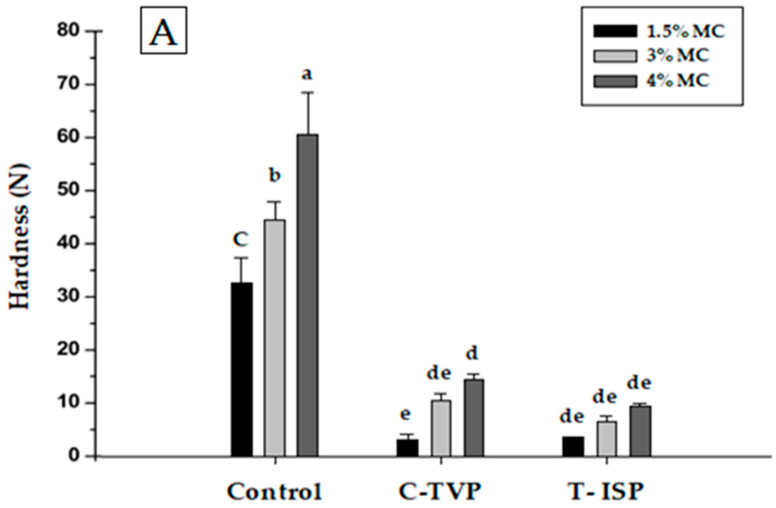
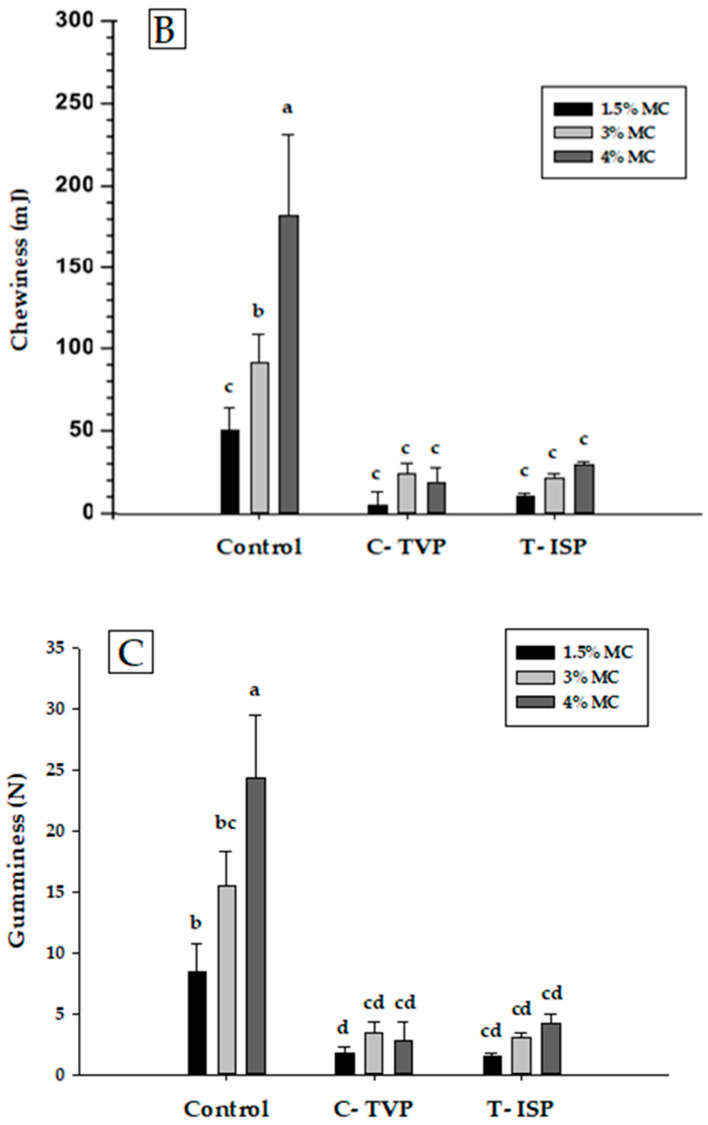
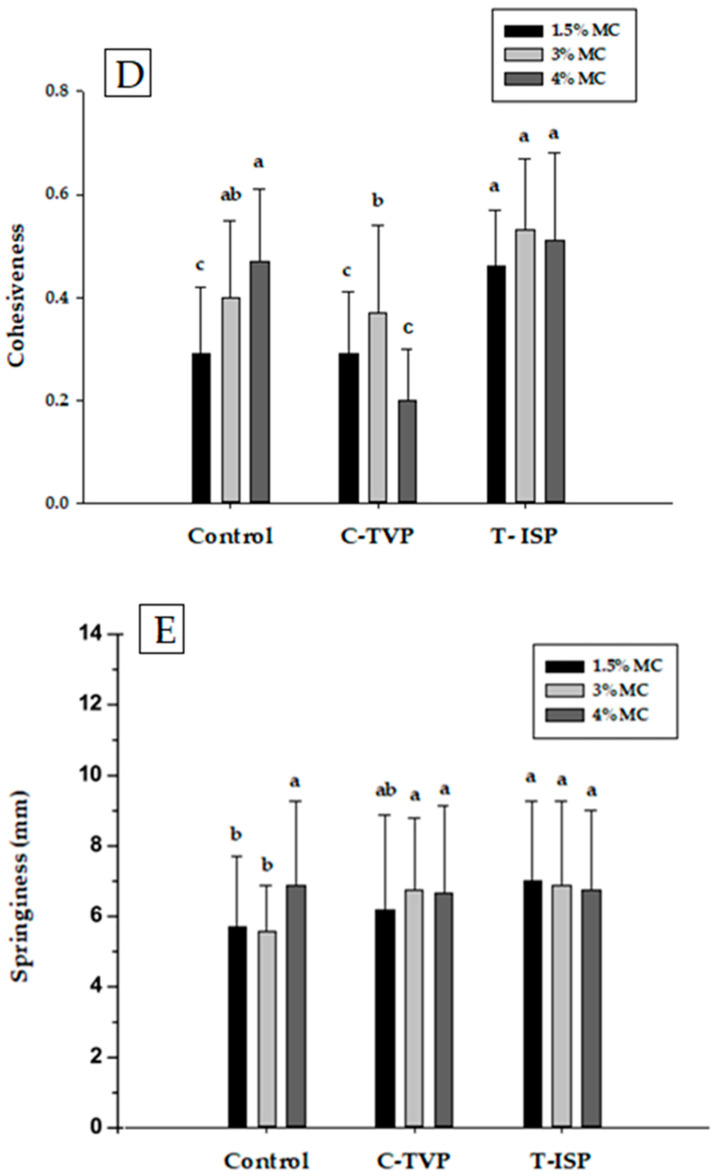
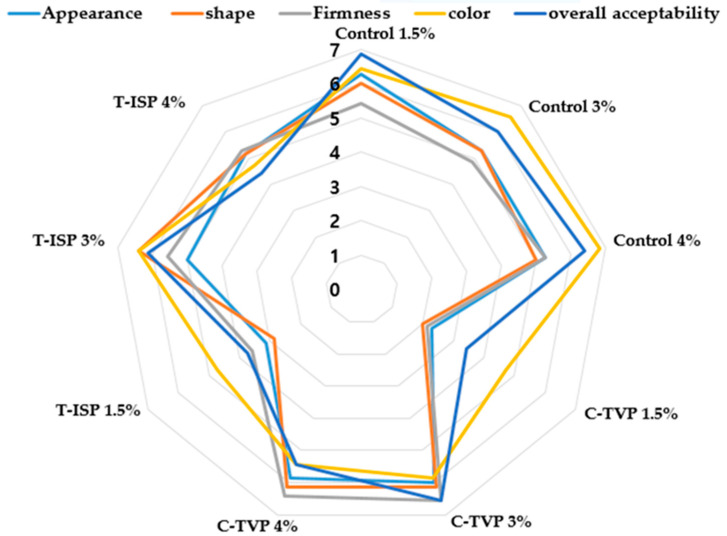
This study assessed the effects of Methylcellulose (MC) at different concentrations on plant-based meat analog (PBMA) patties, comprised of commercial texture vegetable protein (C-TVP) and textured isolate soy protein (T-ISP) as key ingredients, and compared to beef patty control. A significantly higher difference was observed in moisture content in control with increasing MC concentration than the C-TVP and T-ISP patties. However, protein varied significantly among three different protein sources, with control had higher protein content than PBMA patties. Crude fiber content recorded higher values in C-TVP as compared to control. Significantly lower pH values were recorded in control than C-TVP and T-ISP respectively. Regardless, with the addition of MC or ingredient PBMA and control patties tend to reduce lightness (L*) and redness (a*) value after cooking. Although control sample before cooking exhibits lighter and redder than PBMA patties (C-TVP and T-ISP). Likewise, water holding capacity (WHC) decreases as the concentration of MC increases (1.5-4%) in control and PBMA patties. Warner-Bratzler shear force (WBSF) and texture profile analysis (TPA), including hardness, chewiness, and gumminess of control, were significantly higher than C-TVP and T-ISP. Consequently, panelists' in the sensory analysis presented that C-TVP patties containing 3% of MC had better sensory properties than T-ISP. Hence, PBMA patties with C-TVP and incorporation of 3% MC are considered ideal for manufacturing of meat analog as related to control (beef).
Keywords: commercial texture vegetable protein; methylcellulose; plant-based meat analog; texture soy isolate protein.
Conflict of interest statement
The authors declare that they have no conflict of interest.
Figures
References
-
- Wild F. Manufacture of Meat Analogues through High Moisture Extrusion. Elsevier; Amsterdam, The Netherlands: 2016.
-
- Arora B., Kamal S., Sharma V. Effect of Binding Agents on Quality Characteristics of Mushroom Based Sausage Analogue. J. Food Process. 2017;41:e13134. doi: 10.1111/jfpp.13134. - DOI
-
- Apostolidis C., McLeay F. Should we stop meating like this? Reducing meat consumption through substitution. Food Policy. 2016;65:74–89. doi: 10.1016/j.foodpol.2016.11.002. - DOI
LinkOut - more resources
Full Text Sources
Other Literature Sources
