


The Role of Chronic Inflammation in Polycystic Ovarian Syndrome-A Systematic Review and Meta-Analysis
- PMID: 33800490
- PMCID: PMC7962967
- DOI: 10.3390/ijms22052734
The Role of Chronic Inflammation in Polycystic Ovarian Syndrome-A Systematic Review and Meta-Analysis
Abstract
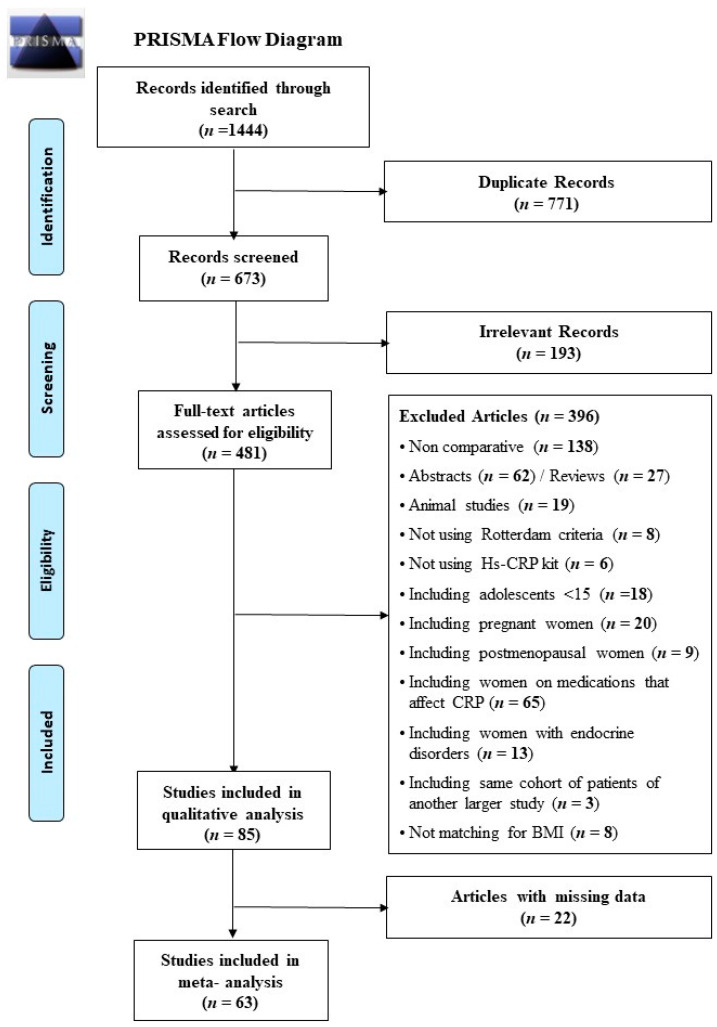
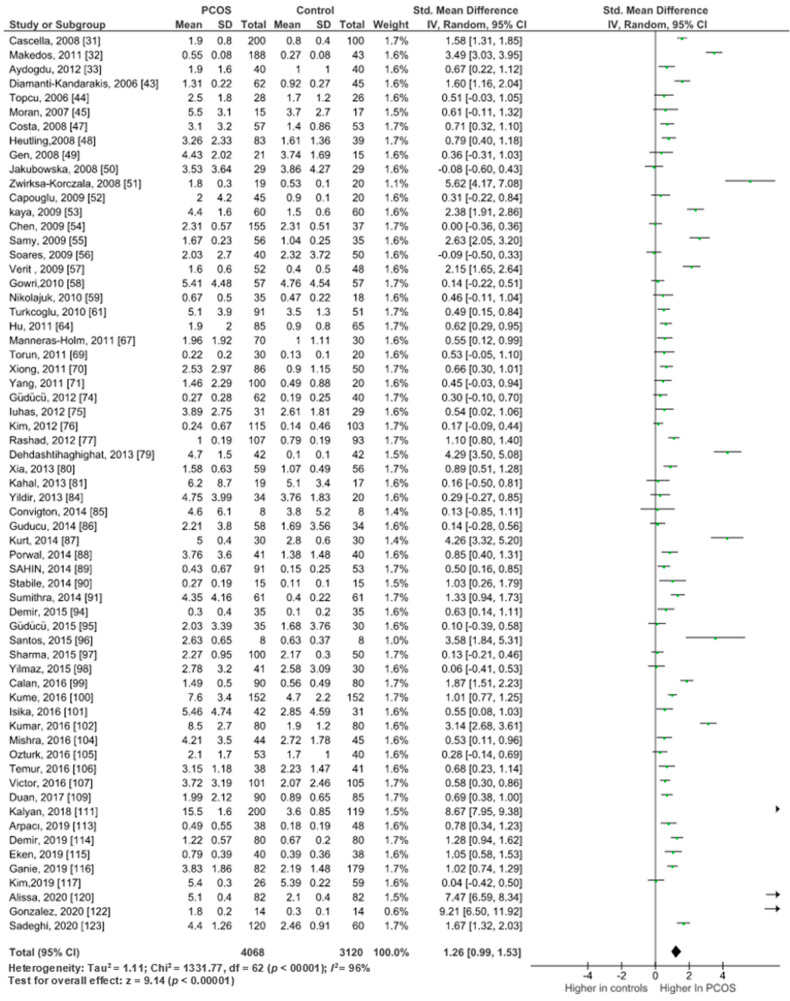
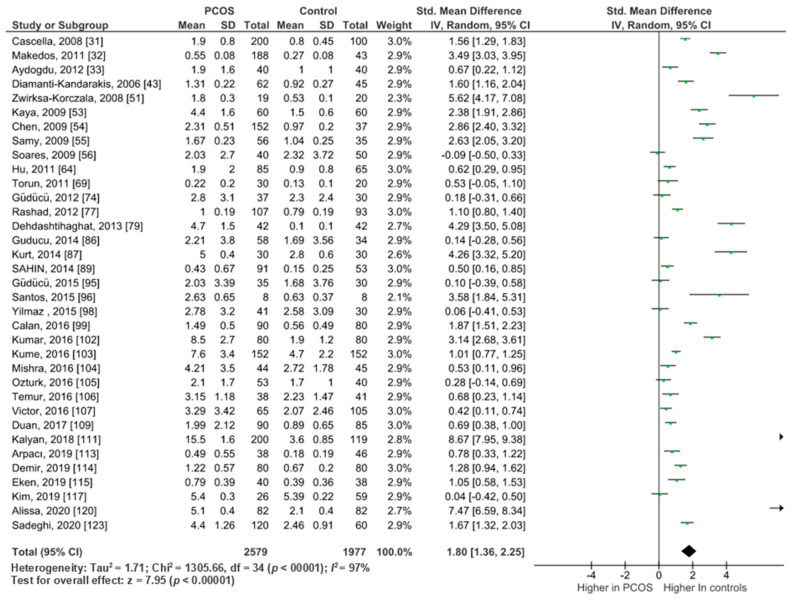
Although the current literature associates polycystic ovarian syndrome (PCOS) with chronic inflammation, the evidence for this link remains inconclusive and its causal nature remains unclear. The purpose of this systematic review was to assess the inflammatory status in PCOS women and to determine whether it is related to PCOS or to its associated adiposity. We searched electronic databases including PUBMED, EMBASE and MEDLINE, SCOPUS, DynaMed plus, TRIP, ScienceDirect and Cochrane Library, for studies investigating C-reactive protein (CRP) and other inflammatory makers in PCOS women versus healthy controls. Quality and risk of bias for selected studies were assessed using the modified Newcastle-Ottawa scale. CRP data were extracted and pooled using RevMan for calculation of the standardized mean difference (SMD) and 95% confidence interval (CI). Eighty-five eligible studies were included in the systematic review, of which 63 were included in the meta-analysis. Pooled analysis of the 63 studies revealed significantly higher circulating CRP in PCOS women (n = 4086) versus controls (n = 3120) (SMD 1.26, 95%CI, 0.99, 1.53). Sensitivity meta-analysis of 35 high quality studies including non-obese women showed significantly higher circulating CRP in PCOS women versus controls (SMD 1.80, 95%CI, 1.36, 2.25). In conclusion, circulating CRP is moderately elevated in PCOS women independent of obesity, which is indicative of low-grade chronic inflammation.
Keywords: C-reactive protein; chronic inflammation; inflammatory markers; insulin resistance; obesity; polycystic ovarian syndrome.
Conflict of interest statement
The authors declare no conflict of interest.
Figures
References
-
- Lauritsen M.P., Bentzen J.G., Pinborg A., Loft A., Forman J.L., Thuesen L.L., Cohen A., Hougaard D.M., Nyboe Andersen A. The Prevalence of Polycystic Ovary Syndrome in a Normal Population According to the Rotterdam Criteria versus Revised Criteria Including Anti-Müllerian Hormone. Hum. Reprod. 2014;29:791–801. doi: 10.1093/humrep/det469. - DOI - PubMed
Publication types
MeSH terms
Substances
Grants and funding
LinkOut - more resources
Full Text Sources
Other Literature Sources
Medical
Research Materials
Miscellaneous
