


Characteristics of Periodontal Tissues in Prosthetic Treatment with Fixed Dental Prostheses
- PMID: 33801337
- PMCID: PMC7958327
- DOI: 10.3390/molecules26051331
Characteristics of Periodontal Tissues in Prosthetic Treatment with Fixed Dental Prostheses
Abstract
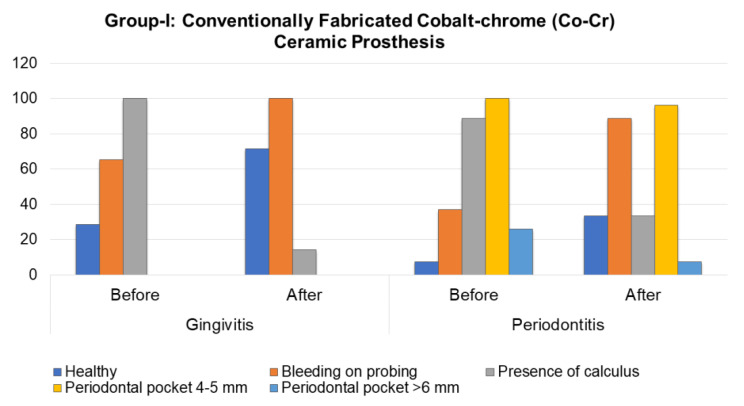
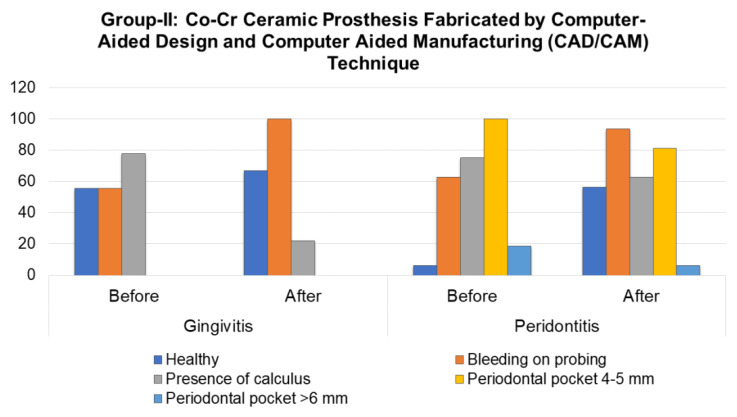
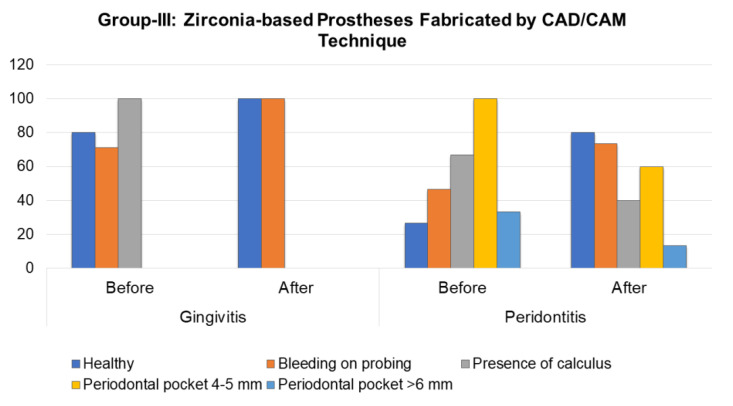
The objective of the present study was to investigate the effects of various types of fixed prostheses on periodontal tissues and explore the association of gingival biotype and gum recession in relation to prosthesis types. The study participants (N = 95) were divided into three groups based on the type of dental prosthesis: Group-I: cobalt-chrome (Co-Cr) ceramic prosthesis fabricated by the conventional method (n = 35); Group-II: consisted of patients with Co-Cr ceramic prostheses fabricated by a computer-aided design and computer aided manufacturing (CAD/CAM) technique (n = 30); and Group-III: zirconia-based prostheses fabricated by the CAD/CAM technique (n = 30). Following the use of prostheses, periodontal examinations were performed using the Community Periodontal Index (CPI) and Modified Approximal Plaque Index (MAPI). In addition, the gingival biotype was examined using a probe transparency method. The Statistical Package for the Social Sciences (SPSS), Version 20 (IBM Company, Chicago, IL, USA), was used to analyze the results, and the significance level was set at p = 0.05. It showed the MAPI results after the use of prosthetic rehabilitation for 12 months of periodontitis in 87.9% ± 15.4 of patients in Group-I, in 80.6% ± 17.97 in those in Group-II, and in 62.5% ± 21.4 in those in Group-III (p < 0.01). The CPI index results indicated a high prevalence of periodontal disease in all groups. The number of people with healthy periodontium constituted 17.1% of patients in Group-I, 24.2% in Group-II, and 37.1% in Group-III. Our study concluded that prosthetic treatment with periodontal diseases showed better outcomes while using dental prostheses fabricated by the CAD/CAM technique compared to the conventionally fabricated dental prostheses. The thin gingival biotype is more often associated with gingival recession than the thick biotype.
Keywords: CAD/CAM; dental prosthesis; gingival biotype; gingival pocket; metal ceramic; oral hygiene; periodontal index; plaque index; zirconium.
Conflict of interest statement
The authors declare no conflict of interest.
Figures
References
MeSH terms
Substances
LinkOut - more resources
Full Text Sources
Other Literature Sources
Miscellaneous
