


Crosstalk between Existential Phenomenological Psychotherapy and Neurological Sciences in Mood and Anxiety Disorders
- PMID: 33801765
- PMCID: PMC8066576
- DOI: 10.3390/biomedicines9040340
Crosstalk between Existential Phenomenological Psychotherapy and Neurological Sciences in Mood and Anxiety Disorders
Abstract
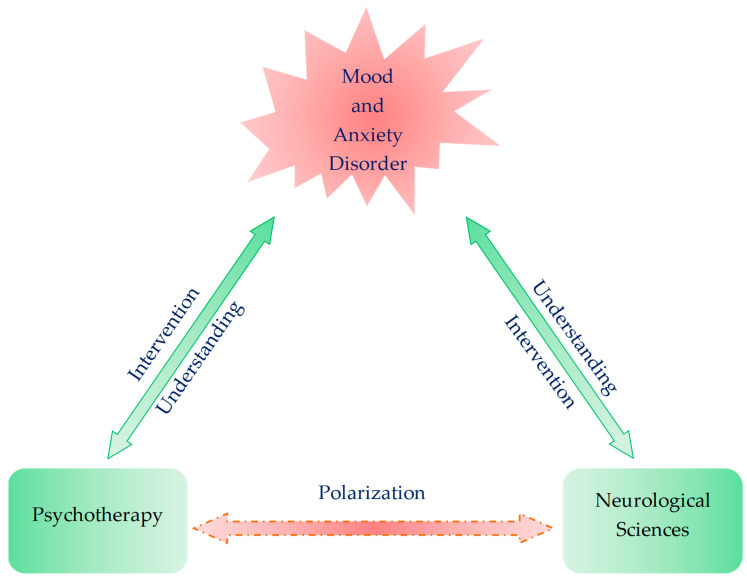
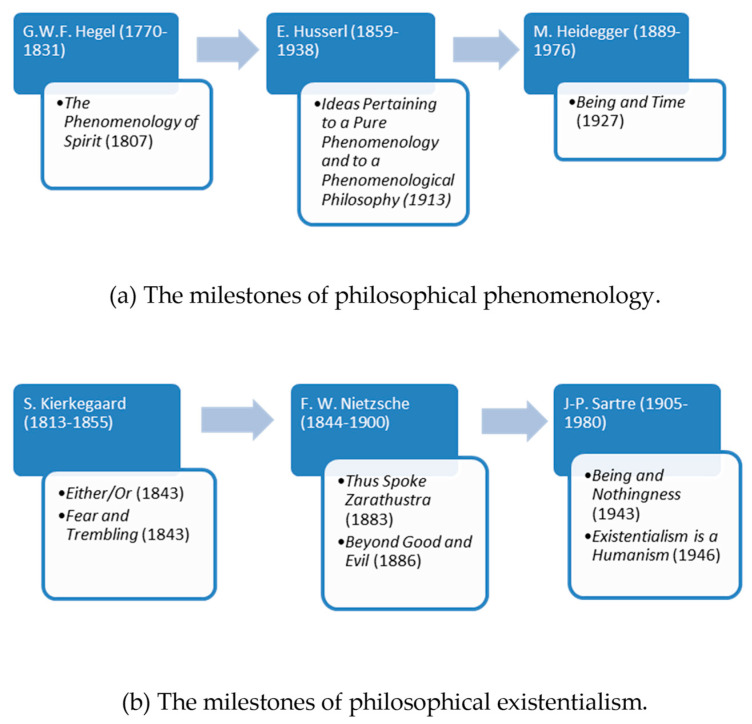
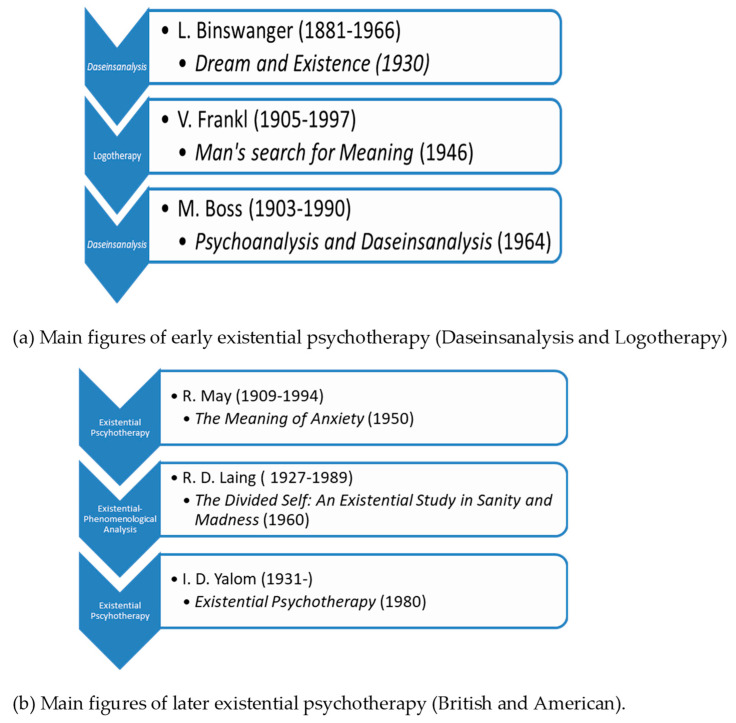
Psychotherapy is a comprehensive biological treatment modifying complex underlying cognitive, emotional, behavioral, and regulatory responses in the brain, leading patients with mental illness to a new interpretation of the sense of self and others. Psychotherapy is an art of science integrated with psychology and/or philosophy. Neurological sciences study the neurological basis of cognition, memory, and behavior as well as the impact of neurological damage and disease on these functions, and their treatment. Both psychotherapy and neurological sciences deal with the brain; nevertheless, they continue to stay polarized. Existential phenomenological psychotherapy (EPP) has been in the forefront of meaning-centered counseling for almost a century. The phenomenological approach in psychotherapy originated in the works of Martin Heidegger, Ludwig Binswanger, Medard Boss, and Viktor Frankl, and it has been committed to accounting for the existential possibilities and limitations of one's life. EPP provides philosophically rich interpretations and empowers counseling techniques to assist mentally suffering individuals by finding meaning and purpose to life. The approach has proven to be effective in treating mood and anxiety disorders. This narrative review article demonstrates the development of EPP, the therapeutic methodology, evidence-based accounts of its curative techniques, current understanding of mood and anxiety disorders in neurological sciences, and a possible converging path to translate and integrate meaning-centered psychotherapy and neuroscience, concluding that the EPP may potentially play a synergistic role with the currently prevailing medication-based approaches for the treatment of mood and anxiety disorders.
Keywords: Martin Heidegger; Viktor Frankl; anxiety disorders; biomarker; depression; existential psychotherapy; functional magnetic resonance imaging; kynurenines; logotherapy; meaning-centered psychotherapy.
Conflict of interest statement
The authors declare no conflict of interest.
Figures
References
-
- Mental Health—Our World in Data. [(accessed on 14 December 2020)]; Available online: https://ourworldindata.org/mental-health#:~:text=Globally%20an%20estimat....
-
- Zhou X., Teng T., Zhang Y., Del Giovane C., Furukawa T.A., Weisz J.R., Li X., Cuijpers P., Coghill D., Xiang Y., et al. Comparative efficacy and acceptability of antidepressants, psychotherapies, and their combination for acute treatment of children and adolescents with depressive disorder: A systematic review and network meta-analysis. Lancet Psychiatry. 2020;7:581–601. doi: 10.1016/S2215-0366(20)30137-1. - DOI - PMC - PubMed
-
- InformedHealth.org Cologne, Germany: Institute for Quality and Efficiency in Health Care (IQWiG). Depression: How Effective Are Antidepressants? [(accessed on 14 December 2020)];2020 Available online: https://www.ncbi.nlm.nih.gov/books/NBK361016/
-
- Depression and Other Common Mental Disorders Global Health Estimates. [(accessed on 14 December 2020)]; Available online: https://apps.who.int/iris/bitstream/handle/10665/254610/WHO-MSD-MER-2017....
-
- Smolderen K.G., Buchanan D.M., Gosch K., Whooley M., Chan P.S., Vaccarino V., Parashar S., Shah A.J., Ho P.M., Spertus J.A. Depression Treatment and 1-Year Mortality After Acute Myocardial Infarction: Insights from the TRIUMPH Registry (Translational Research Investigating Underlying Disparities in Acute Myocardial Infarction Patients’ Health Status) Circulation. 2017;135:1681–1689. doi: 10.1161/CIRCULATIONAHA.116.025140. - DOI - PMC - PubMed
Publication types
Grants and funding
LinkOut - more resources
Full Text Sources
Other Literature Sources
