


Greenspace Interventions, Stress and Cortisol: A Scoping Review
- PMID: 33801917
- PMCID: PMC8001092
- DOI: 10.3390/ijerph18062802
Greenspace Interventions, Stress and Cortisol: A Scoping Review
Abstract
Background: Engaging with nature can profoundly impact psychological and physiological health of persons across the lifespan. Greenspace interventions (GSI) encompass a broad range of strategic, nature-based activities for overall health and wellbeing. Within the past 20 years there has been a growing interest in the access to and management of greenspace to mediate the deleterious impact of acute and chronic stress, particularly, physiologic biomarkers of stress such as cortisol.
Objective: This review aims to describe the impact of greenspace interventions on cortisol, to present the current state of the science on GSIs as they impact cortisol, and to uncover any limitations of current research strategies to best inform future research.
Methods: A scoping methodology was conducted to systematically study this emerging field and inform future research by mapping the literature based on the GSI category, interventional design, cortisol metrics, and subsequent analysis of cortisol.
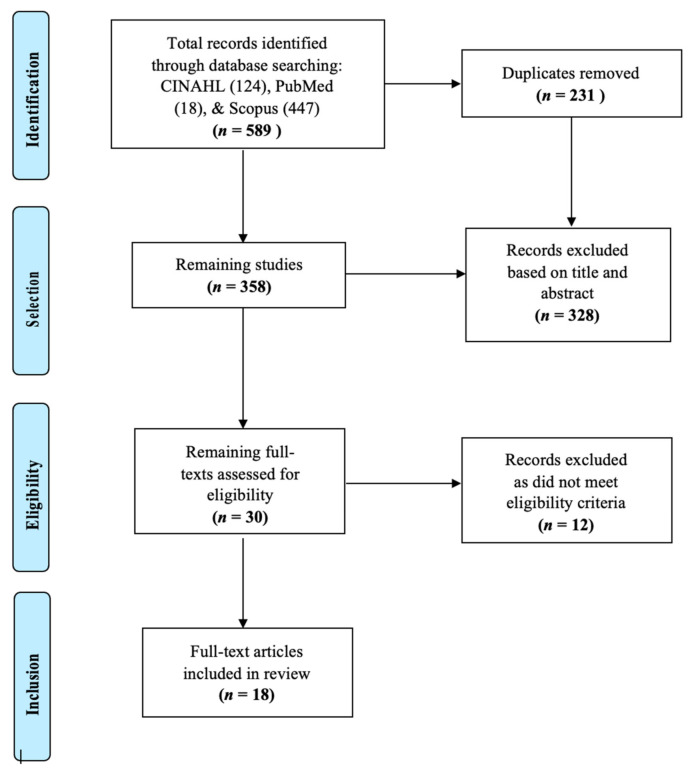
Conclusion: Considerable heterogeneity in research design, aim(s), interventional strategy, and cortisol metrics were identified from a total of 18 studies on GSIs and cortisol outcomes. While studies demonstrated a potential for the positive association between GSIs and stress relief, more rigorous research is needed to represent GSIs as an intervention to mitigate risks of stress.
Keywords: biomarker; cortisol; forest-bathing; greenspace; greenspace intervention; horticulture therapy; nature-based intervention.
Conflict of interest statement
The authors declare no conflict of interest.
Figures
References
-
- Kellert S.R., Case D.J., Escher D., Witter D.J., Mikels-Carrasco J., Seng P.T. The Nature of Americans: Disconnection and Recommendations for Reconnection. Volume 11. The Nature of Americans National Report, DJ Case and Associates; Mishawaka, IN, USA: 2017. p. 2018.
-
- Corazon S.S., Sidenius U., Poulsen D.V., Gramkow M.C., Stigsdotter U.K. Psycho-physiological stress recovery in outdoor nature-based interventions: A systematic review of the past eight years of research. Int. J. Environ. Res. Public Health. 2019;16:1711. doi: 10.3390/ijerph16101711. - DOI - PMC - PubMed
Publication types
MeSH terms
Substances
LinkOut - more resources
Full Text Sources
Other Literature Sources
Miscellaneous
