


The Present Role and New Potentials of Anaerobic Fungi in Ruminant Nutrition
- PMID: 33802104
- PMCID: PMC8000393
- DOI: 10.3390/jof7030200
The Present Role and New Potentials of Anaerobic Fungi in Ruminant Nutrition
Abstract
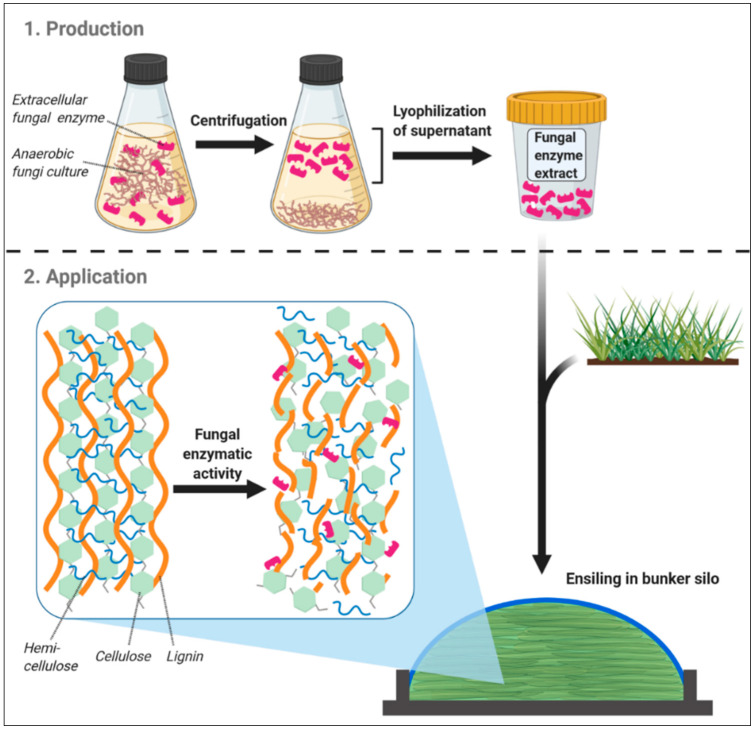
The ruminal microbiota allows ruminants to utilize fibrous feeds and is in the limelight of ruminant nutrition research for many years. However, the overwhelming majority of investigations have focused on bacteria, whereas anaerobic fungi (AF) have been widely neglected by ruminant nutritionists. Anaerobic fungi are not only crucial fiber degraders but also important nutrient sources for the host. This review summarizes the current findings on AF and, most importantly, discusses their new application potentials in modern ruminant nutrition. Available data suggest AF can be applied as direct-fed microbials to enhance ruminal fiber degradation, which is indeed of interest for high-yielding dairy cows that often show depressed ruminal fibrolysis in response to high-grain feeding. Moreover, these microorganisms have relevance for the nutrient supply and reduction of methane emissions. However, to reach AF-related improvements in ruminal fiber breakdown and animal performance, obstacles in large-scale AF cultivation and applicable administration options need to be overcome. At feedstuff level, silage production may benefit from the application of fungal enzymes that cleave lignocellulosic structures and consequently enable higher energy exploitation from forages in the rumen. Concluding, AF hold several potentials in improving ruminant feeding and future research efforts are called for to harness these potentials.
Keywords: Neocallimastigomycota; additive; anaerobic digestion; anaerobic fungi; cattle; enzyme; herbivore; rumen; silage.
Conflict of interest statement
The authors declare no conflict of interest.
Figures
References
Publication types
Grants and funding
LinkOut - more resources
Full Text Sources
Other Literature Sources
