


Functional Coupling between DNA Replication and Sister Chromatid Cohesion Establishment
- PMID: 33802105
- PMCID: PMC8001024
- DOI: 10.3390/ijms22062810
Functional Coupling between DNA Replication and Sister Chromatid Cohesion Establishment
Abstract
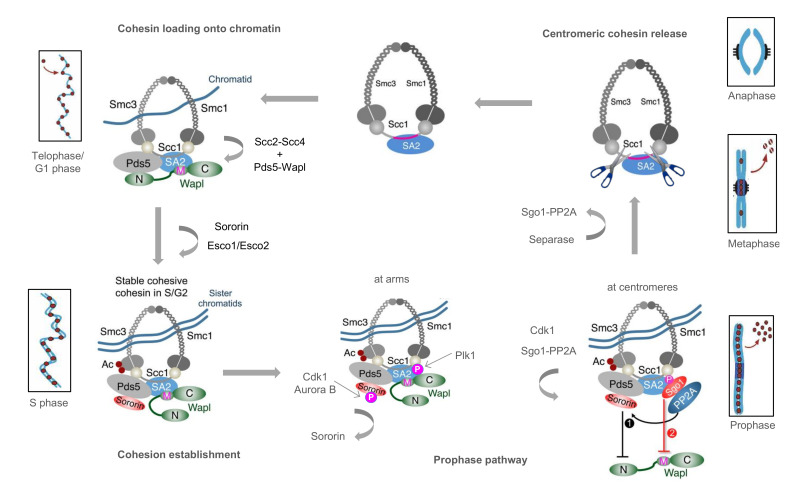
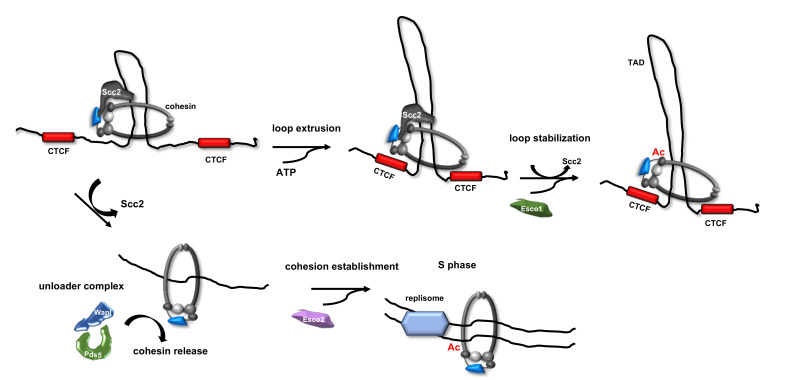
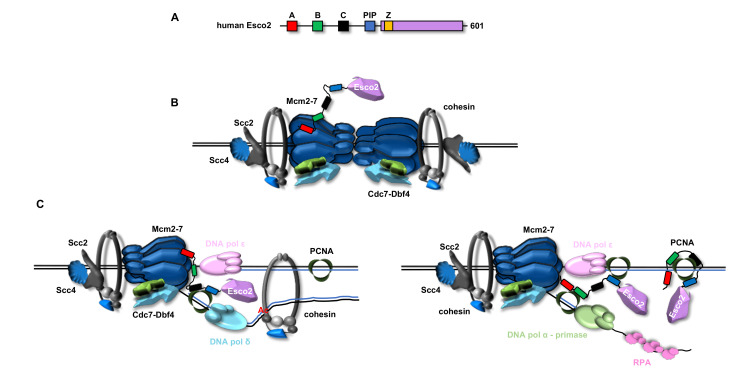
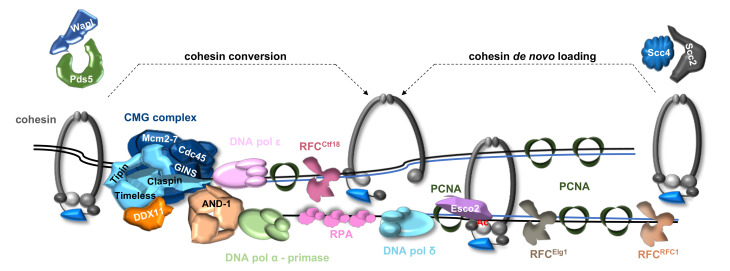
Several lines of evidence suggest the existence in the eukaryotic cells of a tight, yet largely unexplored, connection between DNA replication and sister chromatid cohesion. Tethering of newly duplicated chromatids is mediated by cohesin, an evolutionarily conserved hetero-tetrameric protein complex that has a ring-like structure and is believed to encircle DNA. Cohesin is loaded onto chromatin in telophase/G1 and converted into a cohesive state during the subsequent S phase, a process known as cohesion establishment. Many studies have revealed that down-regulation of a number of DNA replication factors gives rise to chromosomal cohesion defects, suggesting that they play critical roles in cohesion establishment. Conversely, loss of cohesin subunits (and/or regulators) has been found to alter DNA replication fork dynamics. A critical step of the cohesion establishment process consists in cohesin acetylation, a modification accomplished by dedicated acetyltransferases that operate at the replication forks. Defects in cohesion establishment give rise to chromosome mis-segregation and aneuploidy, phenotypes frequently observed in pre-cancerous and cancerous cells. Herein, we will review our present knowledge of the molecular mechanisms underlying the functional link between DNA replication and cohesion establishment, a phenomenon that is unique to the eukaryotic organisms.
Keywords: DNA replication; cell cycle; cohesin; replication proteins; sister chromatid cohesion.
Conflict of interest statement
The authors declare no conflict of interest.
Figures
References
Publication types
MeSH terms
Substances
Grants and funding
LinkOut - more resources
Full Text Sources
Other Literature Sources
