


Assessing Patient Safety Culture in Hospital Settings
- PMID: 33802265
- PMCID: PMC7967599
- DOI: 10.3390/ijerph18052466
Assessing Patient Safety Culture in Hospital Settings
Abstract
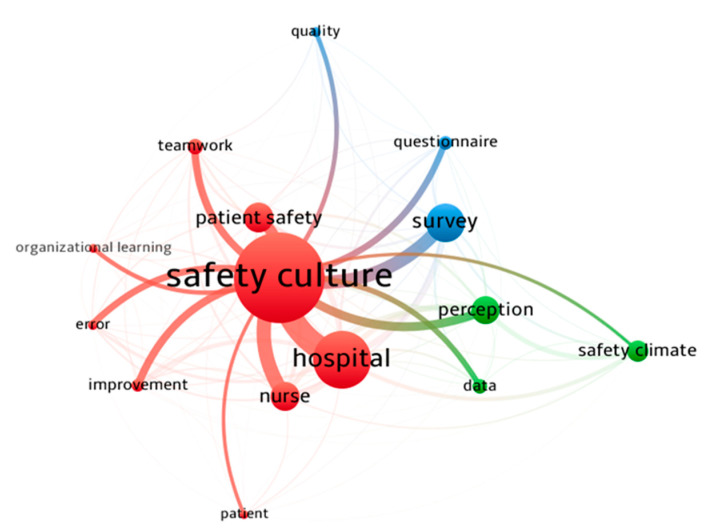
The current knowledge about patient safety culture (PSC) in the healthcare industry, as well as the research tools that have been used to evaluate PSC in hospitals, is limited. Such a limitation may hamper current efforts to improve patient safety worldwide. This study provides a systematic review of published research on the perception of PSC in hospitals. The research methods used to survey and evaluate PSC in healthcare settings are also explored. A list of academic databases was searched from 2006 to 2020 to form a comprehensive view of PSC's current applications. The following research instruments have been applied in the past to assess PSC: the Hospital Survey on Patient Safety Culture (HSPSC), the Safety Attitudes Questionnaire (SAQ), the Patient Safety Climate in Health Care Organizations (PSCHO), the Modified Stanford Instrument (MSI-2006), and the Scottish Hospital Safety Questionnaire (SHSQ). Some of the most critical factors that impact the PSC are teamwork and organizational and behavioral learning. Reporting errors and safety awareness, gender and demographics, work experience, and staffing levels have also been identified as essential factors. Therefore, these factors will need to be considered in future work to improve PSC. Finally, the results reveal strong evidence of growing interest among individuals in the healthcare industry to assess hospitals' general patient safety culture.
Keywords: behavioral learning; healthcare; patient safety culture; safety climate.
Conflict of interest statement
The authors declare no conflict of interest.
Figures
References
-
- World Health Organization . Global Status Report on Road Safety: Time for Action. World Health Organization; Geneva, Switzerland: 2009.
-
- González-Formoso C., Martín-Miguel M.V., Fernández-Domínguez M.J., Rial A., Lago-Deibe F.I., Ramil-Hermida L., Pérez-García M., Clavería A. Adverse Events Analysis as an Educational Tool to Improve Patient Safety Culture in Primary Care: A Randomized Trial. BMC Fam. Pract. 2011;12 doi: 10.1186/1471-2296-12-50. - DOI - PMC - PubMed
Publication types
MeSH terms
LinkOut - more resources
Full Text Sources
Other Literature Sources
Medical
Miscellaneous
