


Secondary Metabolism and Defense Responses Are Differently Regulated in Two Grapevine Cultivars during Ripening
- PMID: 33802641
- PMCID: PMC8002507
- DOI: 10.3390/ijms22063045
Secondary Metabolism and Defense Responses Are Differently Regulated in Two Grapevine Cultivars during Ripening
Abstract
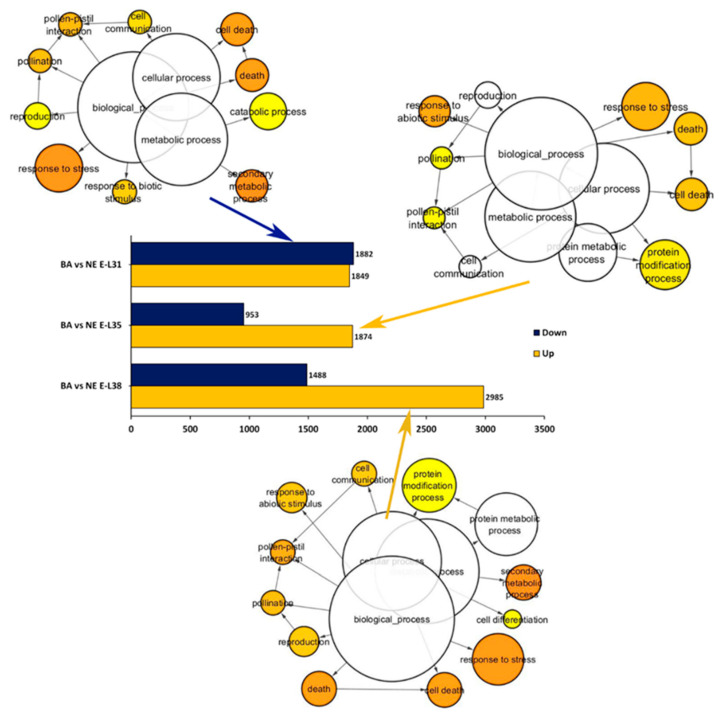
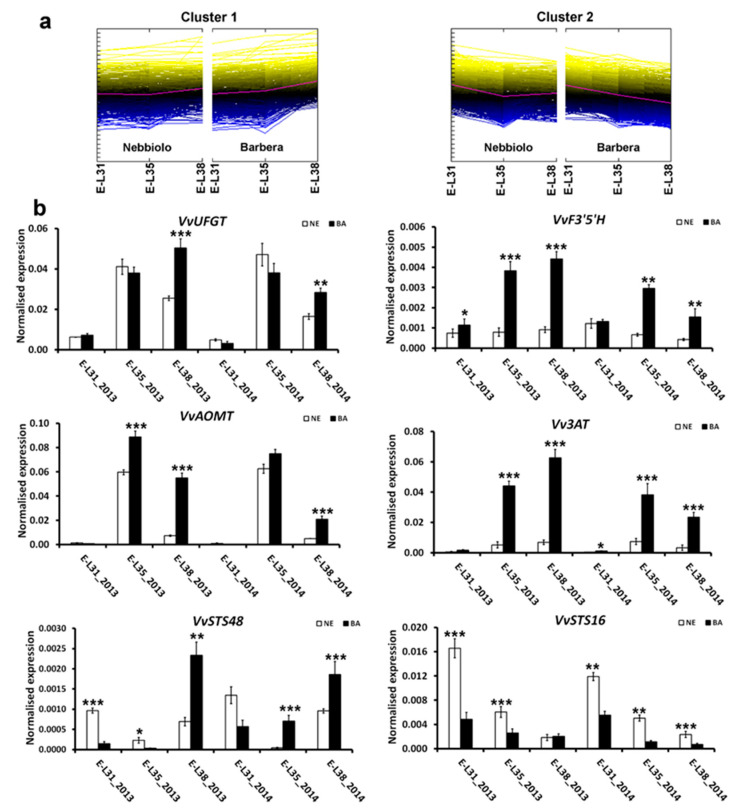
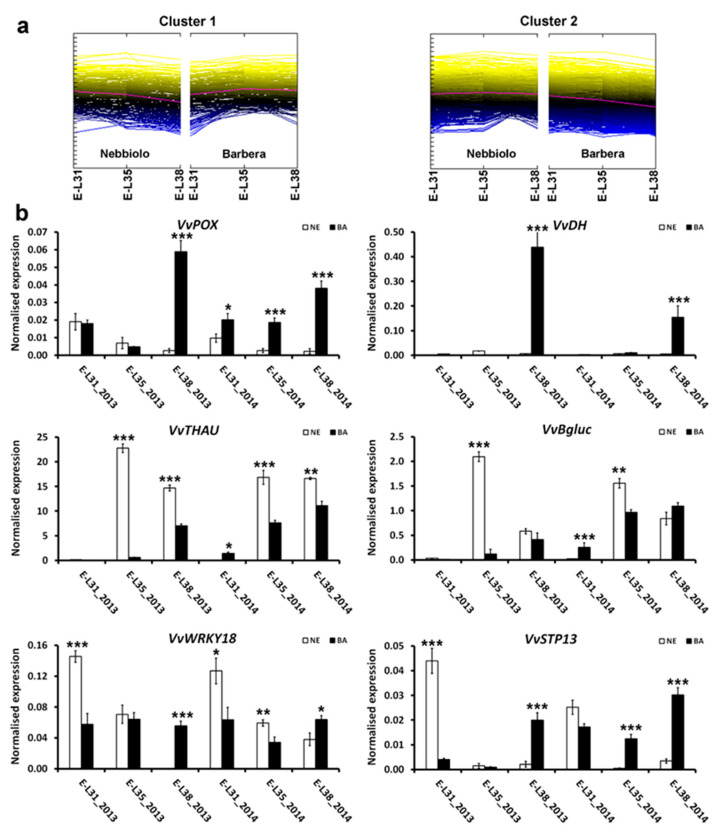
Vitis vinifera 'Nebbiolo' is one of the most important wine grape cultivars used to produce prestigious high-quality wines known throughout the world, such as Barolo and Barbaresco. 'Nebbiolo' is a distinctive genotype characterized by medium/high vigor, long vegetative and ripening cycles, and limited berry skin color rich in 3'-hydroxylated anthocyanins. To investigate the molecular basis of these characteristics, 'Nebbiolo' berries collected at three different stages of ripening (berry pea size, véraison, and harvest) were compared with V. vinifera 'Barbera' berries, which are rich in 3',5'-hydroxylated anthocyanins, using transcriptomic and analytical approaches. In two consecutive seasons, the two genotypes confirmed their characteristic anthocyanin profiles associated with a different modulation of their transcriptomes during ripening. Secondary metabolism and response to stress were the functional categories that most differentially changed between 'Nebbiolo' and 'Barbera'. The profile rich in 3'-hydroxylated anthocyanins of 'Nebbiolo' was likely linked to a transcriptional downregulation of key genes of anthocyanin biosynthesis. In addition, at berry pea size, the defense metabolism was more active in 'Nebbiolo' than 'Barbera' in absence of biotic attacks. Accordingly, several pathogenesis-related proteins, WRKY transcription factors, and stilbene synthase genes were overexpressed in 'Nebbiolo', suggesting an interesting specific regulation of defense pathways in this genotype that deserves to be further explored.
Keywords: Vitis vinifera; anthocyanin profile; defense metabolism; flavonoid 3′,5′-hydroxylases; high-throughput sequencing; stilbene synthases.
Conflict of interest statement
The authors declare no conflict of interest. The funders had no role in the design of the study; in the collection, analyses, or interpretation of data; in the writing of the manuscript, or in the decision to publish the results.
Figures
References
-
- Dai Z.W., Ollat N., Gomes E., Decroocq S., Tandonnet J.P., Bordenave L., Pieri P., Hilbert G., Kappel C., van Leeuwen C., et al. Ecophysiological, genetic, and molecular causes of variation in grape berry weight and composition, a review. Am. J. Enol. Vitic. 2011;62:413–425. doi: 10.5344/ajev.2011.10116. - DOI
-
- van Leeuwen C., Schultz H.R., Garcia de Cortazar-Atauri I., Duchêne E., Ollat N., Pieri P., Bois B., Goutouly J.-P., Quénol H., Touzard J.-M., et al. Why climate change will not dramatically decrease viticultural suitability in main wine-producing areas by 2050. Proc. Natl. Acad. Sci. USA. 2013;110:E3051–E3052. doi: 10.1073/pnas.1307927110. - DOI - PMC - PubMed
MeSH terms
Substances
Grants and funding
LinkOut - more resources
Full Text Sources
Other Literature Sources
