


Mechanical Vibration Damping and Compression Properties of a Lattice Structure
- PMID: 33803878
- PMCID: PMC8003247
- DOI: 10.3390/ma14061502
Mechanical Vibration Damping and Compression Properties of a Lattice Structure
Abstract
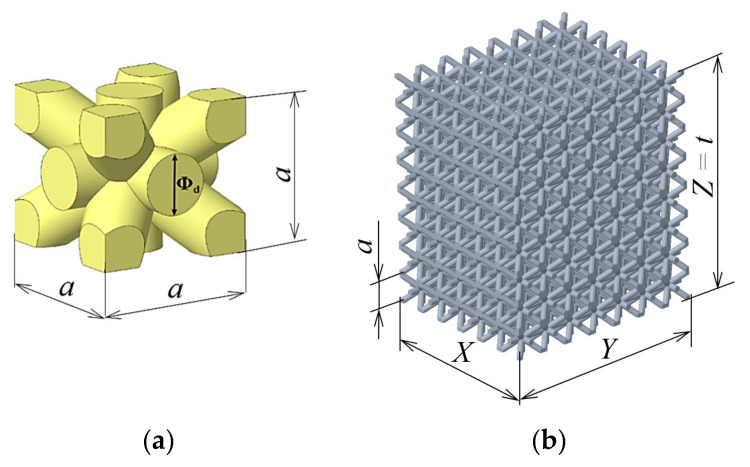
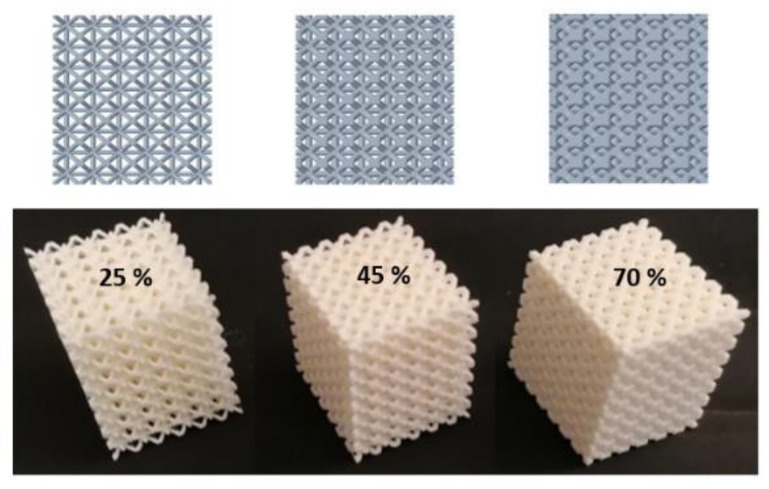
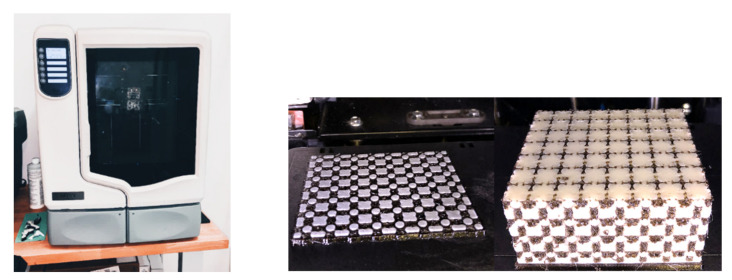
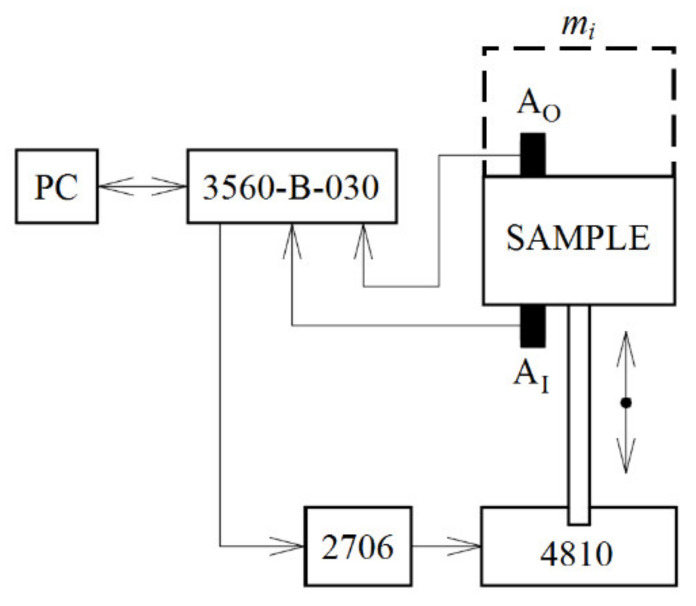
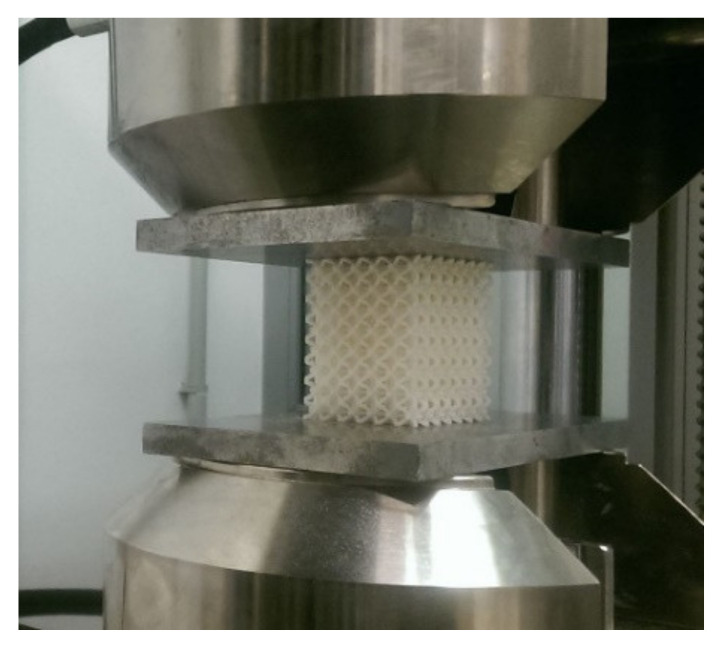
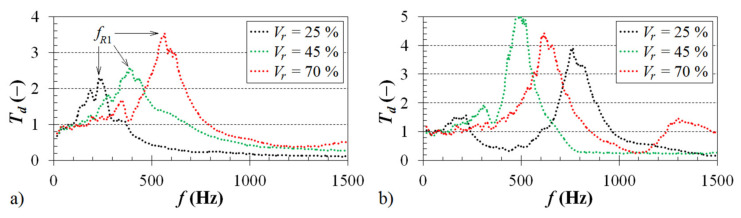
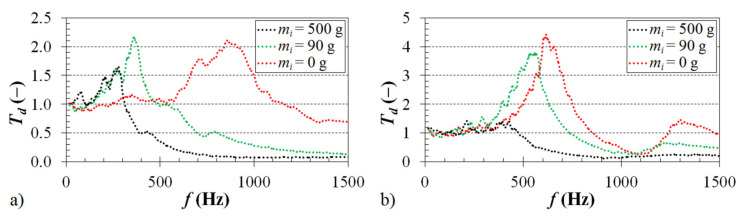
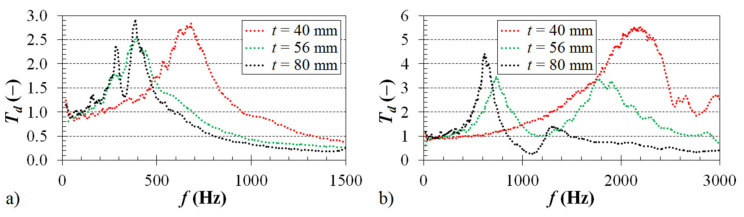
The development of additive technology has made it possible to produce metamaterials with a regularly recurring structure, the properties of which can be controlled, predicted, and purposefully implemented into the core of components used in various industries. Therefore, knowing the properties and behavior of these structures is a very important aspect in their application in real practice from the aspects of safety and operational reliability. This article deals with the effect of cell size and volume ratio of a body-centered cubic (BCC) lattice structure made from Acrylonitrile Butadiene Styrene (ABS) plastic on mechanical vibration damping and compression properties. The samples were produced in three sizes of a basic cell and three volume ratios by the fused deposition modeling (FDM) technique. Vibration damping properties of the tested 3D-printed ABS samples were investigated under harmonic excitation at three employed inertial masses. The metamaterial behavior and response under compressive loading were studied under a uniaxial full range (up to failure) quasi-static compression test. Based on the experimental data, a correlation between the investigated ABS samples' stiffness evaluated through both compressive stress and mechanical vibration damping can be found.
Keywords: 3D printing; Acrylonitrile Butadiene Styrene; compression behavior; displacement transmissibility; excitation frequency; mechanical vibration.
Conflict of interest statement
The authors declare that they have no conflicts of interest.
Figures
References
-
- Mamalis A.G., Manolakos D.E., Szalay A., Pantazopoulos G. Processing of High-Temperature Superconductors at High Strain Rates. Volume 4. CRC Press; New York, NY, USA: 2019. Processing of High-Temperature Superconductors at High Strain Rates; p. 94.
-
- Hasanain S.A., Ahsan M. Effect of strut length and orientation on elastic mechanical response of modified body-centered cubic lattice structures. Proc. Inst. Mech. Eng. L. 2019;233:2219–2233.
-
- Tahseen A., Mian A. Developing and Equivalent Solid Material Model for BCC Lattice Cell Structures Involving Vertical and Horizontal Struts. J. Compos. Sci. 2020;4:1–12.
-
- Alwattar T.A., Mian A. Development of an Elastic Material Model for BCC Lattice Cell Structures Using Finite Element Analysis and Neural Networks Approaches. J. Compos. Sci. 2019;3:33. doi: 10.3390/jcs3020033. - DOI
-
- Iyibilgin O., Yigit C. Experimental investigation of different cellular lattice structures manufactured by fused deposition modeling; Proceedings of the Solid Freeform Fabrication Symposium; Austin, TX, USA. 12–14 August 2013; pp. 895–907.
Grants and funding
- APVV-19-0550/Agentúra Ministerstva Školstva, Vedy, Výskumu a Športu SR
- KEGA 005TUKE-4/2021/Agentúra Ministerstva Školstva, Vedy, Výskumu a Športu SR
- CZ.02.1.01/0.0/0.0/16_019/0000867/European Regional Development Fund in the Research Centre of Advanced Mechatronic Systems Operational Programme Research, Development, and Education
LinkOut - more resources
Full Text Sources
Other Literature Sources
