


Thrombolome and Its Emerging Role in Chronic Kidney Diseases
- PMID: 33803899
- PMCID: PMC8003125
- DOI: 10.3390/toxins13030223
Thrombolome and Its Emerging Role in Chronic Kidney Diseases
Abstract
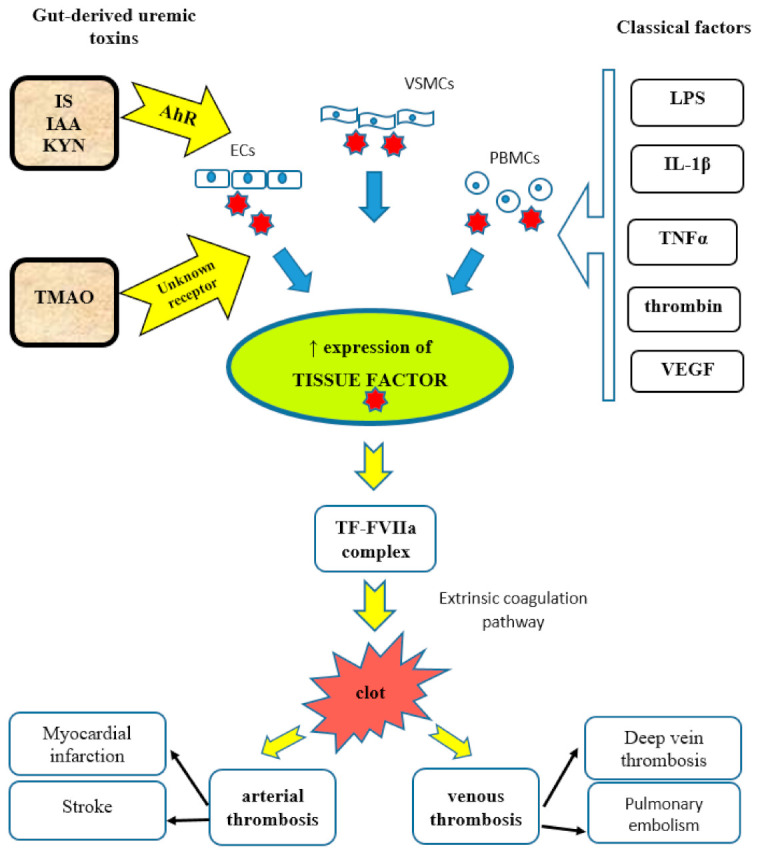
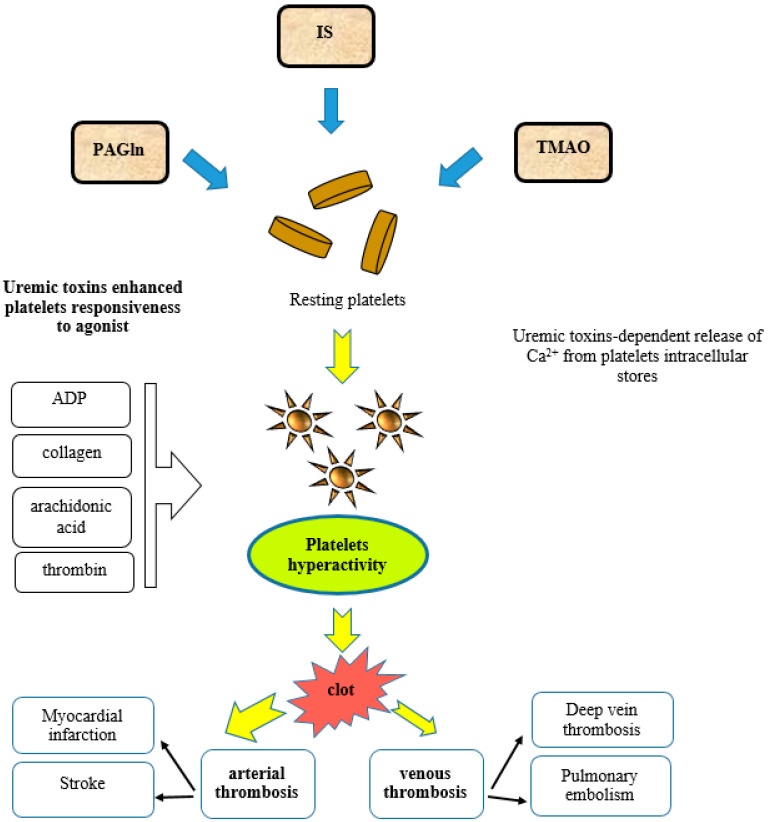
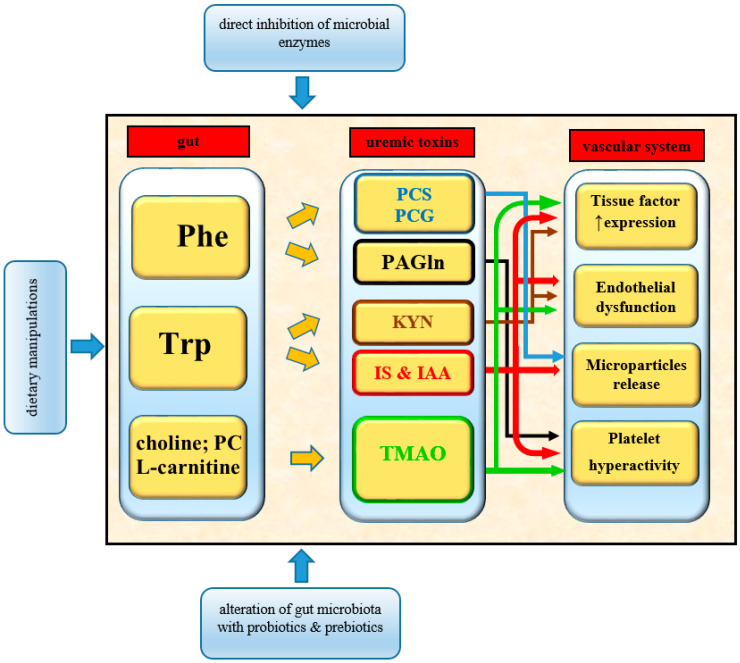
Patients with chronic kidney disease (CKD) are at an increased risk of thromboembolic complications, including myocardial infarction, stroke, deep vein thrombosis, and pulmonary embolism. These complications lead to increased mortality. Evidence points to the key role of CKD-associated dysbiosis and its effect via the generation of gut microbial metabolites in inducing the prothrombotic phenotype. This phenomenon is known as thrombolome, a panel of intestinal bacteria-derived uremic toxins that enhance thrombosis via increased tissue factor expression, platelet hyperactivity, microparticles release, and endothelial dysfunction. This review discusses the role of uremic toxins derived from gut-microbiota metabolism of dietary tryptophan (indoxyl sulfate (IS), indole-3-acetic acid (IAA), kynurenine (KYN)), phenylalanine/tyrosine (p-cresol sulfate (PCS), p-cresol glucuronide (PCG), phenylacetylglutamine (PAGln)) and choline/phosphatidylcholine (trimethylamine N-oxide (TMAO)) in spontaneously induced thrombosis. The increase in the generation of gut microbial uremic toxins, the activation of aryl hydrocarbon (AhRs) and platelet adrenergic (ARs) receptors, and the nuclear factor kappa B (NF-κB) signaling pathway can serve as potential targets during the prevention of thromboembolic events. They can also help create a new therapeutic approach in the CKD population.
Keywords: chronic kidney disease; indole-3-acetic acid; indoxyl sulfate; kynurenine; p-cresol glucuronide; p-cresol sulfate; phenylacetylglutamine; thrombolome; thrombosis; trimethylamine N-oxide; uremic toxins.
Conflict of interest statement
The authors declare no conflict of interest.
Figures
References
Publication types
MeSH terms
Substances
LinkOut - more resources
Full Text Sources
Other Literature Sources
Medical
