Review
. 2021 Mar 24;21(7):2267.
doi: 10.3390/s21072267.

Review of Recent Microwave Planar Resonator-Based Sensors: Techniques of Complex Permittivity Extraction, Applications, Open Challenges and Future Research Directions

Affiliations
Review

Review of Recent Microwave Planar Resonator-Based Sensors: Techniques of Complex Permittivity Extraction, Applications, Open Challenges and Future Research Directions

Rammah Ali Alahnomi et al. Sensors (Basel). .

Abstract

Recent developments in the field of microwave planar sensors have led to a renewed interest in industrial, chemical, biological and medical applications that are capable of performing real-time and non-invasive measurement of material properties. Among the plausible advantages of microwave planar sensors is that they have a compact size, a low cost and the ease of fabrication and integration compared to prevailing sensors. However, some of their main drawbacks can be considered that restrict their usage and limit the range of applications such as their sensitivity and selectivity. The development of high-sensitivity microwave planar sensors is required for highly accurate complex permittivity measurements to monitor the small variations among different material samples. Therefore, the purpose of this paper is to review recent research on the development of microwave planar sensors and further challenges of their sensitivity and selectivity. Furthermore, the techniques of the complex permittivity extraction (real and imaginary parts) are discussed based on the different approaches of mathematical models. The outcomes of this review may facilitate improvements of and an alternative solution for the enhancement of microwave planar sensors' normalized sensitivity for material characterization, especially in biochemical and beverage industry applications.

Keywords: biosensor application; complex permittivity extraction; electric field distribution; microwave sensor; resonators.


Conflict of interest statement

The authors declare no conflict of interest.

Figures
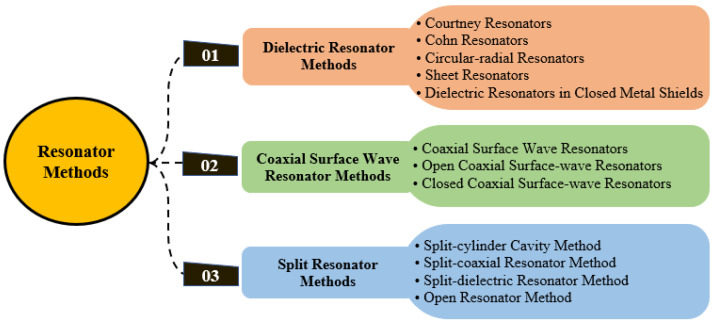
Figure 1
Figure 1
Classification methods based on resonators for the study of material properties.
Figure 2
Figure 2
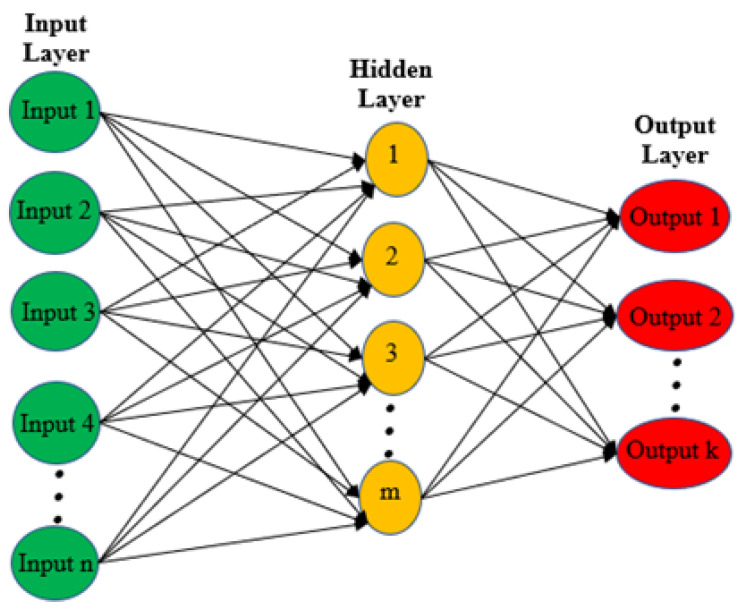
The general structure of the neural network.
Figure 3
Figure 3
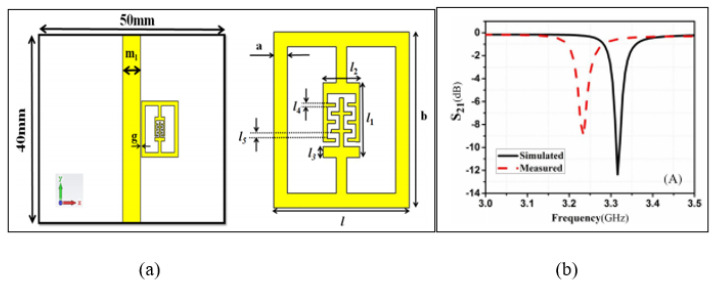
Electric-LC(ELC)-based resonator sensor: (a) Layout of a typical ELC sensor. (b) Measured and simulated transmission response of the structure [73]. Reprinted from Akhtar, M.J.; Varshney, P.K.; Kapoor, A. Interdigital capacitor loaded electric-LC resonator for dielectric characterization. Microwave and Optical Technology Letters 2020 with permission from John Wiley and Sons.
Figure 4
Figure 4
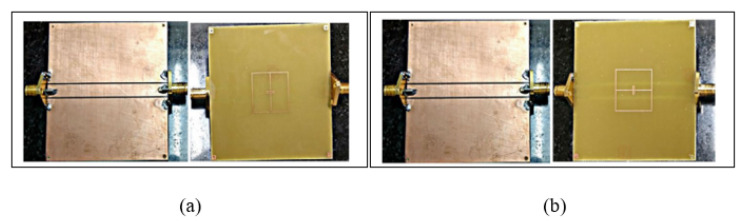
Coplanar Waveguide (CPW)-loaded ELC sensor: (a) First configuration. (b) Second configuration with rotation of the ELC resonator structure by 90° [74]. Reprinted from Akhtar, M.J.; Sharma, A.; Varshney, P.K. Exploration of adulteration in some food materials using high-sensitivity configuration of electric-LC resonator sensor. International Journal of RF and Microwave Computer-Aided Engineering, 2019, with permission from John Wiley and Sons.
Figure 5
Figure 5
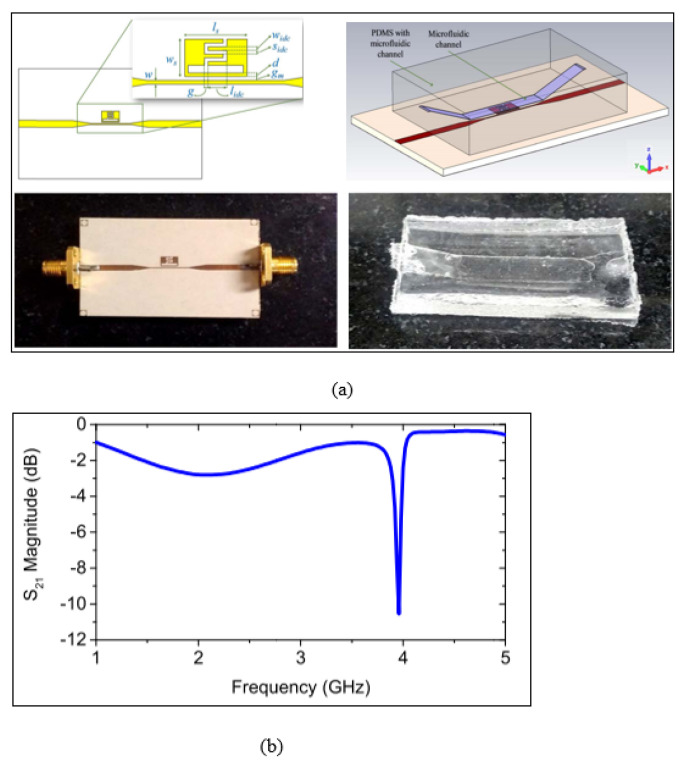
Metamaterial microwave split ring resonator sensor incorporated with an IDC: (a) Layout of the split ring resonator with the IDC along with the PDMS microfluidic channel. (b) Measured transmission response of the unloaded sensor [83]. Reprinted from Govind, G. Metamaterial-Inspired Microwave Microfluidic Sensor for Glucose Monitoring in Aqueous Solutions. IEEE Sensors Journal, 2019, with permission from IEEE.
Figure 6
Figure 6
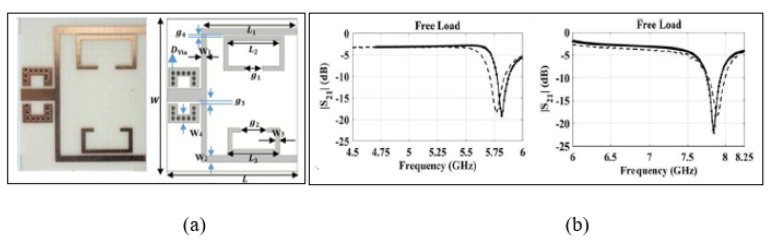
Non-Identical SRR (NID-SRR) sensor: (a) Layout of the NID-SRR sensor. (b) Measured and simulated transmission response on the dual-band NID-SRR [75]. Reprinted from Kiani, S.; Rezaei, P.; Navaei, M. Dual-sensing and dual-frequency microwave SRR sensor for liquid samples permittivity detection. Measurement, 2020, with permission from Elsevier.
Figure 7
Figure 7
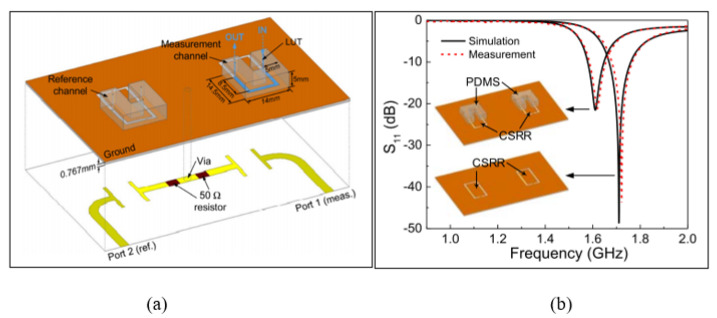
The microstrip CSRR-based sensor: (a) Layout of the MCSRR-based sensor. (b) Measured and simulated reflection response with and without the microfluidic PDMS channels [23]. Reprinted from Gan, H.Y. Differential Microwave Microfluidic Sensor Based on Microstrip Complementary Split-Ring Resonator (MCSRR) Structure. IEEE Sensors Journal, 2020, with permission from IEEE.
Figure 8
Figure 8
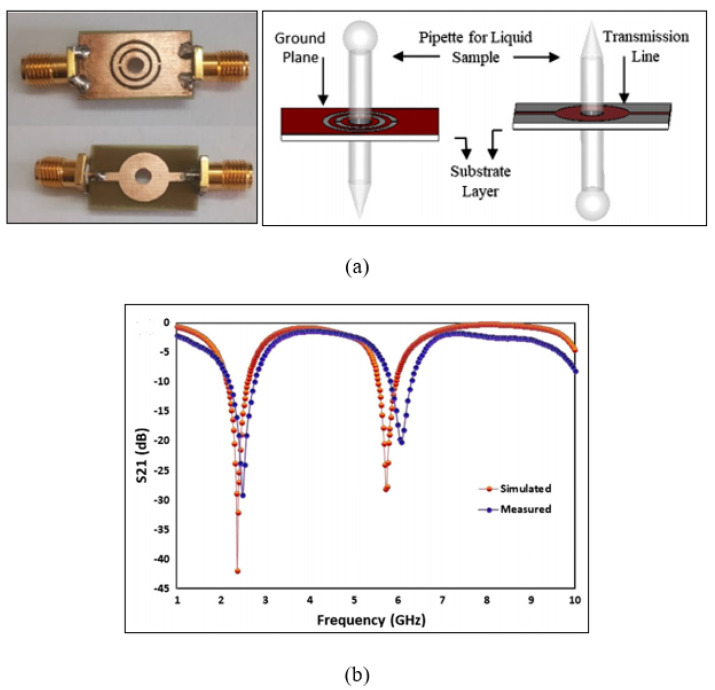
Microwave sensor based on a complementary split ring resonator: (a) Layout of the CSRR sensor along with the pipette for liquid samples. (b) Measured and simulated transmission response for a bare sensor [82]. Reprinted from Khanna, Y. et al. Dual-Band Microwave Sensor for Investigation of Liquid Impurity Concentration Using a Metamaterial Complementary Split-Ring Resonator. Journal of Electronic Materials, 2019, with permission from Springer Nature.
Figure 9
Figure 9
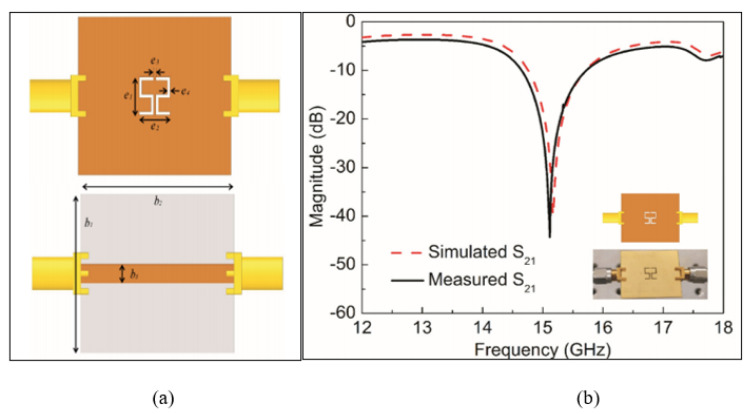
The Complementary Symmetric S-Shaped Resonator (CSSSR): (a) Layout of the CSSSR sensor. (b) Measured and simulated transmission response. The complementary SSSR is etched out of the ground plane metallisation in the bottom view and excited by the feedline in the top view [76].
Figure 10
Figure 10
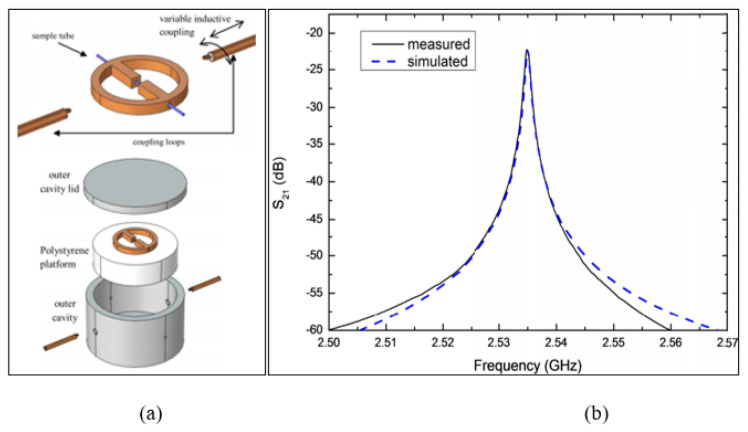
Central Gap Ring Resonator (CGRR) sensor: (a) Layout of the CGRR sensor including the CGRR, variable inductive coupling feedlines, outer aluminium, polystyrene platform, and PTFE sample tube. (b) Measured and simulated transmission response with an empty PTFE tube [77]. Reprinted from Hamzah, H. High Q Microwave Microfluidic Sensor Using a Central Gap Ring Resonator. IEEE Transactions on Microwave Theory and Techniques, 2020, with permission from IEEE.
Figure 11
Figure 11
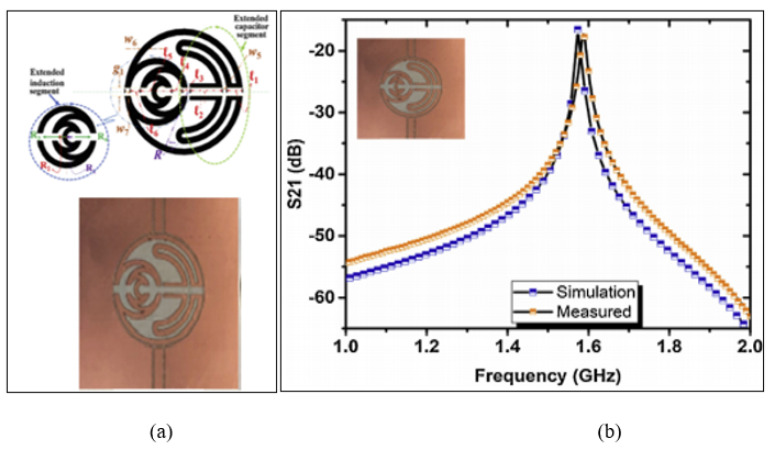
Miniaturized coplanar waveguide SRR (MSRR) sensor: (a) Layout of the MSRR sensor including an extended inductive and capacitive segment. (b) Measured and simulated transmission response in the unloaded condition [78]. Reprinted from Hosseini, N,; Olokede, S.S.; Daneshmand, M. A novel miniaturized asymmetric CPW split ring resonator with extended field distribution pattern for sensing applications. Sensors and Actuators A: Physical, 2020, with permission from Elsevier.
Figure 12
Figure 12
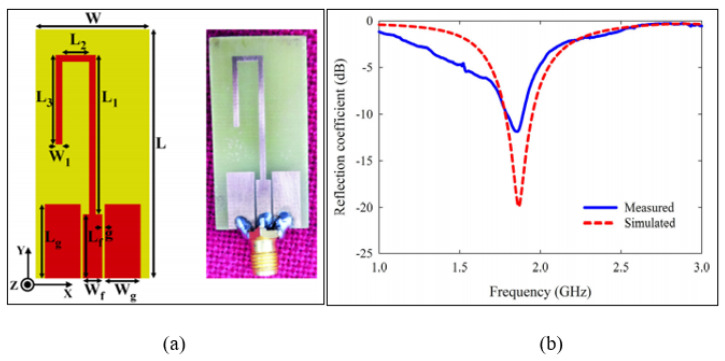
The coplanar waveguide fed open stub resonator sensor: (a) Layout of the CPW fed open stub resonator where the length and width are 38 mm and 17.8 mm, respectively. (b) Measured and simulated responses in the unloaded condition [79]. Reprinted from Moolat, R. et al. Liquid Permittivity Sensing Using Planar Open Stub Resonator. Journal of Electronic Materials, 2020, with permission from Springer Nature.
Figure 13
Figure 13
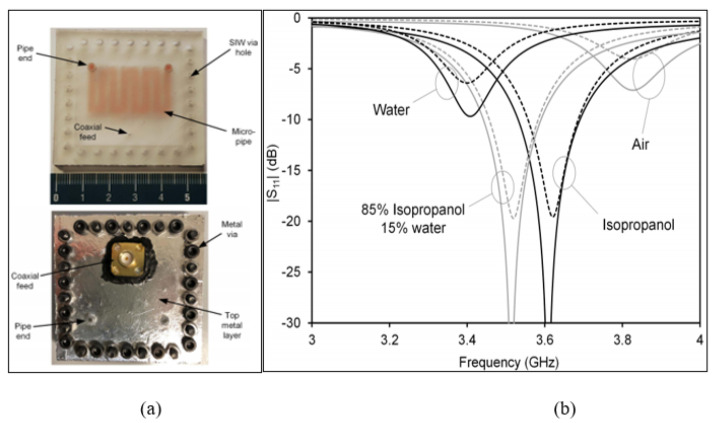
The Substrate-Integrated Waveguide (SIW) sensor: (a) Layout of the SIW sensor along with embedded micropipe. (b) Measured and simulated reflection response for empty (air), pure isopropanol, a mixture of isopropanol and water, and distilled water. The solid and dashed lines represent the simulation and measurement results, respectively [80].
Figure 14
Figure 14
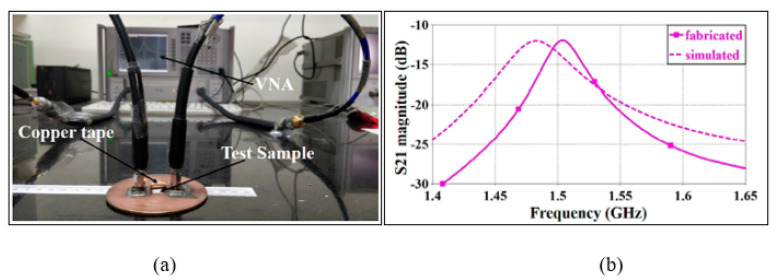
Cylindrical cavity resonator sensor: (a) Fabricated cavity-based cylindrical resonator along with the tested sample. (b) Measured and simulated transmission responses [84]. Reprinted from Varshney, P.K.; Akhtar, M.J. A compact planar cylindrical resonant RF sensor for the characterization of dielectric samples. Journal of Electromagnetic Waves and Applications, 2019, with permission from Taylor and Francis.
Figure 15
Figure 15
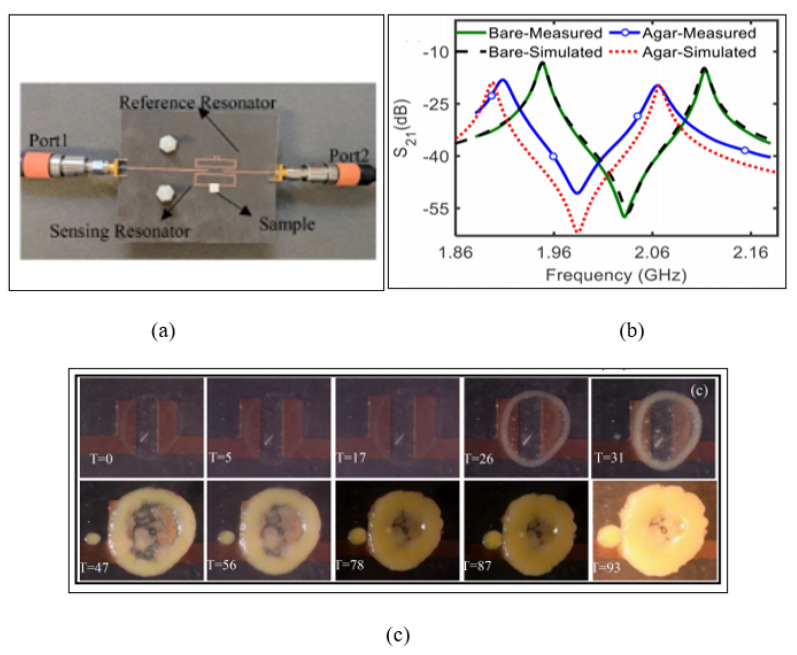
Microwave sensor based on a pair of split ring resonators: (a) Layout of the microwave sensor along with the two split resonators used as reference and sensing resonators. (b) Measured and simulated transmission response for the bare and loaded sensor. (c) Captured time-lapsefor the growth of bacteria associated with the experiment where T is time in hours [81]. Reprinted from Mohammadi, S. A Label-Free, Non-Intrusive, and Rapid Monitoring of Bacterial Growth on Solid Medium Using Microwave Biosensor. IEEE Transactions on Biomedical Circuits and Systems, 2020, with permission from IEEE.
Figure 16
Figure 16
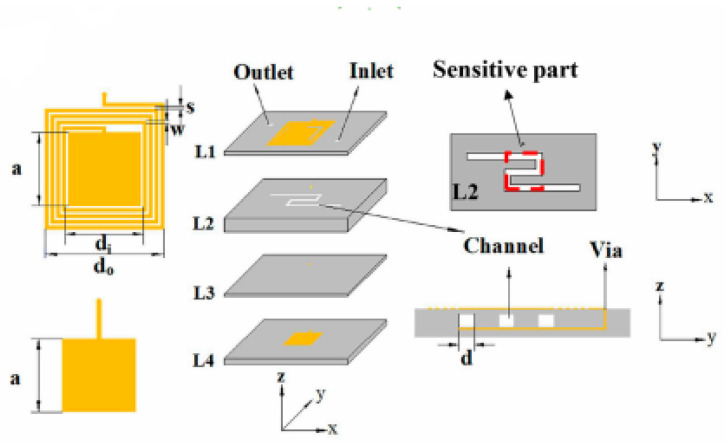
Design of a wireless LC microfluidic sensor using the Low Temperature Co-fired Ceramic (LTCC) multilayer technology [179].
Figure 17
Figure 17
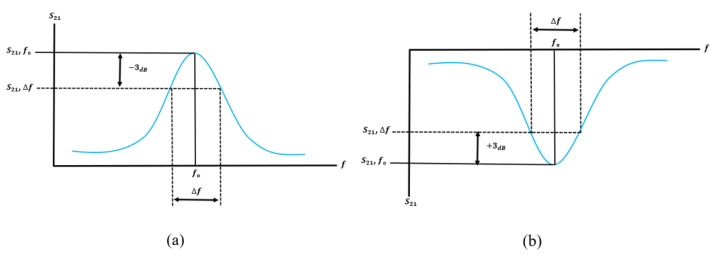
Measurement of the quality factor from S21: (a) Bandpass response. (b) Bandstop response.
Figure 18
Figure 18
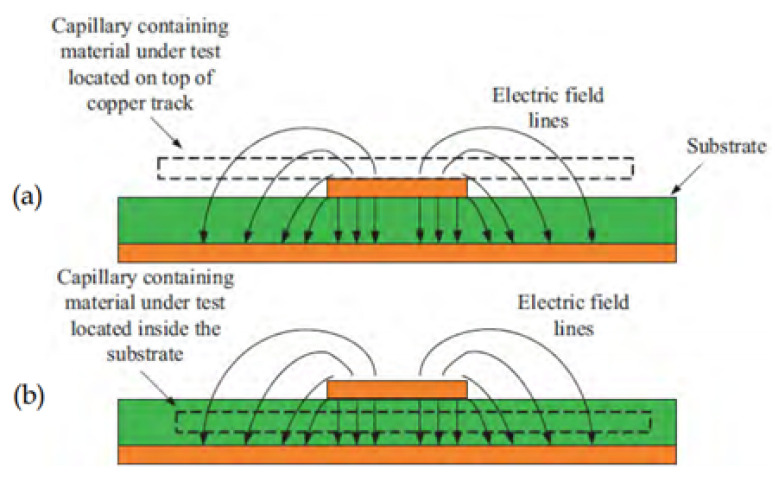
The possible location of the MUT: (a) Above the copper track: (b) Inside the substrate [98].

References

    1. Polivka J. An Overview of Microwave Sensor Technology. High Freq. Electron. 2007;1:32–42.
    1. Langdon R.M. Resonator Sensors—A Review. J. Phys. E. 1985;18:103–115. doi: 10.1088/0022-3735/18/2/002. - DOI
    1. Hensley S., Farr T. Microwave Remote Sensing and Surface Characterization. Volume 3. Elsevier Ltd.; San Diego, CA, USA: 2013.
    1. Kulkarni S., Joshi M.S. Design and Analysis of Shielded Vertically Stacked Ring Resonator as Complex Permittivity Sensor for Petroleum Oils. IEEE Trans. Microw. Theory Tech. 2015;63:2411–2417. doi: 10.1109/TMTT.2015.2451110. - DOI
    1. Dielectric Materials and Applications; Von Hippel A.R., editor. Massachusetts Institute of Technology. John Wiley and Sons; Hoboken, NJ, USA: 1995.

LinkOut - more resources